At SIGMA Orthopedics & Sports Medicine in Bayonne, we treat shoulders with the same precision and accountability found in elite sports and aviation medicine. Our approach isn’t about rushing to surgery or avoiding it unnecessarily. It’s about understanding each shoulder’s unique needs, evaluating the injury in detail, and creating a treatment plan that maximizes healing and performance.
Led by Dr. Frank McCormick, MD, a Harvard-trained orthopedic sports medicine surgeon with a background in U.S. military aviation, SIGMA combines research-driven techniques with high-reliability processes inspired by aviation checklists. Every evaluation considers structural integrity, functional demands, and long-term performance, ensuring surgical recommendations are based on data, not guesswork.
Shoulder pain often starts quietly, then gradually affects sleep, lifting, sports, and daily movement. If you’re exploring an Orthopedic shoulder procedure in Bayonne, this guide explains exactly when surgery is recommended, what minimally invasive shoulder procedures can treat, and how an Orthopedic repair fits into a full recovery plan designed for strength, mobility, and lasting performance.
SIGMA’s Core Care Lines for Active Patients
SIGMA is an orthopedic and sports medicine practice specializing in joint preservation, sports medicine, and advanced surgical care, with focused expertise in the shoulder, hip, and knee, and additional care pathways for elbow and spine. Treatment planning is supported by dedicated programs in:
- Orthobiologics (including SIGMA’s SynerG approach when indicated)
- Surgery Optimization (risk reduction and recovery planning)
- Remote Opinion options for patients who want clarity before traveling or committing to a plan
This matters because shoulder pain rarely exists in isolation. The best outcomes come from precise diagnosis, coordinated rehab, and a recovery strategy that matches your lifestyle and performance needs.
Why Arthroscopy Changed Shoulder Care
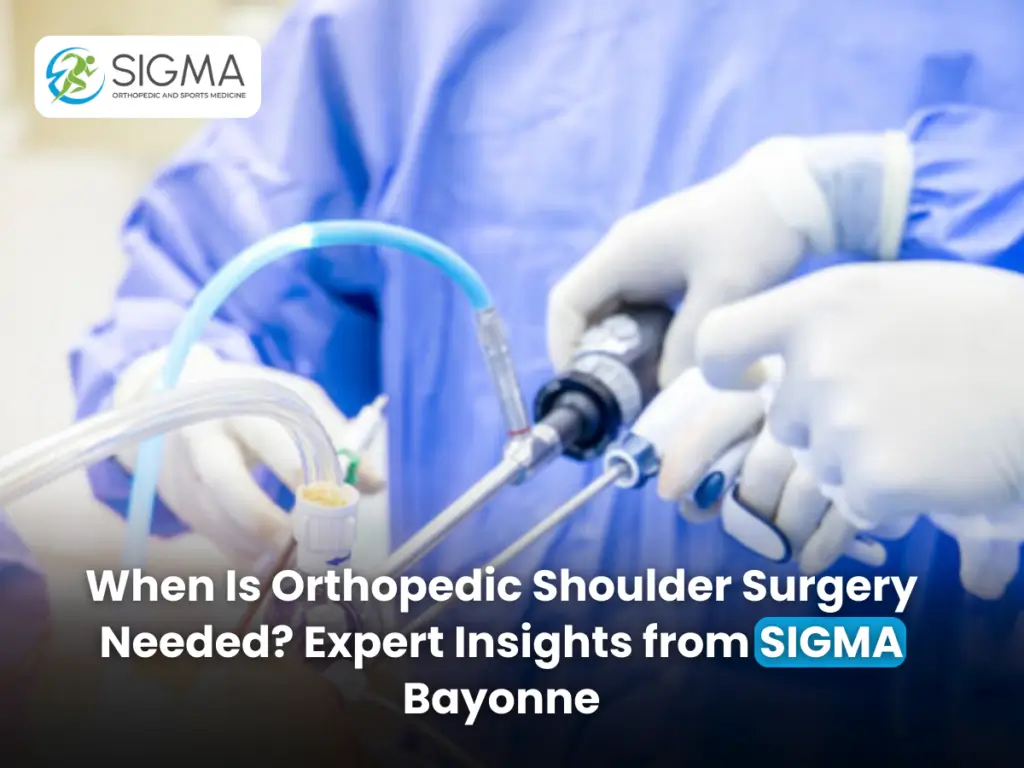
Modern shoulder care has shifted from assumption-based treatment to precision-based intervention. Using advanced Orthopedic techniques, surgeons can directly visualize and treat internal shoulder structures, such as the labrum, rotator cuff, cartilage surfaces, and joint lining, through small portals. This is why patients often hear arthroscopy described as keyhole shoulder surgery or small incision surgery.
The true advantage is not cosmetic; it’s control. Arthroscopy allows a more accurate internal look at what’s driving symptoms and enables targeted treatment while minimizing unnecessary disruption of surrounding tissue. In many cases, this supports a smoother path and can contribute to reduced post-surgery pain compared with larger open approaches (depending on what’s repaired).
When an Orthopedic Shoulder Procedure in Bayonne Becomes the Right Move
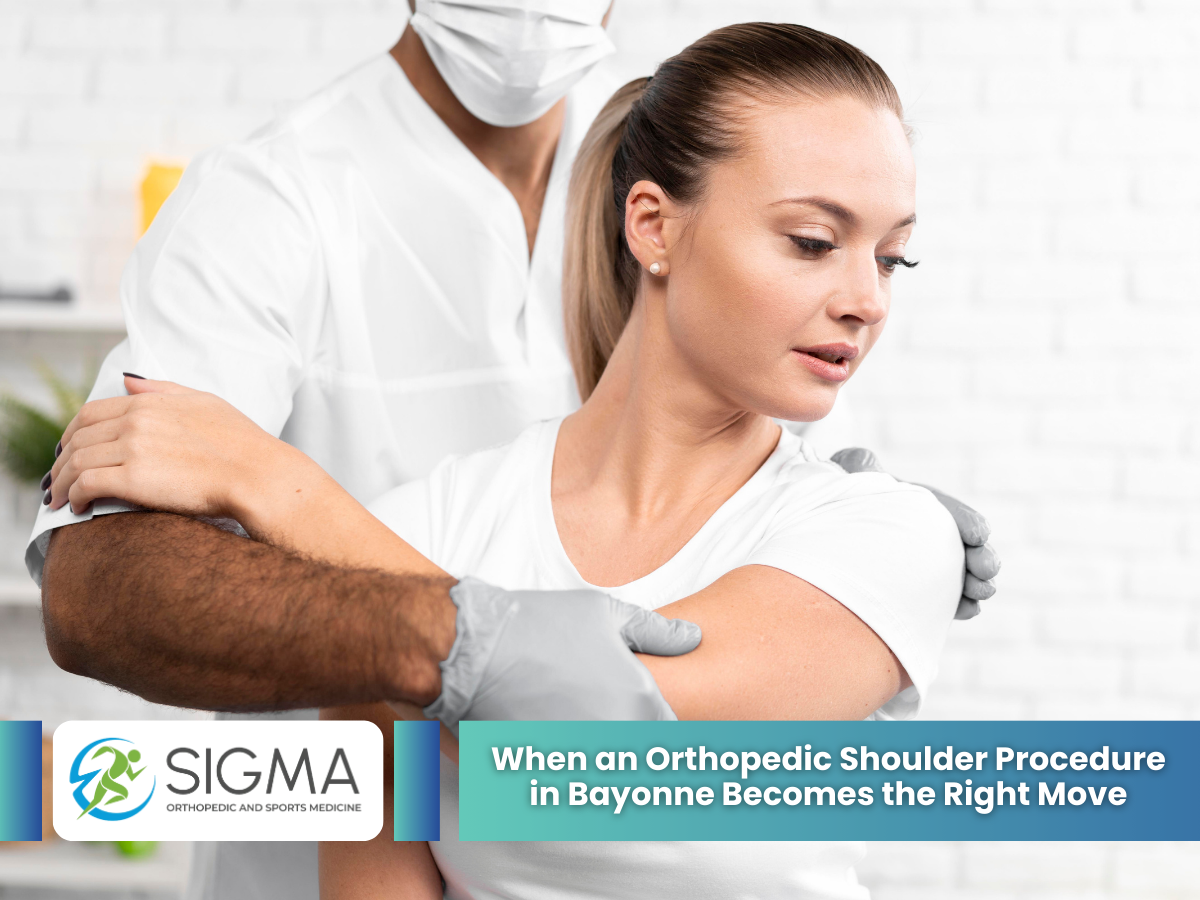
Not every shoulder problem needs surgery. Many improve with structured rehabilitation, activity modification, and, in selected cases, image-guided injections or biologic care. Surgery is typically considered when precision diagnostics suggest the shoulder is unlikely to recover or perform reliably without repair.
Common scenarios include:
- Symptoms persist despite a structured non-surgical plan
If you’ve committed to appropriate rehab and still have meaningful pain, weakness, or mechanical symptoms, the issue may be structural rather than purely inflammatory. - Mechanical symptoms suggest an internal, repairable problem
Catching, locking, painful clicking, or a slipping sensation can point to issues best evaluated and treated with shoulder joint arthroscopy. - Meaningful weakness or loss of function
Difficulty lifting, controlling force, or stabilizing overhead may signal tendon or stability injuries that benefit from Orthopedic shoulder repair. - A tear or instability pattern is likely to worsen
Some injuries progress under repetitive load. For athletes and active workers, early repair can protect long-term function. - Your activity demands require reliable performance
When conservative care cannot restore stability under speed, load, and fatigue, outpatient shoulder surgery may be discussed to get you back to durable performance.
Conditions Commonly Treated With Shoulder Arthroscopy Surgery
At SIGMA Bayonne, arthroscopy is commonly used to evaluate and treat a range of shoulder problems. These are the categories patients most often ask about:
Rotator cuff tears
Tears can cause night pain, weakness, and difficulty lifting the arm. Some partial tears improve with rehab, but larger, symptomatic, or function-limiting tears may require repair for long-term recovery.
Labral tears and instability
If the shoulder dislocates, partially slips, or feels unstable, the labrum and stabilizing structures may need orthopedic stabilization. This can be especially important for athletes or active patients who require repeatable control.
Biceps tendon pathology
Front-of-shoulder pain, snapping, or persistent irritation can involve the biceps tendon. Arthroscopy may address the underlying cause when non-surgical care fails.
Impingement and inflammatory conditions
When pain is driven by mechanical irritation patterns and symptoms persist despite rehab, arthroscopy can clarify the true driver and address it appropriately.
Loose bodies or cartilage-related mechanical symptoms
If fragments inside the joint cause catching or locking, shoulder joint arthroscopy can evaluate and treat the problem directly through a controlled internal joint procedure.
What a Minimally Invasive Shoulder Procedure Usually Involves
Patients often imagine “major surgery,” but arthroscopy is designed to be controlled and targeted. While every case is unique, most orthopedic procedures follow a similar structure:
Small portal incisions are made. A camera is inserted to visualize the joint. Specialized instruments are used to address the problem, repairing tissue, stabilizing structures, smoothing rough surfaces, or removing loose fragments. The shoulder is then protected afterward based on what was repaired.
Because the approach is minimally invasive, many cases can be performed as outpatient shoulder surgery, meaning patients go home the same day with clear instructions and a staged rehab plan.
Faster Surgical Recovery and Reduced Post-Surgery Pain: What Arthroscopy Can and Can’t Promise
Arthroscopy often supports a more modern recovery experience because it can reduce soft-tissue disruption and uses smaller incisions. Many patients associate this with faster surgical recovery and reduced post-surgery pain, and in many cases, that can be true compared with larger open procedures.
However, arthroscopy does not eliminate biology. If tendons are repaired, they need time to heal. If the labrum is repaired, stability must be protected while tissue matures. The recovery timeline depends more on what was repaired than on incision size.
That’s why SIGMA doesn’t “sell speed.” SIGMA builds predictability through planning, preparation, and measurable milestones.
Orthopedic Shoulder Repair Recovery With SIGMA’s 100 Days to Success Framework
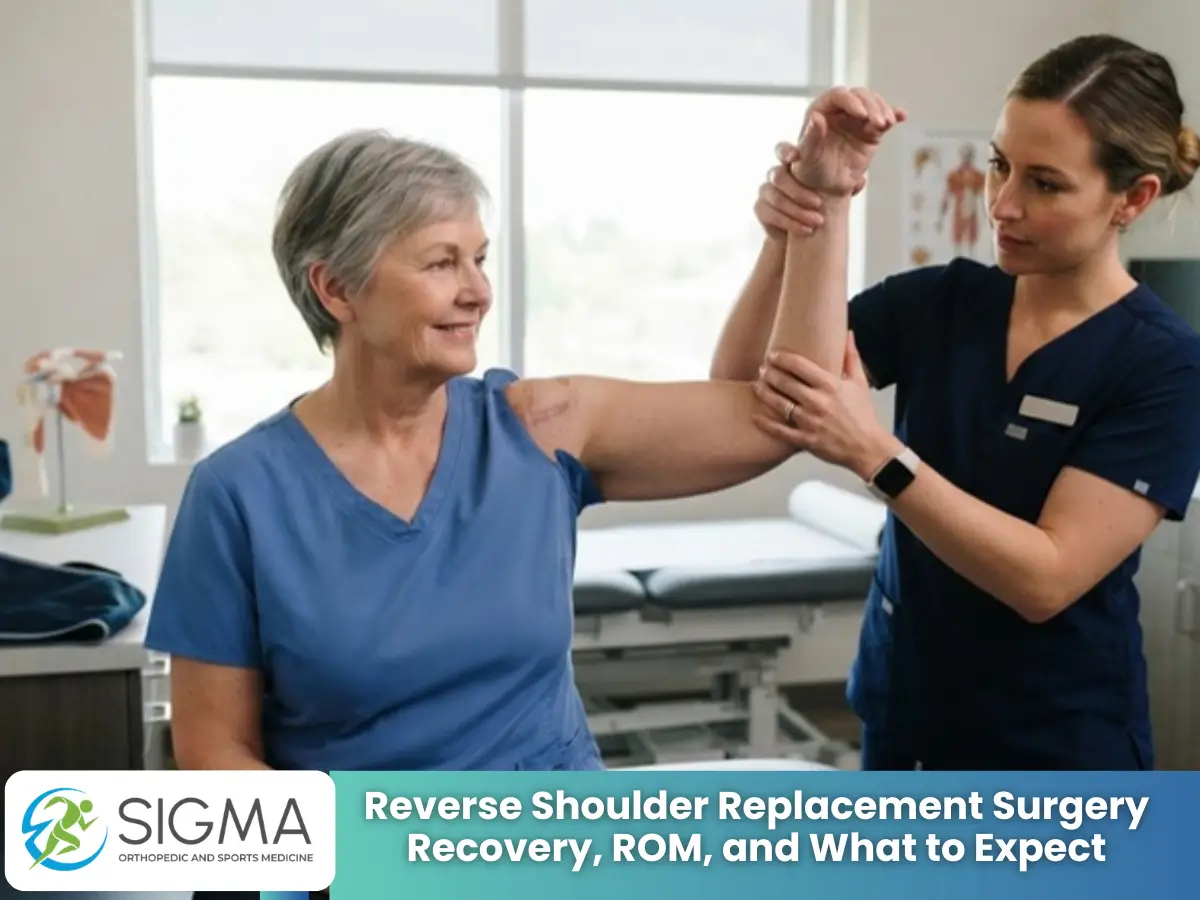
Recovery is most successful when it’s treated like training: progressive, disciplined, and honest about workload. SIGMA’s approach is aligned with a clear roadmap, often described through the 100 Days to Success style framework, so patients understand what progress should look like and when it’s safe to advance.
Here’s a realistic phase-based structure many patients follow after Orthopedic repair:
Phase 1: Protection and pain control (early weeks)
The priority is protecting the repair, managing inflammation, and maintaining safe motion where allowed. This period often requires the most adjustment for sleep and daily routines.
Phase 2: Controlled motion and joint mobility (weeks to months)
Therapy focuses on restoring range gradually without overstressing healing tissue. Consistency matters more than intensity.
Phase 3: Strength and endurance rebuilding (months)
This phase targets rotator cuff endurance, scapular stability, and mechanics. It’s when patients start feeling “stronger,” not just “less sore.”
Phase 4: Return to function and sport/work demands (later months)
Higher-level tasks return gradually, overhead lifting, throwing, heavy work, or contact exposure, based on readiness criteria, not guesswork.
How SIGMA Tracks Outcomes: Measured, Not Assumed

Healing isn’t judged by imaging alone. SIGMA integrates patient-reported outcome tracking to monitor the recovery that actually matters to your life, pain trends, functional capacity, sleep quality, endurance, and confidence in the shoulder.
This is part of the SIGMA identity: outcomes that are measured, not guessed. Tracking progress helps identify plateaus early, adjust rehab intelligently, and confirm when patients are truly ready to advance.
Small Incision Surgery and Outpatient Shoulder Surgery: Who It Fits Best
Many active patients prefer arthroscopy because it often fits modern life better, same-day discharge for many cases, smaller incisions, and a rehab structure that can be planned around work and family responsibilities. For the right diagnosis, this can be an excellent match.
That said, not every shoulder problem is best handled Orthopedically. Some complex cases require a different approach. A high-quality SIGMA consultation will explain why arthroscopy fits your case, or why another strategy is safer or more effective.
Frequently Asked Questions
Is shoulder arthroscopy surgery always better than open surgery?
Not always. Arthroscopy is excellent for many problems, but the best approach depends on the specific injury, tissue quality, and complexity of repair needed.
Does keyhole shoulder surgery mean no pain?
No. Incisions are small, but healing tissues can still be sore early on. Many patients experience less disruption compared to larger open procedures, but discomfort and stiffness can still be part of recovery.
How do I know if I need orthopedic shoulder repair or just therapy?
If symptoms improve steadily with structured rehab, surgery may not be necessary. If pain, weakness, instability, or mechanical catching persists despite proper therapy, repair may be discussed.
Is outpatient shoulder surgery safe and effective?
Many orthopedic procedures are safely performed outpatient basis when appropriate. Safety depends on your health profile, diagnosis, and surgical plan.
What helps most with reduced post-surgery pain?
Following your pain-control plan, protecting the shoulder early, and staying consistent with guided rehabilitation typically support the smoothest recovery.
Ready to Get Clarity on Your Shoulder and Your Options?
If your shoulder pain keeps returning, strength isn’t coming back, or instability is changing how you move, you don’t have to keep guessing. A focused evaluation at SIGMA Orthopedics & Sports Medicine can determine whether an orthopedic shoulder procedure in Bayonne is appropriate, what type of shoulder arthroscopy surgery (if any) is truly needed, and how your recovery will be guided with structured milestones and outcome tracking.
Ready for a shoulder plan that’s precise and predictable? Book an appointment with SIGMA Orthopedics & Sports Medicine or request a remote opinion today.