Pain has a way of shrinking life. A knee that won’t trust you on stairs. A shoulder that whispers warnings every time you reach overhead. A hip that turns simple walks into negotiations.
And then comes the fork in the road.
One path says surgery. The other says PRP. Both promise relief. Both come with questions. And for most patients, the real struggle isn’t pain it’s choosing right.
For patients searching for clarity around PRP vs surgery Bayonne NJ, the answer isn’t a trend or a shortcut. It’s precision. It’s data. And it’s understanding what your body actually needs.
That’s where SIGMA Orthopedics & Sports Medicine changes the conversation.
The Real Question Isn’t PRP or Surgery
It’s Why, When, and For Whom
Too many orthopedic decisions are framed like a coin toss. Injection or incision. Wait or operate. Hope or fear.
But the knee doesn’t care about trends. Neither does cartilage, tendon, or ligament tissue. Biology follows rules. Healing has patterns.
The smartest orthopedic care doesn’t ask, “What do you want?”
It asks, “What will produce the best measurable outcome?”
That mindset is the foundation behind every orthopedic treatment decision at SIGMA.
What PRP Really Is (and What It Isn’t)
Platelet-rich plasma (PRP) isn’t magic. It’s biology, refined.
PRP is created by concentrating platelets from your own blood cells packed with growth factors that signal repair. When injected into injured tissue, those signals can accelerate healing, reduce inflammation, and improve function.
Scientific literature, including studies published in The American Journal of Sports Medicine and Arthroscopy, shows PRP can be effective for:
- Mild to moderate osteoarthritis
- Tendinopathies (like patellar or rotator cuff tendons)
- Partial ligament injuries
- Early cartilage degeneration
In the PRP vs surgery comparison, PRP shines when tissue still has the capacity to heal.
That’s the key phrase most clinics skip.
When PRP Makes Sense
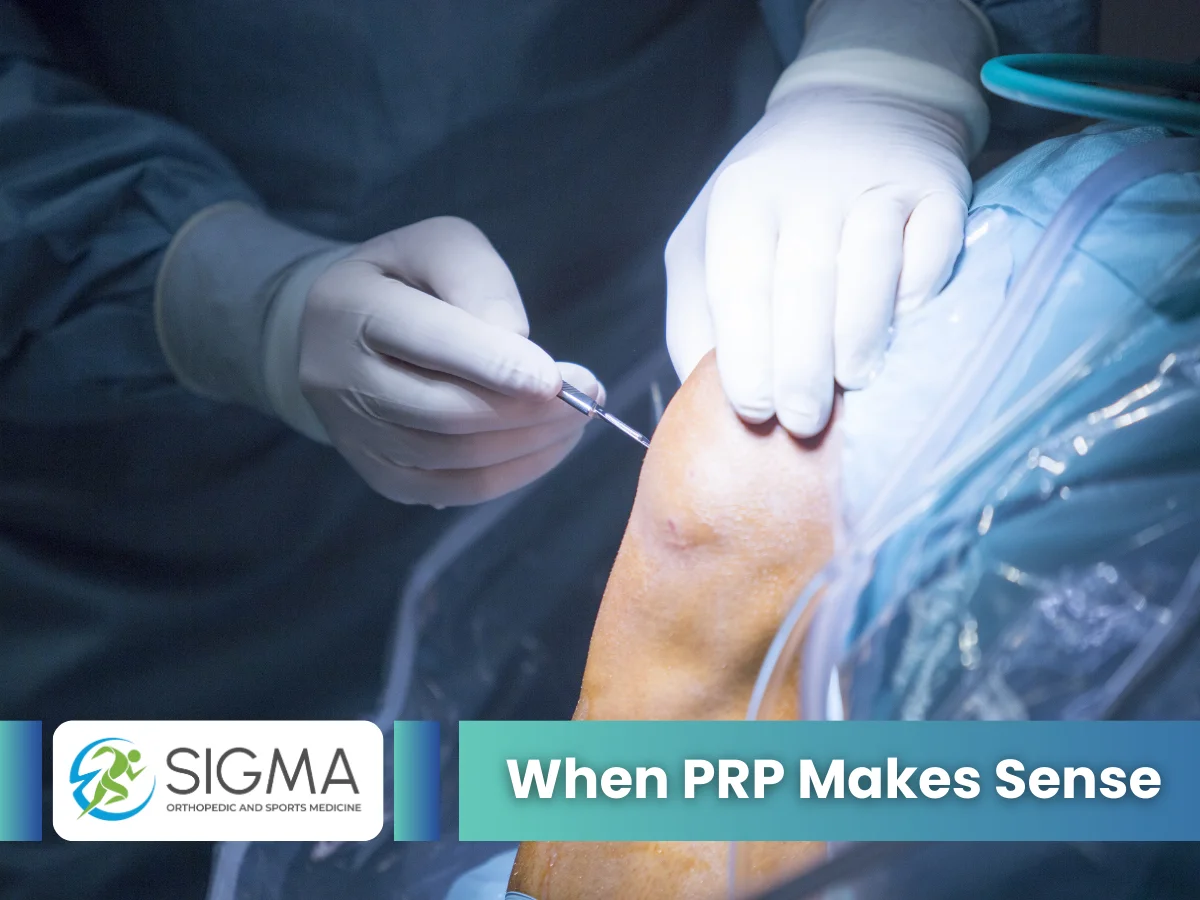
PRP works best when the structure is intact but struggling.
At SIGMA, PRP is considered when patients have:
- Joint pain without complete structural failure
- Partial ligament or tendon injuries
- Early degenerative changes
- Pain that persists despite rest and therapy
This is where regenerative medicine treatment earns its place not as a replacement for surgery, but as a way to delay or avoid it safely.
PRP Therapy Outcomes You Can Measure
PRP isn’t judged by vibes or promises. It’s judged by function.
At SIGMA, PRP effectiveness is tracked using outcome tools like PatientIQ, measuring pain scores, mobility, daily function, and return-to-activity timelines.
If it’s not improving function, it’s not working.
When Surgery Is the Smarter Choice
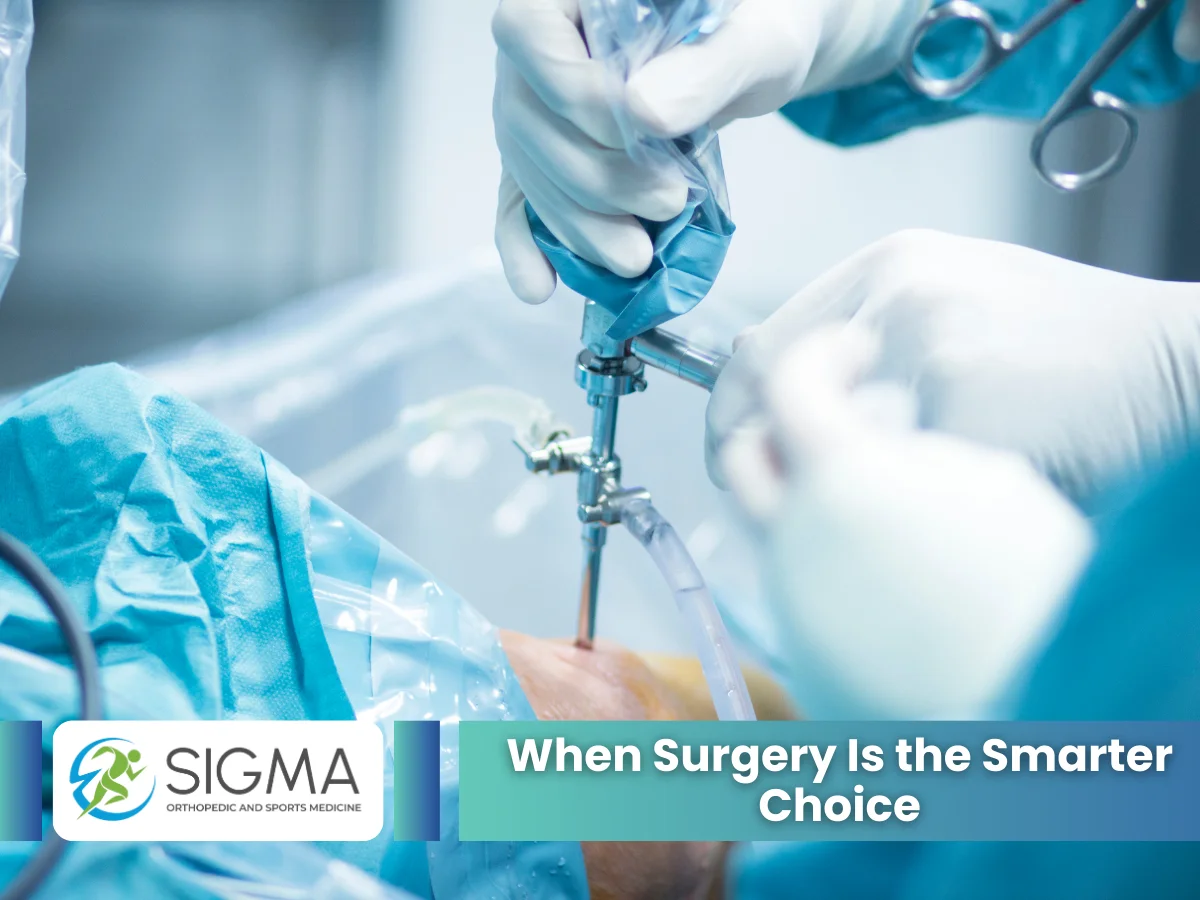
Let’s be honest. PRP has limits.
It can’t reattach a torn ligament.
It can’t rebuild collapsed cartilage.
It can’t stabilize a knee that buckles.
Surgery becomes the better option when:
- There’s a complete ligament rupture
- Mechanical instability is present
- Structural alignment is compromised
- Conservative care has failed
Modern orthopedic surgery isn’t brute force anymore. At SIGMA, it’s minimally invasive, data-driven, and engineered for recovery.
This is where the PRP vs surgery discussion matures from ideology to anatomy.
Recovery Time: PRP vs Surgery
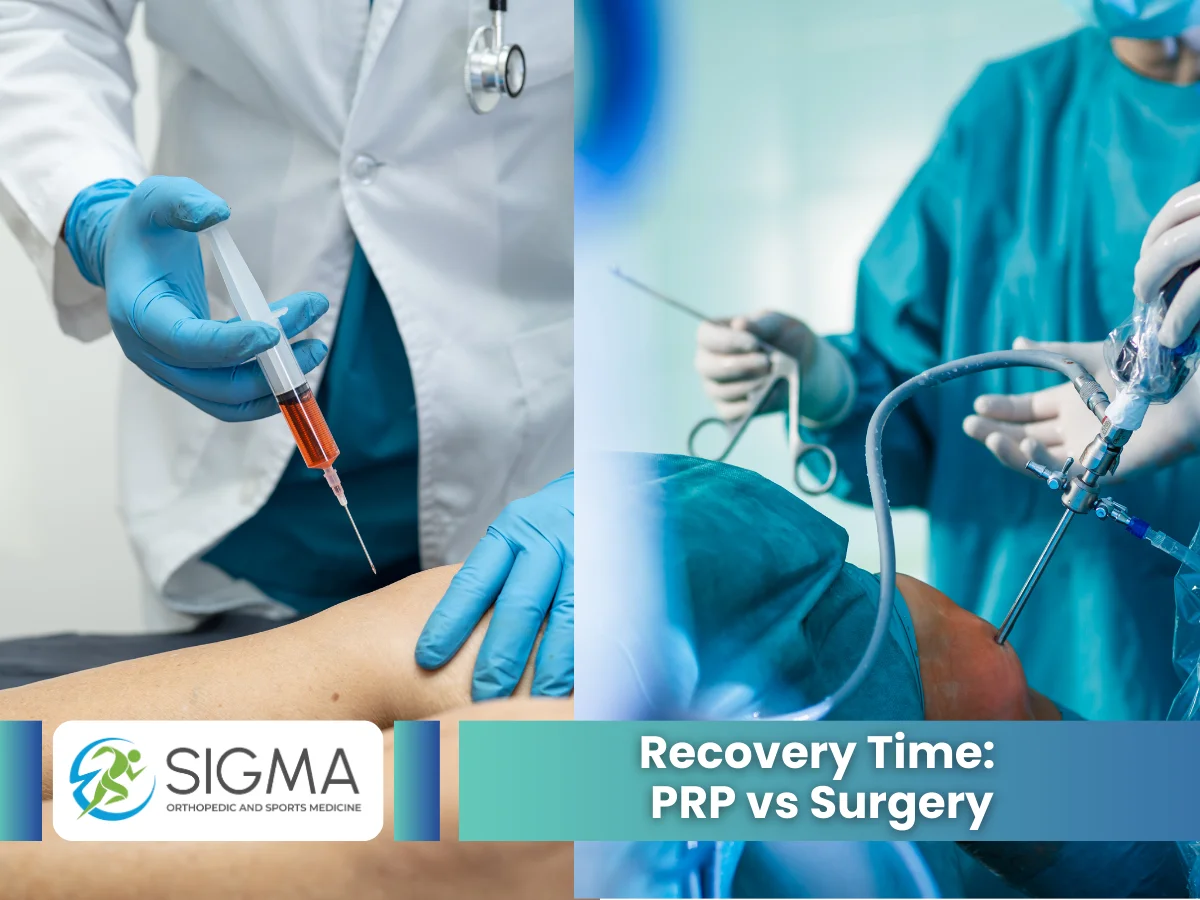
Recovery time PRP vs surgery is one of the most common patient questions, and for good reason.
| PRP Recovery | Surgical Recovery | |
| Downtime | Minimal | Higher upfront disruption |
| Activity Resumption | Most patients resume within days | Weeks to months, depending on procedure |
| Healing Timeline | Improvement continues over weeks to months | Structured rehab timeline, long-term recovery |
| Invasiveness | Non-invasive, no incisions or anesthesia | Minimally invasive to open surgery, requires anesthesia |
| Effectiveness | Accelerates healing in mild to moderate injuries | Corrects severe structural damage, stabilizes joints |
| Risk | Low | Higher surgical and anesthesia risks |
| Patient Experience | Quick, convenient, gradual improvement | Intensive rehab, precise but disruptive initially |
| Summary | PRP may offer speed | Surgery offers certainty and structural correction |
SIGMA’s role isn’t to sell either. It’s to match the timeline to the tissue and the patient’s life.
Minimally Invasive Treatment Options
Not all surgeries are equal. Not all injections are either.
SIGMA prioritizes minimally invasive treatment options whenever possible, whether that’s arthroscopy instead of open surgery, or PRP instead of a scalpel.
Why? Because trauma matters. Less tissue disruption often means:
- Faster recovery
- Lower complication risk
- Better long-term outcomes
This philosophy borrows heavily from aviation and sports performance systems built to reduce error and variability.
Why Choosing Wrong Costs More Than Waiting
Choosing PRP when surgery is needed can delay healing.
Choosing surgery when PRP would work can create unnecessary risk.
That’s the quiet danger patients don’t hear about.
At SIGMA, every decision is framed around outcomes, not options. The goal isn’t to avoid surgery. It’s to avoid regret.
Why Choose SIGMA Orthopedics & Sports Medicine
Before deciding between PRP and surgery, the most important choice is who guides you.
SIGMA Orthopedics isn’t built around volume. It’s built around precision.
Patients choose SIGMA because of:
- Surgeon-led care from Dr. Frank McCormick
- Harvard training and academic leadership
- Six Sigma methodology applied to medicine
- Outcome tracking, not guesswork
- Technology-driven recovery pathways
Here, treatment plans aren’t opinions. They’re engineered decisions.
Making the Right Choice Feels Different
The right treatment doesn’t feel rushed. It doesn’t feel vague. It doesn’t feel like a sales pitch.
It feels clear.
Whether that path is PRP, surgery, or something in between, SIGMA helps patients move forward with confidence, not crossed fingers.
Conclusion
Pain forces decisions. But fear doesn’t have to drive them.
The debate around PRP vs surgery isn’t about new versus old. It’s about right versus wrong for your body.
When treatment is guided by data, biology, and precision systems, the fog lifts. Choices simplify. Outcomes improve.
And healing stops being a gamble.
If you’re weighing PRP against surgery and want a decision backed by science, not pressure, schedule a consultation with SIGMA Orthopedics today.
Your recovery deserves clarity.
FAQs
1. Is PRP better than surgery for joint pain?
PRP can be highly effective for mild to moderate joint conditions where tissue integrity remains. Surgery is better when structural damage is severe or when instability exists.
2. How do I know if PRP will work for me?
PRP effectiveness depends on injury type, severity, and biology. SIGMA uses imaging, functional testing, and outcome data to determine candidacy.
3. Does PRP replace surgery completely?
No. PRP is a tool, not a cure-all. It’s ideal for certain conditions, but cannot repair complete structural damage.
4. Which has a longer recovery PRP or surgery?
PRP typically has shorter downtime, while surgery requires structured rehabilitation but offers long-term correction for severe injuries.
5. How does SIGMA help patients decide?
SIGMA uses a data-driven, surgeon-led process that evaluates anatomy, lifestyle, goals, and measurable outcomes before recommending treatment.