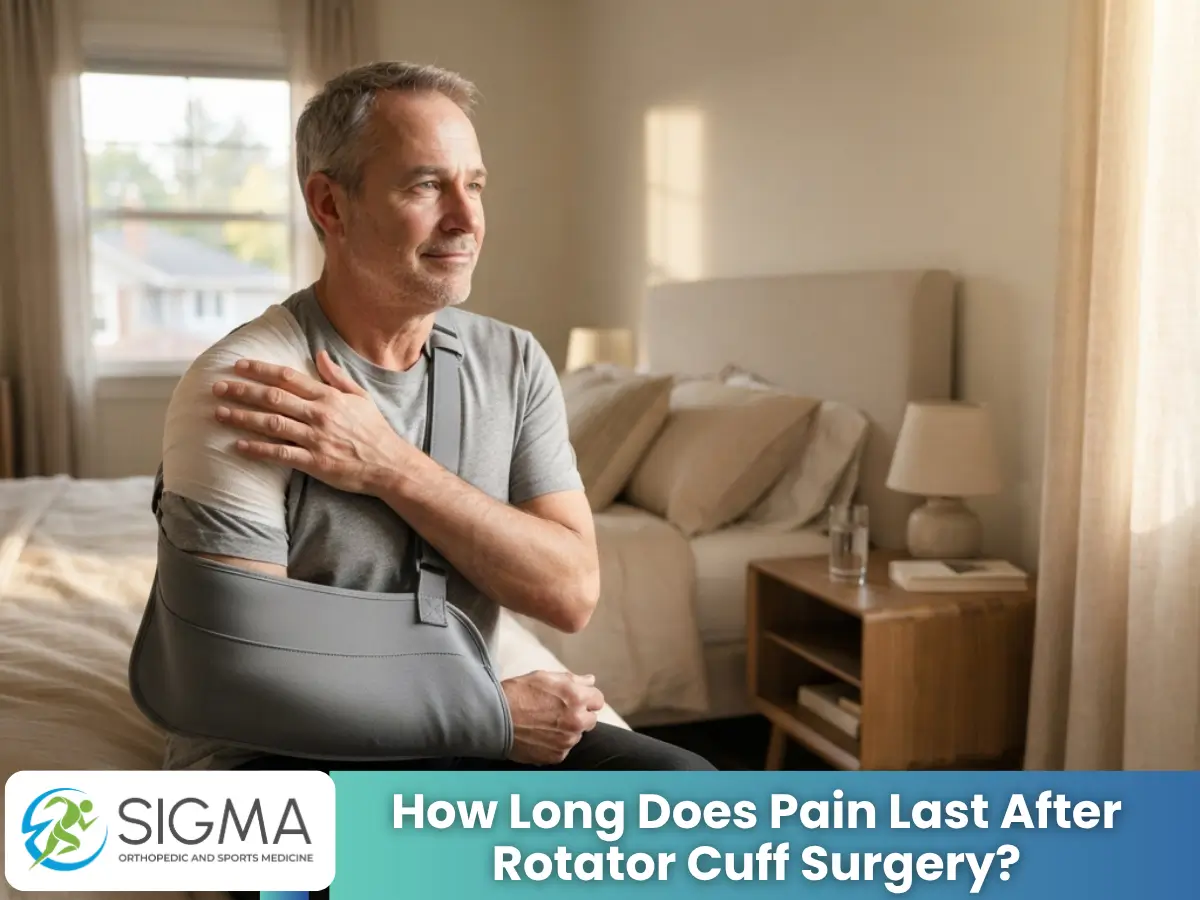
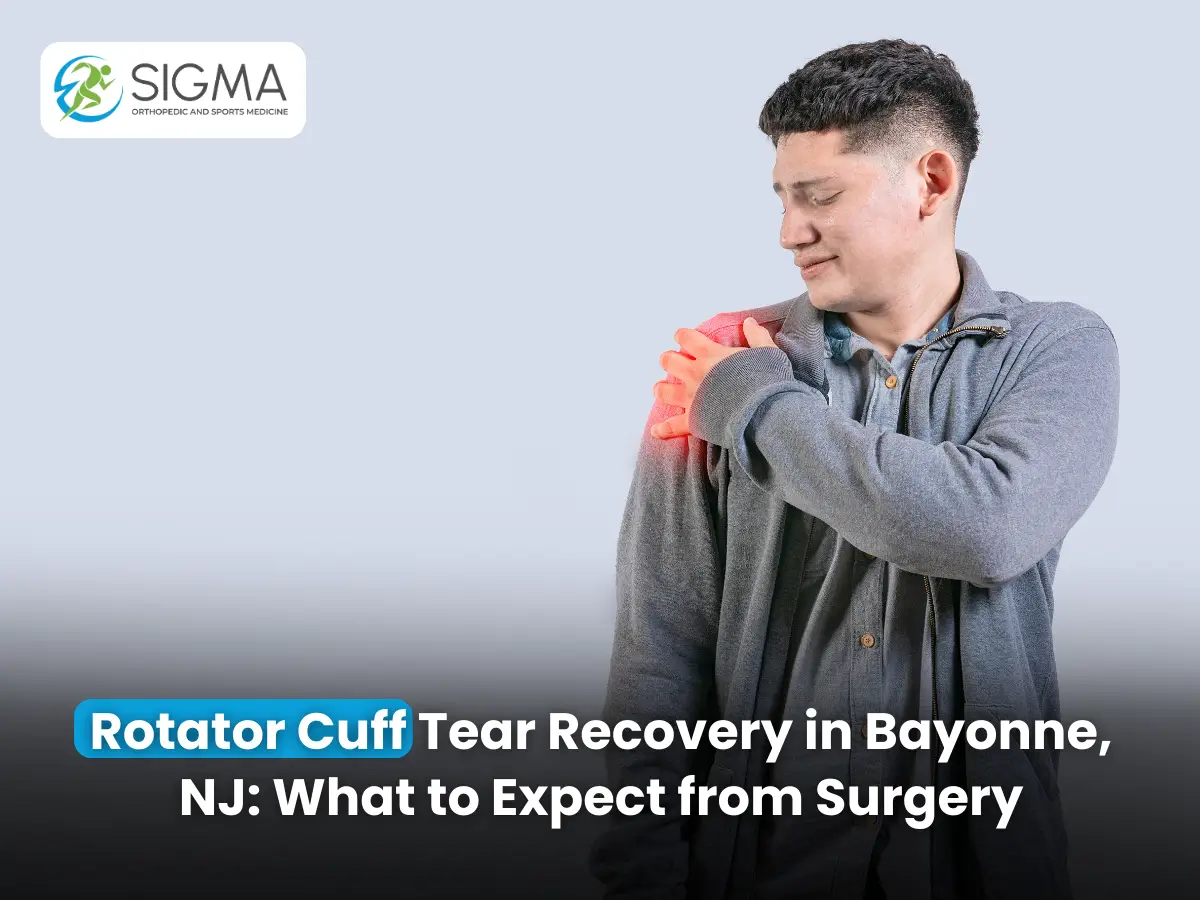
Introduction
At SIGMA Orthopedics & Sports Medicine, recovery is treated like a high-reliability process, not a waiting period. Led by Dr. Frank McCormick, MD (Harvard-trained orthopedic sports medicine surgeon with a U.S. military aviation background), SIGMA is built on aviation-inspired checklists, research-driven techniques, and a simple standard: outcomes that are measured, not guessed. That mindset shapes the evaluation, the surgery when needed, and the entire return-to-function strategy.
If you’re searching for rotator cuff tear recovery in Bayonne, you’re likely not looking for generic reassurance. You want a plan that feels precise, a timeline you can understand, and a recovery approach that’s built for real-life demands.
This guide explains what recovery typically looks like after rotator cuff repair and how physical therapy for the rotator cuff supports long-term shoulder tendon recovery and shoulder strength restoration.
The SIGMA Approach to Rotator Cuff Injuries
Rotator cuff recovery doesn’t succeed through luck or vague instructions; it succeeds through a system. SIGMA’s shoulder pathway is part of a broader practice focused on joint preservation, sports medicine, orthobiologics, and advanced surgical care across the shoulder, hip, and knee, with additional expertise in elbow and spine.
What makes the SIGMA approach distinct:
- Precision diagnosis first to identify the true pain generator and avoid wasted time
- Surgery Optimization to reduce avoidable risk and improve predictability
- SynerG Orthobiologics, when indicated (PRP / A2M for select tendinopathy or partial-tear patterns; BMAC augmentation in select repairs)
- Measurable outcome tracking using SIGMA checkpoints, so progress is verified
- A “Fighter Pilot” mindset built on communication, clarity, and repeatable execution
This is SIGMA branding in action: Precision Surgery. Faster Recovery. Outcomes measured, not guessed.
Why Recovery Matters as Much as the Surgery
Surgery is only one part of the outcome. The bigger part is what happens next, how well the repaired tendon bonds back to bone, and how carefully the shoulder is rebuilt. Rotator cuff repair restarts that tendon-to-bone connection, and true shoulder tendon recovery depends on protection early, progressive loading later, and a plan that respects healing biology.
Many patients feel better before the tendon is truly ready. Pain calms down, motion improves, and daily life feels easier, but healing continues beneath the surface. That’s why restrictions and phase-based rehab matter even when you feel capable of more.
What Surgery Typically Aims to Fix
Rotator cuff surgery aims to restore a stable, functional shoulder by repairing torn tendon tissue and improving mechanics. Depending on your condition, the plan may also address contributors such as inflammation patterns, biceps tendon involvement, or mechanical irritation, but the central goal stays the same: re-establish a durable tendon attachment and create the conditions for long-term strength and control.
Recovery isn’t perfectly linear day-to-day, but it can be highly predictable phase-to-phase when the plan is structured and followed consistently.
Rotator Cuff Healing Stages and What They Mean for Rehab
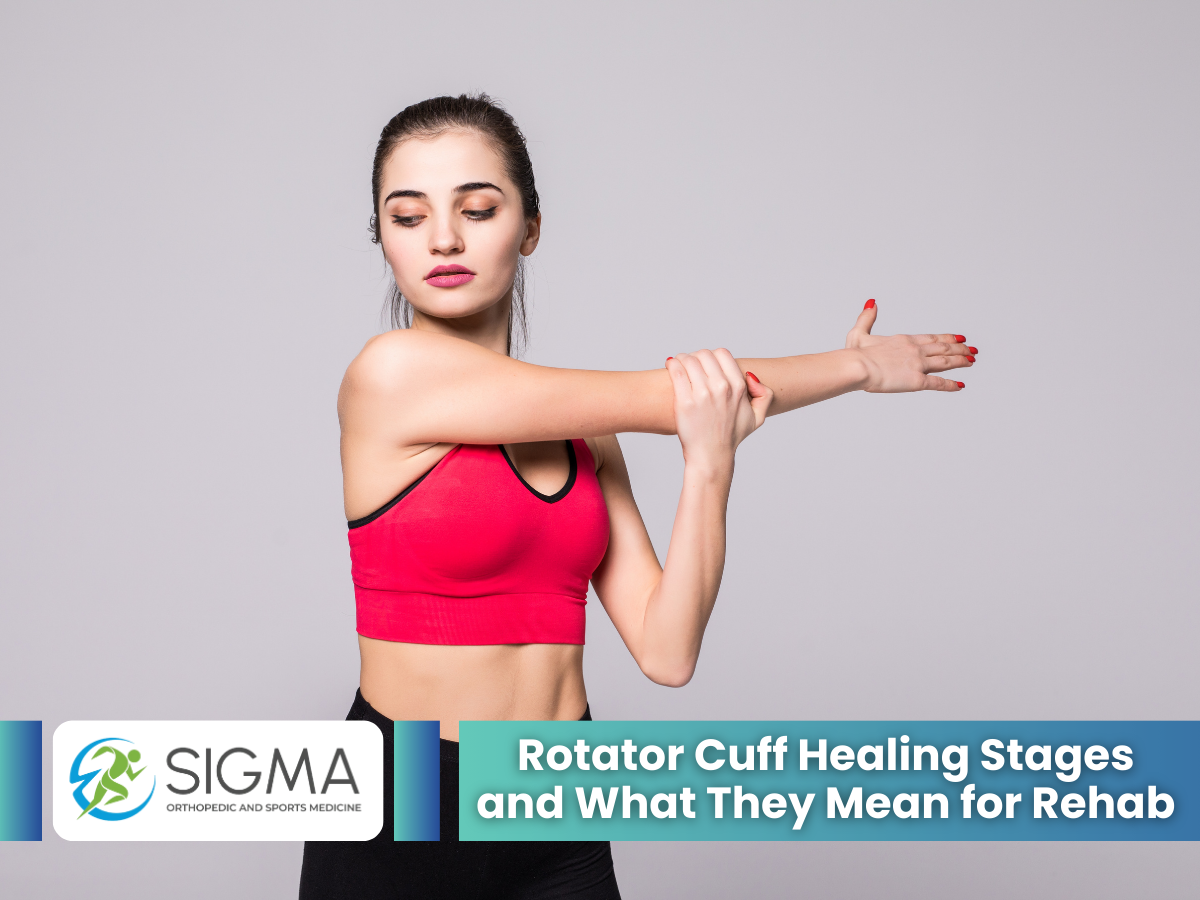
Understanding rotator cuff healing stages makes the timeline feel less mysterious and explains why rehab progresses stepwise.
Stage 1: Protection and early bonding
The repair is at its most vulnerable. Expect soreness and stiffness. Protection is the priority while the tendon begins bonding to bone.
Stage 2: Controlled mobility and tendon maturation
The attachment strengthens gradually. Rehab emphasizes guided motion to reduce stiffness without overstressing healing tissue.
Stage 3: Strength rebuilding and endurance development
This is when shoulder strength restoration begins to feel real. Control and endurance are rebuilt before heavy effort is allowed.
Stage 4: Functional return and performance rebuilding
Rehab transitions from clinical exercises into real-life movement patterns, overhead work, lifting, and sport demands, so improvements hold up outside the clinic.
These stages are the foundation of safe healing after a rotator cuff tear and explain why rushing often backfires.
Rotator Cuff Recovery Timeline After Surgery
Your exact plan depends on tear size, tissue quality, and goals, but most recoveries follow a similar structure. This overview helps set realistic expectations for your rotator cuff recovery timeline.
Weeks 0–2 focus on protection, comfort, and safe daily movement. Sleep and routine changes are often the hardest part early on.
Weeks 2–6 usually introduce more structured therapy and guided mobility. The goal is to prevent long-term stiffness while still respecting the repair.
Weeks 6–12 commonly mark the transition into more active control and early strengthening. This phase can feel deceptively good, which is why it’s also one of the easiest times to accidentally overdo it.
Months 3–6 are where strength, endurance, and mechanics become a priority, especially for overhead work, lifting, or athletic demands.
Months 6 and beyond focus on higher-level durability: resilience under load, consistency across weeks, and confidence under fatigue, not just one good day.
The SIGMA 100 Days to Health Pathway for Predictable Progress
Many patients struggle most with uncertainty: Am I on track, doing too much, or doing too little? SIGMA addresses this by turning recovery into a visible, trackable pathway.
The 100 Days to Health model blends clinical precision, process engineering, and consistent communication so milestones are clear. Rather than “hoping it worked,” patients move through defined phases: preparation and risk reduction, day-of-surgery systems, early recovery, rebuilding strength and mobility, and then verification of outcomes. Progress is measured, and the plan can be adjusted intelligently based on real response.
Rotator Cuff Rehab Exercises and How They Progress
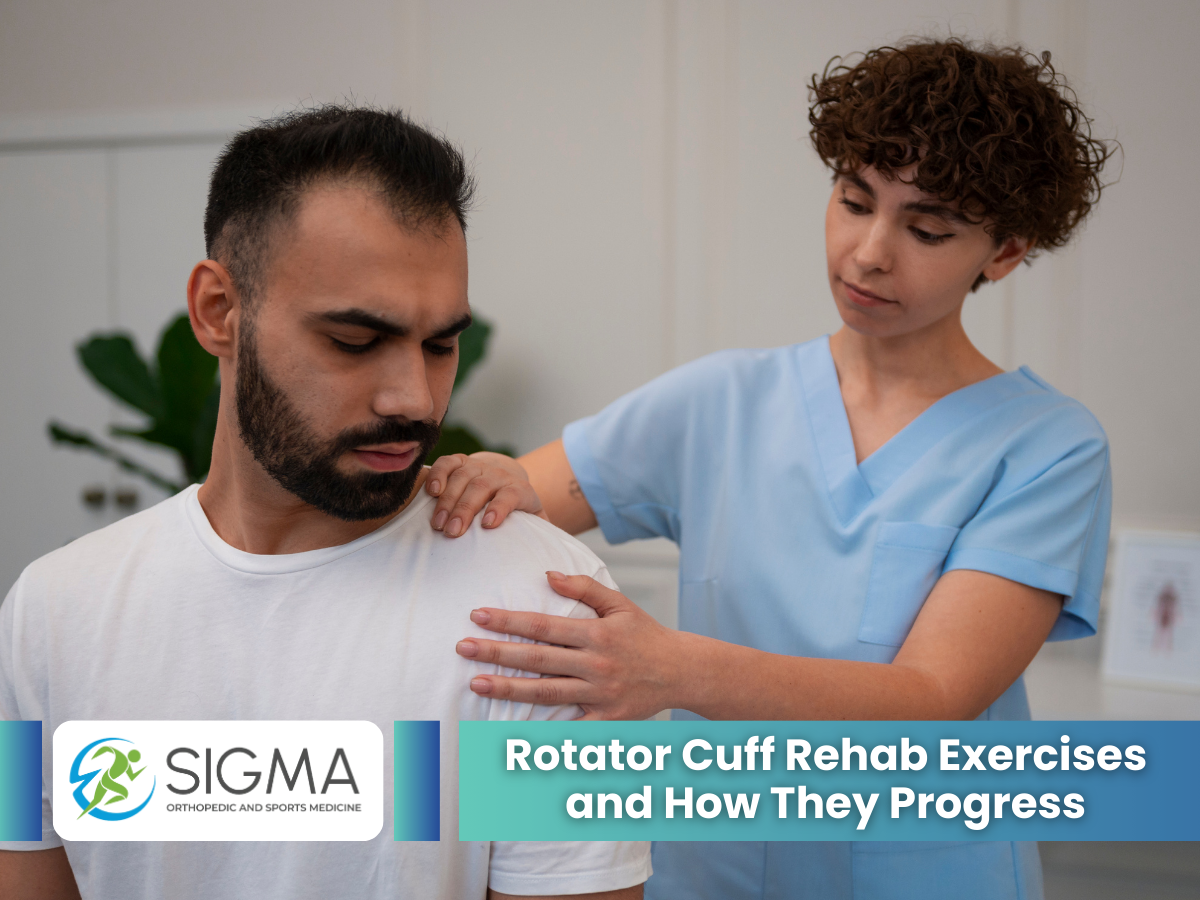
The right rotator cuff rehab exercises change over time. Early rehab is not about strength; it’s about restoring motion safely, protecting the repair, and maintaining shoulder awareness. As healing advances, rehab shifts into mechanics: scapular stability, posture, and force-couple control, and rotator cuff activation without overload. Later phases look more like training, using progressive resistance and endurance work so your shoulder becomes reliable under real-world demands.
The common thread is progression, not random exercises, and not rushing.
Pain Relief During Recovery Without Derailing Healing
Pain relief during recovery is part of a smart plan, not a sign you’re failing. Early discomfort is common, and managing it well supports sleep and participation in therapy. Most successful strategies come from consistent fundamentals, cold therapy when recommended, medication guidance from your care team, supportive sleep setup, and avoiding sudden reaching or lifting early.
One of the biggest traps is testing the shoulder for reassurance. Forcing motion often increases irritation and slows progress. Comfort improves more reliably through pacing and structure.
Post Rotator Cuff Treatment as a Complete System
Strong post-rotator cuff treatment is more than therapy visits. It includes clear restrictions, phase-based milestones, home guidance matched to your stage, return-to-activity planning, and follow-ups that adjust based on your response, not assumptions.
SIGMA’s systems-based approach emphasizes access, communication, and continuous process improvement because small refinements early often prevent bigger setbacks later.
Return to Daily Activities and the First Milestones That Matter
Most patients want to know when normal life returns, such as driving, dressing, work tasks, cooking, and sleeping. Return to daily activities is gradual. Light activities often come back first with modifications. Overhead tasks and lifting usually take longer because they place a greater demand on tendon healing and shoulder mechanics.
A useful mindset is to treat daily life like rehab: controlled, patient, and progressive.
Midpoint Reality Check for Rotator Cuff Tear Recovery Bayonne
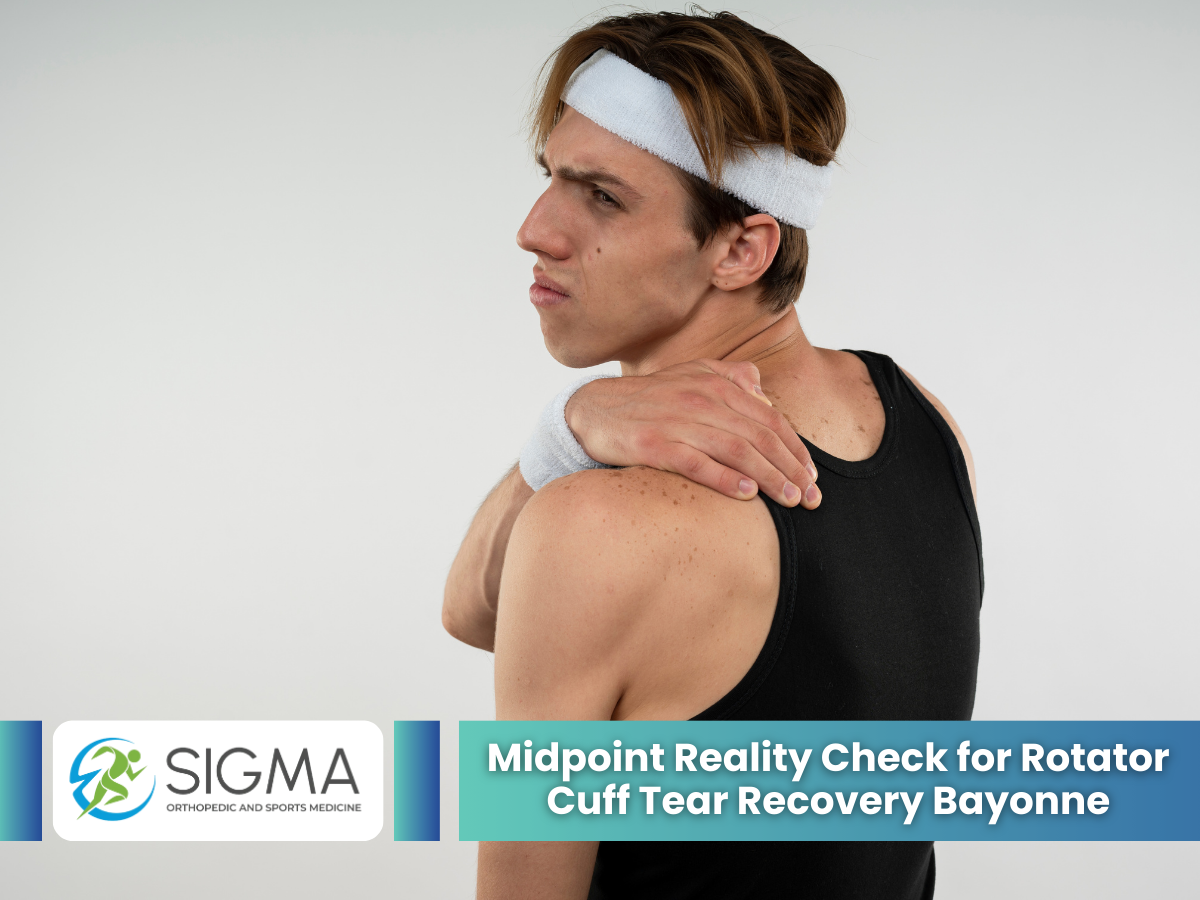
Right in the middle of recovery, many patients hit a confusing stage: you’re better than the early weeks, but not strong yet. That’s normal, and it’s where discipline matters most. If your goal is a durable, high-function shoulder, rotator cuff tear recovery in Bayonne should be treated like training: consistent, progressive, and honest about workload. That’s how you build a shoulder that performs repeatedly, not occasionally.
Frequently Asked Questions
How long does rotator cuff tear recovery take after surgery?
Most patients progress through major phases over several months. Higher-demand overhead strength and sport-specific readiness often take longer. Your plan should match your tear, tissue quality, and goals.
When do rotator cuff rehab exercises start?
Rehab often begins early, but the type depends on the phase. Early work is protective and motion-focused. Strength work progresses later as healing allows.
What does physical therapy for the rotator cuff focus on first?
Usually pain control, safe mobility, scapular stability, and gradual return of active control, then strength and functional patterns.
Is stiffness normal during healing after a rotator cuff tear?
Some stiffness is common early. That’s why therapy balances protection with guided motion rather than forcing range too fast.
When can I return to daily activities?
Basic activities return gradually with restrictions. Overhead tasks and lifting typically take longer because they demand stronger tendon healing and mechanics under load.
Ready to Make Your Recovery Predictable, Not Stressful
Rotator cuff surgery can be a turning point when recovery is handled with structure and realism. If you want a plan you can trust, focus on the phases, respect tendon healing, and commit to progressions that rebuild real function. For anyone pursuing rotator cuff tear recovery in Bayonne, the goal isn’t just getting through surgery; it’s restoring a shoulder that feels stable, strong, and dependable again.
Book your appointment with SIGMA Orthopedics & Sports Medicine or request a Remote Opinion to begin a precision-driven recovery plan, supported by aviation-inspired checklists and verified through the 100 Days to Health milestones.