
Unexplained shoulder pain is exhausting, especially when you’ve already tried rest, physical therapy, injections, or imaging, yet the shoulder still feels unstable, catches, or simply doesn’t behave the way it should. Many patients aren’t looking for more guesses. They’re looking for clarity.
If you’re exploring diagnostic shoulder orthoscopy in Bayonne, you’re likely asking a practical and important question:
How do we identify what’s really happening inside my shoulder so treatment actually matches the problem?
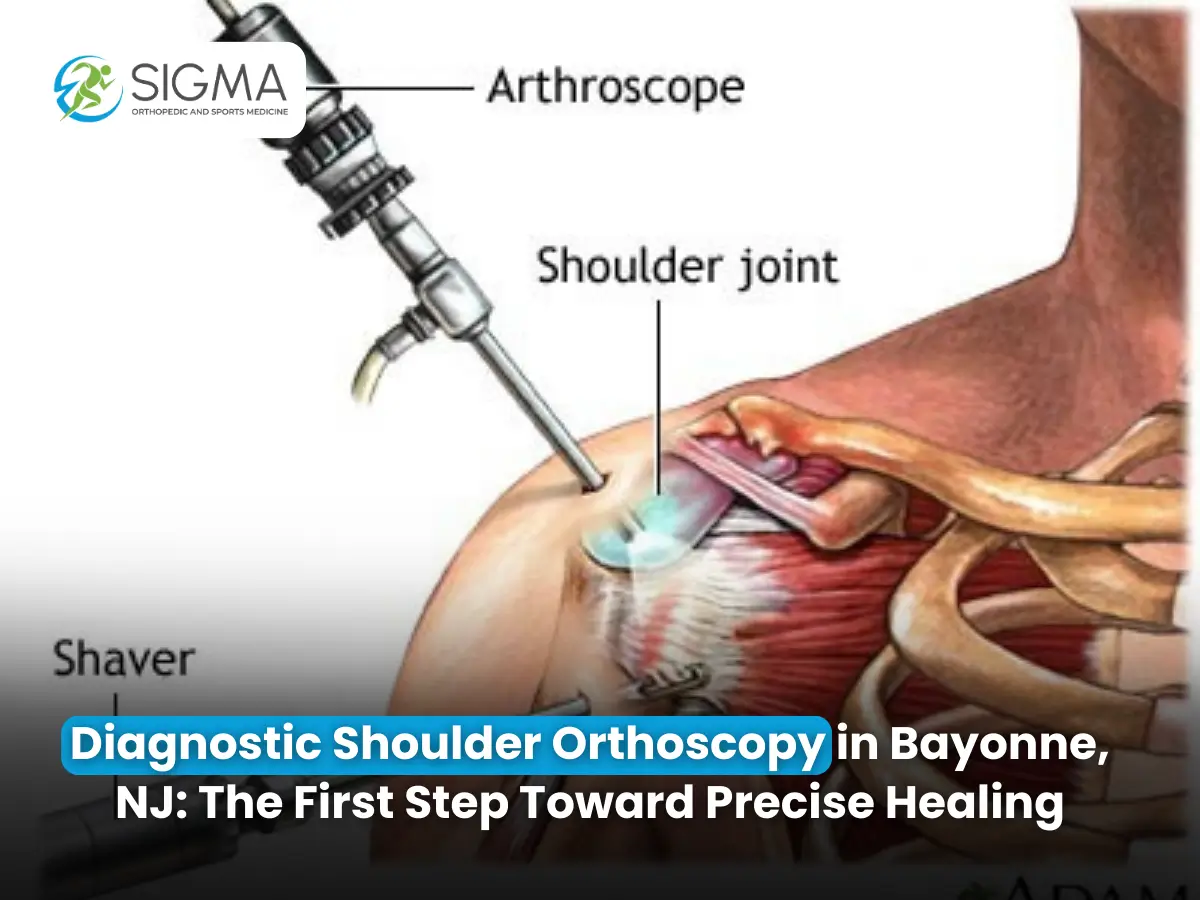
For the right patient, diagnostic shoulder orthoscopy by SIGMA Orthopedics & Sports Medicine can provide that next level of certainty. It is a minimally invasive diagnostic procedure that allows direct visualization inside the shoulder joint, an internal joint examination that can confirm or rule out problems that are not always fully explained by symptoms, physical exam findings, or imaging alone.
This guide explains what diagnostic shoulder orthoscopy is, when it’s considered, and why it can be the first step toward a more precise and effective healing plan.
What Diagnostic Shoulder orthoscopy Really Is
Diagnostic shoulder orthoscopy is a procedure in which a surgeon inserts a small camera (orthoscope) through a tiny incision to directly view the inside of the shoulder joint. Unlike external tests that rely on interpretation, orthoscopy allows real-time visualization of key structures, including:
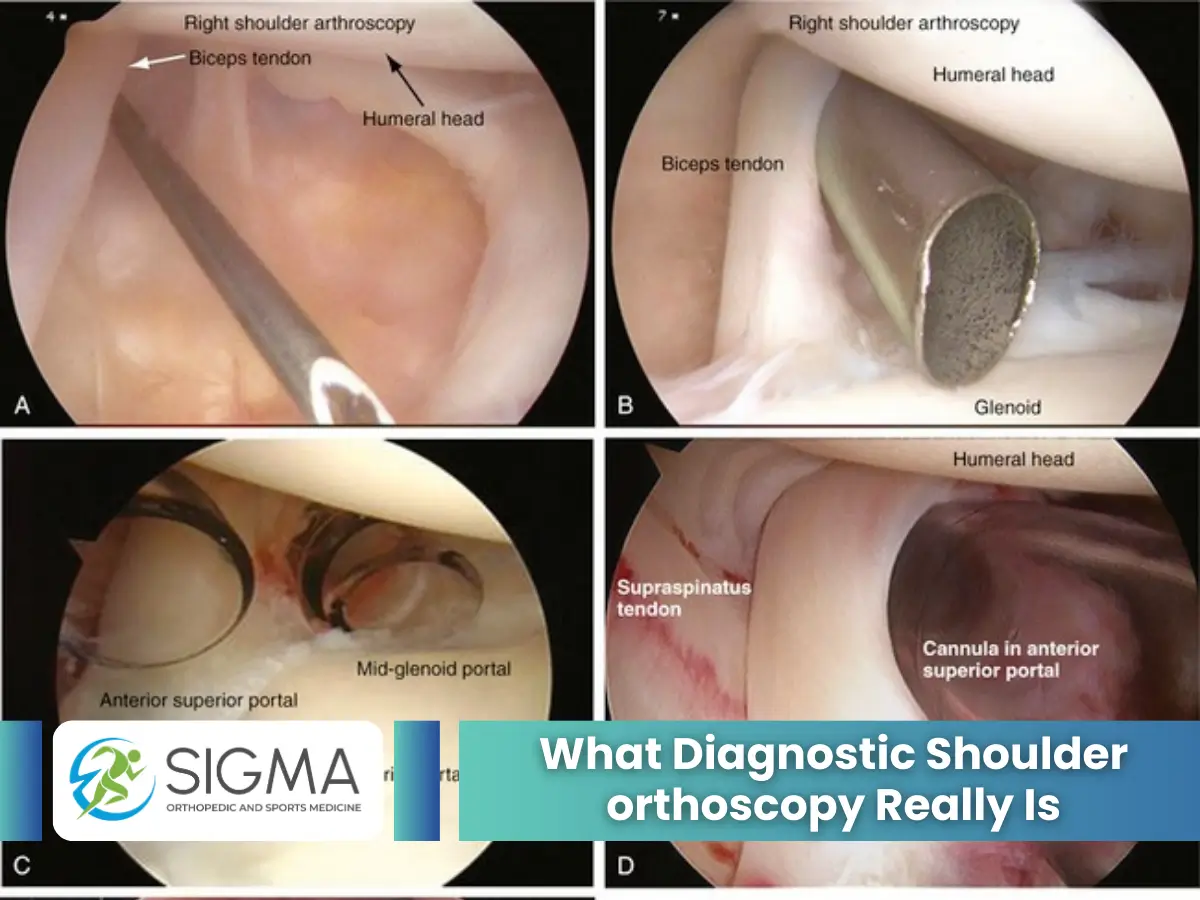
- Articular cartilage surfaces
- The labrum
- Joint lining (synovium)
- Portions of the rotator cuff
- The biceps tendon anchor
In simple terms, it is a direct shoulder joint evaluation from the inside. In some cases, the procedure remains diagnostic only. In others, when previously discussed and planned, it may transition into a repair procedure during the same session if a treatable problem is confirmed.
Why Patients Consider Diagnostic Shoulder orthoscopy in Bayonne
Most shoulder conditions can be diagnosed with a thorough exam and imaging. However, some cases remain unclear despite appropriate care. Patients often explore diagnostic shoulder orthoscopy in Bayonne when the clinical picture doesn’t fully add up.
Common reasons include:
- Persistent or unexplained shoulder pain despite conservative treatment
- Clicking, catching, or locking sensations suggesting a mechanical issue
- Feelings of instability that imaging does not clearly explain
- Symptoms that return quickly after rehabilitation or injections
- Difficulty returning to sport or work despite “normal” scans
When these patterns appear, a deeper shoulder injury assessment may be necessary to identify the true source of pain or dysfunction.
How orthoscopy Improves Diagnostic Accuracy
The greatest value of diagnostic orthoscopy is diagnostic certainty. While many shoulder conditions can be seen on MRI or ultrasound, orthoscopy allows the surgeon to directly inspect joint structures and surfaces.
A diagnostic orthoscopic evaluation can help:
- Confirm cartilage quality and subtle wear patterns
- Evaluate labral integrity and stability
- Assess synovial inflammation
- Identify loose bodies or small internal fragments
- Clarify the extent of tissue fraying or partial damage
This level of accuracy matters. Treatment decisions are only as good as the diagnosis behind them. A plan built on direct visualization is often more precise and more effective than one based on inference alone.
orthoscopy as a Surgical Imaging Alternative
Patients frequently ask whether diagnostic orthoscopy replaces MRI. It does not serve as a first-line substitute, but it can act as a surgical imaging alternative when non-surgical tools fail to provide sufficient clarity.
Imaging provides an interpreted snapshot. orthoscopy provides direct, dynamic visualization. This distinction can be especially important in active patients whose symptoms occur under motion, load, or fatigue rather than at rest.
What the Procedure Typically Involves
Although each treatment plan is individualized, diagnostic shoulder orthoscopy generally follows a consistent framework:
- The shoulder is prepared in a controlled surgical setting
- Small incisions are made to insert the camera and instruments
- A systematic internal joint examination is performed
- Findings are documented and correlated with symptoms
- If pre-planned, certain treatable issues may be addressed during the same session
Because the incisions are small, some patients assume recovery is immediate. In reality, recovery depends on what is done during the procedure. Diagnostic-only orthoscopy usually recovers more quickly than orthoscopic repair.
What Diagnostic Shoulder orthoscopy Can Reveal
The goal is to identify the structural reason the shoulder is not functioning normally. Diagnostic orthoscopy may reveal or confirm:
- Cartilage changes
- Labral tears or instability
- Synovial inflammation
- Mechanical irritation patterns
- Loose bodies
- Internal sources of catching or pain
These findings often explain why rehabilitation alone did not resolve symptoms and help guide a more targeted and effective plan.
Mid-Guide Takeaway
If you’ve been living with persistent symptoms and no clear diagnosis, frustration is understandable. For the right patient, diagnostic shoulder orthoscopy in Bayonne can move the process from uncertainty to a precise, actionable diagnosis.
That clarity improves decision-making, whether the next step is structured rehabilitation, biologic treatment, or a repair strategy based on what the shoulder joint evaluation actually shows.
Recovery Expectations: Diagnostic vs. Repair

A key point for patients is that “orthoscopy” can mean different things.
- Diagnostic-only orthoscopy: Recovery often focuses on managing soreness, restoring comfortable motion, and gradually returning to daily activities.
- orthoscopy with repair: Recovery is more involved and typically includes restrictions and a structured rehabilitation program.
Your surgeon should explain this distinction clearly before the procedure so expectations are aligned.
Questions to Ask Before Choosing orthoscopy
To make an informed decision, consider asking:
- What is the most likely diagnosis right now, and what remains uncertain?
- What treatments have already been tried, and why weren’t they sufficient?
- What specific findings would orthoscopy confirm or rule out?
- If a problem is found, will it be treated during the same procedure?
- How does recovery differ between diagnostic-only and repair procedures?
Clear answers help avoid surprises and build confidence.
Frequently Asked Questions
Is diagnostic shoulder orthoscopy the same as shoulder orthoscopy surgery?
It is a type of shoulder orthoscopy focused on evaluation. In some cases, it may transition into treatment if planned and appropriate.
Does it guarantee an accurate diagnosis?
No test guarantees certainty, but orthoscopy can significantly improve diagnostic accuracy by allowing direct joint inspection.
When is it considered for unexplained shoulder pain?
Often, when symptoms persist despite conservative care, imaging does not fully explain mechanical or functional limitations.
Is it minimally invasive?
Yes. It is considered minimally invasive due to small incisions and camera-based visualization.
Will it replace MRI?
No. MRI is usually first-line. Orthoscopy is considered when a more direct evaluation is needed.
Ready for Clear Answers and a Precise Plan?
Living with pain and uncertainty is draining. If you’ve exhausted conservative options and still lack a confident diagnosis, diagnostic shoulder orthoscopy in Bayonne may provide the clarity you need.
At SIGMA Orthopedics & Sports Medicine, we focus on precision, using direct joint evaluation, modern arthroscopic techniques, and thoughtful decision-making to guide the next step, whether that’s rehabilitation, advanced non-surgical care, or targeted repair.
Schedule an evaluation in Bayonne with SIGMA Orthopedics & Sports Medicine and take the first step toward precise healing with confidence.