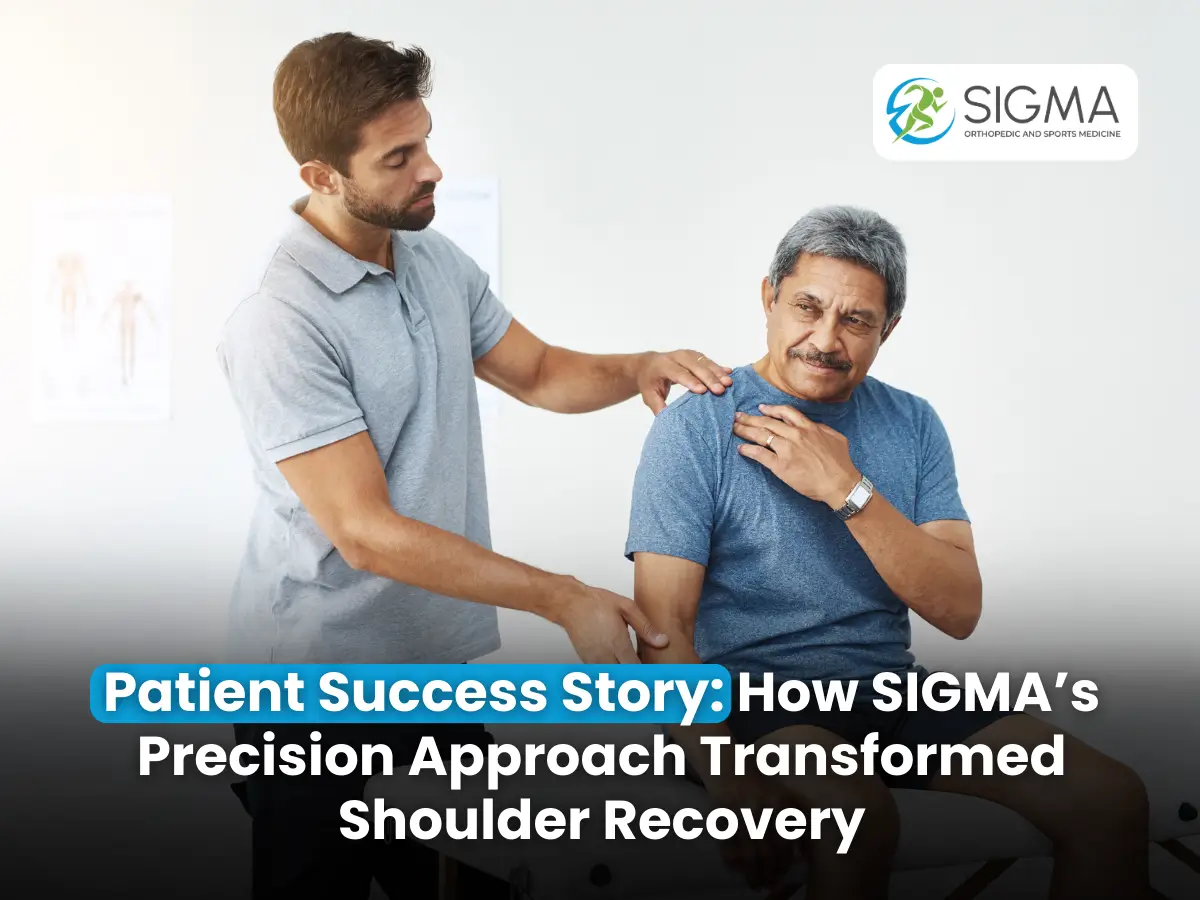
When people search for a shoulder surgery testimonial in Bayonne, they’re usually not looking for hype; they’re looking for proof. Proof that recovery is possible. Proof that the shoulder can feel stable again. Proof that the plan isn’t guesswork. If you’ve been dealing with pain, weakness, or that constant “I don’t trust this shoulder” feeling, reading real-world recovery journeys can be the difference between delaying care and finally moving forward with confidence.
Important note: To protect privacy, the story below is a patient-style success story based on common recovery patterns and what many patients report in orthopedic care. It’s written as a realistic, educational narrative, not an identifiable individual’s medical record.
The Moment It Became More Than “Just a Strain”
It started like many shoulder injuries do: an annoying pinch during overhead work, then soreness that didn’t fully settle. At first, it was easy to ignore. But the pain kept returning. Sleep got worse. Strength dropped. Reaching behind the back felt sharp.
The biggest red flag wasn’t even pain; it was the loss of trust. The shoulder felt unpredictable.
This is where many patient recovery experiences begin: not with one dramatic injury, but with a slow realization that the body is compensating, the range is shrinking, and every workout or workday becomes a negotiation.
The SIGMA Evaluation: Clarity Before Decisions
One thing patients consistently mention in orthopedic reviews is how reassuring it feels when a provider explains the situation clearly, without rushing. At SIGMA Orthopedics & Sports Medicine, this clarity comes from a precision-first process:
- Expert shoulder evaluation focused on function, strength, stability, and symptoms under real-life demand
- Diagnostic accuracy supported by advanced imaging review and correlation to exam findings
- A decision pathway that considers non-surgical options when appropriate, and surgery when the shoulder is unlikely to recover reliably without repair
In this story, the evaluation focused on two essentials:
- What structure was most likely driving pain and weakness
- What path would realistically restore stability and function
Surgery wasn’t framed as a “last resort.” It was framed as a targeted solution, only if the diagnosis supported it.
What Makes SIGMA Different: A Recovery System, Not Just a Procedure
Most patients don’t come in asking about devices, tools, or “brands.” They come in wanting a better outcome and a plan they can trust. SIGMA’s differentiator is that the outcome isn’t left to chance. It’s built through a system:
1) SIGMA Precision Approach to Surgical Care
SIGMA uses modern arthroscopic methods to address shoulder problems with controlled visualization and targeted repair, minimizing unnecessary disruption and focusing on what truly needs to be fixed.
2) SynerG Orthobiologic Lab Augmentation (When Appropriate)
For select patients, the SynerG Orthobiologic Lab may be used to support the healing environment, especially when tissue quality, inflammation, or recovery demands benefit from biologic augmentation. This is never a “one-off injection.” It’s integrated into the surgical + rehab strategy.
3) Patient-Reported Outcomes as Objective Benchmarks
Recovery isn’t measured by vague impressions alone. SIGMA uses patient-reported outcomes (PROMs) to track function, pain patterns, sleep, confidence, and performance over time, so recovery is measured, adjusted, and improved using real data.
4) Monitored 100 Days to Health Program
Instead of “good luck, see you in a few weeks,” patients follow a structured recovery path through 100 Days to Health, a monitored, milestone-driven system that keeps the plan consistent and reduces the risk of doing too much too soon.
Surgery Day: What Patients Often Remember Most

In many before-and-after stories, the emotional experience is just as important as the physical one. The most common concerns patients report before surgery are:
- “Will I wake up in a lot of pain?”
- “How long will I be out of normal life?”
- “What if it doesn’t work?”
A professional team reduces anxiety by explaining what happens next in plain language: how to protect the repair, sleep positioning, what early motion is allowed, and what the timeline looks like.
For many patients, that day is when trust in orthopedic care becomes real, because the plan finally feels structured.
The First Two Weeks: Managing Pain Without Panicking

The early stage of recovery is often the most mentally challenging. Not because it’s unbearable, but because it’s unfamiliar. Sleep can be awkward. The shoulder can feel stiff. There’s often soreness that comes and goes.
This is where SIGMA’s structured approach matters. Early discomfort doesn’t mean failure, it means healing has started.
Patients who report the smoothest early experience usually do three things well:
- Follow protection rules closely
- Keep motion within the allowed boundaries
- Stay consistent rather than “testing” the shoulder
Within 100 Days to Health, early milestones are clear, so patients don’t guess, overreact, or overdo it.
Weeks 3–6: The “I Feel Better… Can I Do More?” Phase
This is the phase where many people get tempted. Pain is often reduced. Motion improves. Daily life feels less fragile. But strength is not fully back, and the repaired tissue is still maturing.
In many shoulder surgery success stories, the turning point is discipline during this phase. Patients who do best respect the plan even when they feel “good enough” to push.
They treat therapy like training: progressive, consistent, honest about load.
SIGMA’s advantage here is structure plus monitoring:
- Planned progressions
- Milestone check-ins
- PROM tracking to ensure progress is real, not just “a good week.”
Months 2–4: Strength Returns and Confidence Starts to Stick
This is the part patients love describing: the shoulder starts to feel dependable again, not just less painful, but more capable.
At this stage, many patients notice:
- Overhead motion feels smoother
- Daily tasks stop triggering fear
- Strength returns in a way that feels real.
- Flare-ups happen less often and recover faster
This is what treatment confidence looks like: the shoulder doesn’t feel like a risk anymore.
And because SIGMA tracks patient-reported outcomes, progress can be measured, compared to baseline, and improved with adjustment when needed.
Month 5 and Beyond: The “Before vs After” Becomes Clear
Meaningful recovery isn’t one good week; it’s repeatable performance across weeks and months. In strong shoulder treatment results, patients commonly describe:
- Sleeping normally again
- Returning to lifting or sport-specific work with control
- Feeling stable under fatigue (the real test)
- Regaining the ability to reach, carry, and press without hesitation
This is when “before and after” becomes more than a concept; it becomes a lived difference.
What Made the Biggest Difference in This Recovery

- Clear milestones: knowing what “safe progress” looked like at each stage
- Consistent rehab: treating therapy like training, not optional homework
- Precision arthroscopic repair: targeted treatment with modern techniques
- SynerG augmentation when appropriate: supporting the healing environment strategically
- Objective benchmarks: PROMs tracking to measure recovery and guide decisions
- 100 Days to Health monitoring: structured progression that reduces guesswork
- Communication: asking questions early rather than pushing through confusion
These patterns show up again and again in positive recovery experiences.
What This Shoulder Surgery Testimonial Bayonne Story Really Shows
The real lesson isn’t that surgery is always the answer. The lesson is that when surgery is appropriate, recovery becomes far more predictable when the plan is structured and when precision techniques support a controlled repair.
If you’re reading this because you’re unsure whether you can trust your shoulder again, remember: the best success stories aren’t built on luck. They’re built on diagnosis, precision, consistency, and smart progression, guided by experts who measure what matters.
Frequently Asked Questions
Are shoulder surgery success stories common?
Many patients do very well when the diagnosis is correct, the procedure matches the problem, and rehab is followed consistently. Outcomes vary by injury type, tissue quality, and activity demands.
What do orthopedic patient reviews usually highlight?
Clarity, communication, realistic timelines, and how supported they felt, especially early in recovery.
How do you build confidence before surgery?
Ask specifics: what is being repaired, what phases look like, what restrictions matter, and what milestones define progress.
How does SIGMA measure recovery?
SIGMA uses patient-reported outcomes as objective benchmarks, tracking pain, function, sleep, and confidence over time to guide and improve recovery.
Ready to Start Your Own Comeback with SIGMA?
If you’ve been searching for a shoulder surgery testimonial in Bayonne because you want real reassurance, here’s the most useful takeaway: the best recoveries come from a precise diagnosis, a modern repair strategy when needed, and a monitored recovery system by SIGMA Ortho in Bayonne.
At SIGMA Orthopedics & Sports Medicine, your plan is supported by:
- Precision arthroscopic care
- The SynerG Orthobiologic Lab (when appropriate)
- Patient-reported outcome tracking as measurable benchmarks
- The monitored 100 Days to Health program
If you’re ready to stop guessing and start moving forward, schedule a shoulder evaluation with SIGMA Orthopedics & Sports Medicine and build a plan designed for stability, strength, and long-term trust in your shoulder again.