
Getting quality sleep after ACL surgery isn’t easy, but the right sleeping position can make a significant difference. In most cases, sleeping on your back with your leg elevated and properly supported is the safest option during the first few weeks. This position helps reduce swelling, protects the healing ligament, and makes it easier to manage pain throughout the night.
Many patients struggle with restless nights because of discomfort, swelling, or the knee brace. Fortunately, a few simple adjustments can improve your comfort and support a smoother recovery. This guide explains the safest sleeping positions, common mistakes to avoid, and practical tips that can help you sleep better after surgery.
Why Is Sleeping So Difficult After ACL Surgery?
Poor sleep is one of the most common complaints after ACL reconstruction. Even if your pain feels manageable during the day, it often becomes more noticeable once you’re lying still at night.
Several factors contribute to this discomfort:
- Surgical pain and tenderness
- Swelling around the knee
- Limited movement from the knee brace
- Difficulty finding a comfortable position
- Anxiety about moving the knee while asleep
Sleep is an important part of recovery because your body repairs tissues and reduces inflammation while you rest. According to the American Academy of Orthopaedic Surgeons (AAOS), following proper postoperative care including protecting the knee and managing swelling helps support healing and rehabilitation.
The Best Sleeping Position After ACL Surgery
For most patients, the best way to sleep after ACL surgery is on their back with the surgical leg elevated.
This position keeps the knee stable, reduces pressure on the joint, and limits unwanted twisting while you sleep. It also allows fluid to drain more effectively, helping reduce swelling overnight.
Place one or two pillows under your calf and ankle instead of directly beneath your knee. Supporting the lower leg keeps the knee closer to full extension, which is important during the early stages of recovery.
Why This Position Works
- Helps reduce swelling
- Supports proper knee alignment
- Protects the healing ACL graft
- Improves circulation
- Makes getting in and out of bed easier
If you’re naturally a back sleeper, you’ll likely find this position becomes more comfortable after the first few nights.
Should You Elevate Your Knee While Sleeping?
Yes. Elevating your leg is one of the simplest ways to improve comfort after surgery.
The goal is to keep your knee above the level of your heart whenever possible. This encourages excess fluid to move away from the joint, reducing swelling and the feeling of tightness.
A wedge pillow or firm pillows under the calf work well for most patients.
Avoid This Common Mistake
Don’t place a pillow directly under your knee for long periods.
Although it may feel comfortable initially, keeping the knee bent all night can contribute to stiffness and make it harder to fully straighten your leg during rehabilitation.
The MedlinePlus Medical Encyclopedia also recommends proper elevation as part of postoperative swelling management.
Can You Sleep on Your Side?
Yes but usually not immediately after surgery.
During the first week or two, most surgeons recommend sleeping on your back because it provides the greatest protection for the healing knee.
Once your pain and swelling improve, side sleeping may become an option if your surgeon approves it.
Tips for Side Sleeping
- Sleep on your non-operated side.
- Place a thick pillow between your knees.
- Keep the operated leg fully supported.
- Avoid twisting the surgical knee.
If side sleeping causes pain or swelling the next morning, return to sleeping on your back until your knee becomes more comfortable.
Is Sleeping on Your Stomach a Good Idea?
In most cases, no.
Sleeping on your stomach can place unnecessary pressure on the knee and make it easier to accidentally bend or rotate the joint during the night. It is also difficult to stay comfortable while wearing a postoperative brace.
Most orthopedic surgeons recommend waiting until later in recovery before returning to stomach sleeping.
Can You Sleep With a Knee Brace On?
Yes. In fact, many patients are instructed to wear their brace while sleeping during the early stages of recovery.
The brace helps prevent sudden twisting or excessive bending while you’re asleep. Even though it may feel bulky at first, it provides important protection while the reconstructed ligament begins to heal.
Whether can you sleep with a knee brace on comfortably depends on the type of brace and your surgeon’s instructions. Some patients are allowed to loosen the straps slightly before bed, but you should only do this if your surgeon recommends it.
Removing the brace too soon may increase the risk of accidental movements that could stress the healing knee.
Simple Tips for Sleeping More Comfortably

Improving your sleep often comes down to a few small habits before bedtime.
Try these simple strategies:
- Ice your knee for 15–20 minutes before bed.
- Take pain medication exactly as prescribed.
- Keep pillows in place to support your leg.
- Avoid caffeine late in the evening.
- Create a cool, quiet sleeping environment.
- Perform any gentle stretching exercises recommended by your physical therapist before going to bed.
These small adjustments won’t eliminate discomfort completely, but they can make sleeping much easier during the first few weeks after surgery.
When Can I Sleep Without Braces After ACL Surgery?
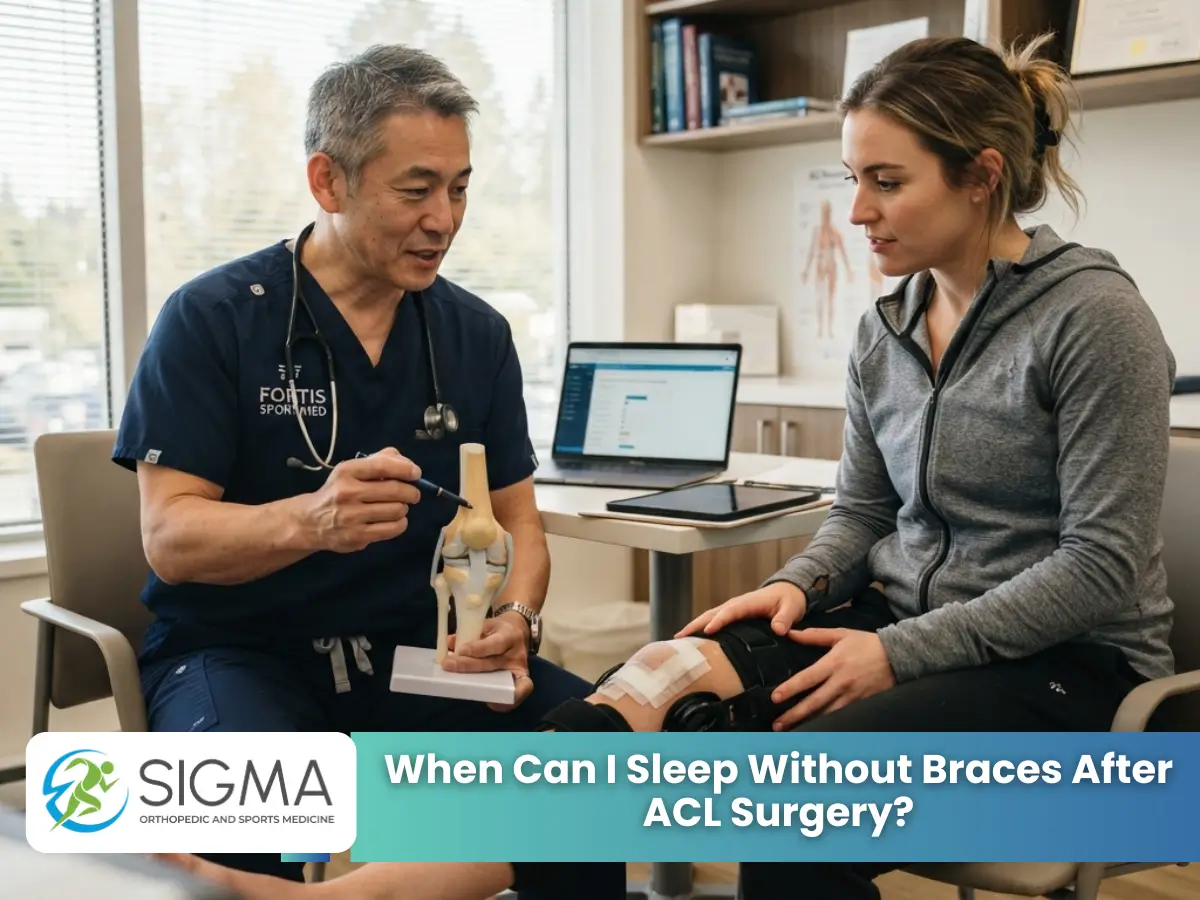
One of the most common questions patients ask is when can I sleep without brace after ACL surgery. The answer depends on your surgeon’s protocol, the type of ACL reconstruction you had, and whether additional procedures—such as a meniscus repair—were performed.
Many patients wear the brace while sleeping for the first one to four weeks. Others may need it longer if their knee still lacks stability or if healing is progressing more slowly.
Never stop wearing the brace simply because it feels uncomfortable. Your surgeon will usually recommend removing it only after your knee has regained enough strength and control.
Your Surgeon May Allow You to Sleep Without the Brace When:
- Your knee is stable.
- Swelling has significantly improved.
- You can comfortably keep your leg straight.
- You’re no longer at risk of accidental twisting while asleep.
If you’re unsure, ask during your follow-up appointment instead of making the decision yourself.
How to Reduce Knee Stiffness After ACL Surgery
Morning stiffness is completely normal during the first several weeks. It usually improves as swelling decreases and your range of motion returns.
If you’re wondering how to reduce knee stiffness after ACL surgery, focus on consistency rather than intensity.
Helpful Ways to Reduce Stiffness
- Complete your prescribed physical therapy exercises.
- Walk short distances as recommended.
- Ice the knee after exercise if swelling increases.
- Elevate your leg several times a day.
- Stay hydrated and avoid sitting for long periods.
Gentle movement throughout the day is often more effective than trying to stretch aggressively after waking up.
What If You Normally Sleep on Your Side or Stomach?
Changing your sleeping habits isn’t easy, especially if you’ve spent years sleeping the same way.
If you’re naturally a side sleeper, try placing pillows around your body to prevent rolling over during the night. Many patients find that a body pillow provides extra support and makes sleeping on their back more comfortable.
Stomach sleepers usually have the hardest adjustment. Fortunately, this restriction is temporary. As your recovery progresses and your surgeon clears you for more movement, you’ll gradually be able to return to your preferred sleeping position.
How to Sleep With a Torn ACL Before Surgery
Patients waiting for surgery often ask how to sleep with a torn ACL because instability and swelling can make nighttime uncomfortable.
Although the ligament hasn’t been reconstructed yet, many of the same principles apply.
Before Surgery, Try To:
- Sleep on your back whenever possible.
- Elevate the injured leg.
- Use ice before bedtime if swelling is present.
- Wear a brace if your healthcare provider recommends one.
- Avoid twisting the knee while getting into bed.
These steps won’t heal the ACL tear, but they can make sleeping much more comfortable until surgery.
Is Sleeping After ACL Surgery Similar to Knee Replacement Recovery?
There are similarities, but the goals aren’t exactly the same.
Patients often compare recovery advice with sleeping position after knee replacement, since both procedures involve pain, swelling, and limited mobility.
Both surgeries benefit from:
- Sleeping on the back early in recovery.
- Elevating the leg correctly.
- Using pillows for support.
- Managing swelling before bedtime.
However, ACL reconstruction places greater emphasis on protecting the healing ligament, while knee replacement recovery focuses more on restoring joint mobility and reducing postoperative swelling.
Mistakes That Can Make Sleeping More Difficult
Small habits can make a big difference during recovery.
Avoid these common mistakes:
- Sleeping with a pillow directly under your knee all night.
- Skipping pain medication recommended by your surgeon.
- Sleeping without your brace before you’re cleared.
- Ignoring increasing swelling or severe pain.
- Sleeping in a position that twists your knee.
Correcting these habits can improve comfort and help prevent unnecessary setbacks.
When Should You Contact Your Surgeon?
Some discomfort is expected, but certain symptoms shouldn’t be ignored.
Contact your healthcare provider if you notice:
- Severe pain that isn’t improving.
- Rapidly increasing swelling.
- Fever or chills.
- Redness or drainage around the incision.
- Calf pain, warmth, or unusual swelling.
- Difficulty moving your foot or toes.
These symptoms could indicate complications that require prompt medical attention.
The Centers for Disease Control and Prevention (CDC) provides information about recognizing signs of surgical site infections, while the National Institute of Arthritis and Musculoskeletal and Skin Diseases (NIAMS) offers educational resources on ligament injuries and recovery.
Recovery Takes Patience – But Better Sleep Makes a Difference

Sleeping comfortably after ACL surgery won’t happen overnight, and that’s completely normal. The first couple of weeks are usually the most challenging, but pain, swelling, and stiffness gradually improve as your knee heals.
Focus on protecting your knee, following your rehabilitation plan, and giving your body the rest it needs. Better sleep supports tissue repair, improves energy levels, and helps you stay consistent with physical therapy.
At SIGMA Orthopedics and Sports Medicine, recovery is viewed as more than healing a ligament. A successful outcome comes from combining expert surgical care, personalized rehabilitation, and patient education so you can safely return to the activities you enjoy. Following the right sleep habits is one small step that can make a meaningful difference throughout your recovery.
Frequently Asked Questions
What is the best sleeping position after ACL surgery?
For most patients, sleeping on your back with your leg elevated on pillows placed under the calf and ankle is the safest option during the early recovery period.
When can I sleep without my brace after ACL surgery?
This varies by patient and surgical technique. Many people can stop wearing the brace after one to four weeks, but only after their surgeon confirms it’s safe.
Can I sleep on my side after ACL surgery?
Yes, once your surgeon approves it. Use a pillow between your knees to support the operated leg and avoid twisting the knee.
Is knee stiffness normal in the morning?
Mild stiffness is common during recovery and usually improves with gentle movement, physical therapy, and reduced swelling.
Can I sleep with a pillow under my knee?
It’s better to place pillows under your calf and ankle instead. Keeping a pillow directly under your knee for long periods may encourage the knee to remain bent, which can contribute to stiffness.
How long does it take to sleep comfortably again?
Many patients notice gradual improvement within two to six weeks. Recovery varies based on the surgical procedure, pain levels, rehabilitation progress, and individual healing.