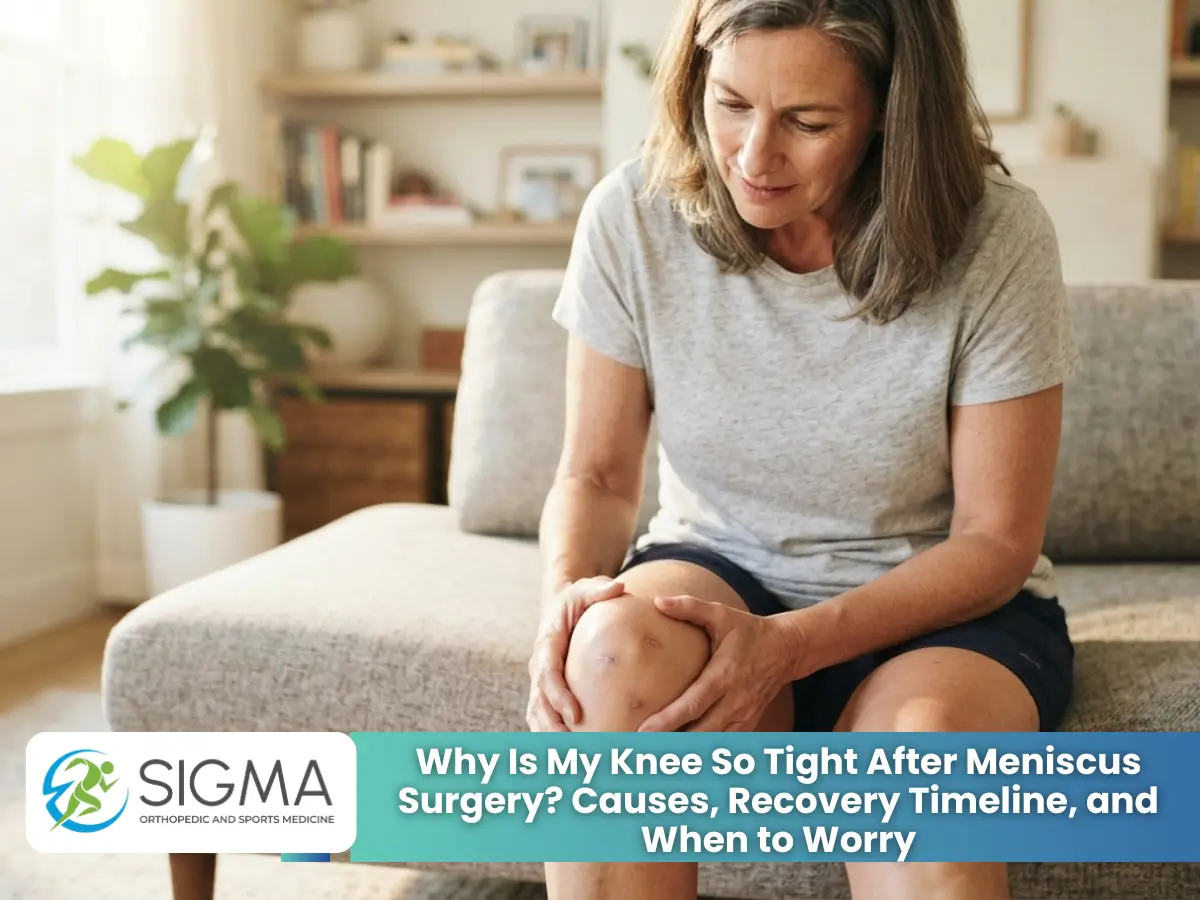
If you’re asking why is my knee so tight after meniscus surgery, the short answer is that tightness is usually a normal part of healing. Swelling, inflammation, scar tissue formation, and temporary muscle weakness can all make your knee feel stiff or restricted, especially during the first few weeks after surgery. However, if the tightness continues to worsen, limits your ability to regain motion, or is accompanied by severe pain, redness, or fever, it deserves prompt medical attention.
Every patient’s recovery is different. Some people regain comfortable movement within a few weeks, while others experience stiffness for several months depending on the type of surgery, the extent of the meniscus damage, and how consistently they follow rehabilitation. Understanding what causes knee tightness and knowing when it’s expected versus when it’s a warning sign can help you recover more confidently.
Why Your Knee Feels Tight After Surgery
A tight knee is one of the most common concerns following meniscus surgery. Many patients describe it as feeling like a tight band wrapped around the knee or as though the joint simply won’t bend or straighten normally. That sensation rarely comes from a single cause. Instead, several normal healing processes happen at the same time.
Post-Surgical Swelling Creates Pressure Inside the Joint
The most common reason for tightness is swelling. During surgery, even minimally invasive arthroscopic procedures create small amounts of tissue trauma. Your immune system responds by sending extra blood flow and inflammatory cells into the joint to begin healing.
As fluid builds inside the knee capsule, the joint becomes less flexible. This increased pressure makes bending and straightening uncomfortable and often creates the sensation that the knee is “too full” to move normally.
The American Academy of Orthopaedic Surgeons (AAOS) explains that swelling is an expected part of recovery after arthroscopic knee procedures and gradually improves as healing progresses.
Inflammation Protects the Healing Tissue
Inflammation is often viewed negatively, but it’s actually an essential stage of recovery. It helps repair damaged tissue and protects the surgical area from further injury.
During this phase, surrounding muscles naturally tighten to stabilize the joint. This protective response is helpful initially but can also contribute to stiffness if it continues longer than necessary.
Muscles Become Weak Surprisingly Fast
Even a short period of reduced activity can weaken the quadriceps and hamstring muscles.
The quadriceps play a major role in controlling knee motion. When they aren’t activating normally after surgery, patients often notice that the knee feels unstable, heavy, or unusually tight. This muscular weakness can persist even after swelling starts improving.
A structured rehabilitation program focuses heavily on restoring muscle activation because stronger muscles improve both movement and joint support.
Scar Tissue Is Part of Healing
Every surgical incision produces scar tissue. Normally, these collagen fibers remodel over time and become flexible.
However, when scar tissue develops excessively or the knee isn’t moved enough during rehabilitation, it may restrict motion. This can create a pulling sensation when trying to fully bend or straighten the leg.
Controlled movement and physical therapy help guide healthy scar tissue formation without overstressing the healing meniscus.
Is Knee Tightness Normal After Meniscus Surgery?
In most cases, yes.
Feeling tightness during the first several weeks is expected regardless of whether you had a meniscus repair or a partial meniscectomy. The intensity and duration simply vary from person to person.
A partial meniscectomy generally allows faster recovery because damaged tissue is removed rather than repaired. Patients often regain mobility relatively quickly.
A meniscus repair, however, requires the tissue to heal back together. Because the repaired cartilage needs protection, weight-bearing and knee motion may be limited during the early weeks. As a result, stiffness can last longer even when recovery is progressing exactly as planned.
This is one reason surgeons customize rehabilitation protocols instead of using a single recovery timeline for every patient.
How Long Does Knee Tightness Usually Last?
Although everyone heals differently, most patients notice a gradual pattern rather than a sudden improvement.
During the first two weeks, swelling is usually at its highest. The knee often feels stiff first thing in the morning or after sitting for extended periods.
Between weeks three and six, inflammation gradually decreases. Range of motion begins improving, although some tightness often remains during exercise or after increased activity.
By two to three months, many patients regain much of their normal flexibility. Mild stiffness after long walks, climbing stairs, or strenuous activity can still occur, particularly following a meniscus repair.
Some individuals continue noticing occasional tightness beyond three months. This does not automatically indicate something is wrong, especially if motion and strength continue improving over time.
Why Does the Knee Feel Tight Even When Pain Is Gone?

Many patients become confused when pain improves but stiffness remains.
Pain and mobility recover on different timelines.
The inflammation responsible for pain often settles before muscles fully regain strength or before swelling completely resolves. Small amounts of remaining fluid inside the joint can still limit movement even though discomfort is minimal.
Likewise, muscles that have weakened during recovery require weeks of rebuilding before they provide normal support again.
This explains why someone may feel relatively comfortable walking but still struggle to squat, kneel, or fully straighten the knee.
What Activities Can Make Tightness Worse?
Recovery isn’t always linear. It’s common for symptoms to improve and then temporarily worsen after increasing activity.
Long periods of standing, extended walks, deep squats, kneeling, or returning to sports too early may all increase swelling and temporarily recreate the feeling of tightness.
Even sitting with the knee bent for several hours during travel or office work can make the joint feel stiff afterward.
This doesn’t necessarily mean you’ve damaged the repair. More often, it’s your knee reminding you that healing is still underway.
Alternating activity with periods of rest, icing the joint after exercise, and following your rehabilitation plan can help minimize these flare-ups.
When Should You Be Concerned About Persistent Tightness?
Although tightness is common, certain symptoms suggest that your surgeon should evaluate your recovery.
If swelling continues increasing instead of improving, if the knee becomes warm and noticeably red, or if you develop fever or drainage from the surgical incisions, these could indicate infection and require urgent medical care.
You should also contact your orthopedic specialist if you suddenly lose knee motion after previously making good progress, hear a painful pop followed by instability, or experience significant calf swelling and tenderness.
The Centers for Disease Control and Prevention (CDC) provides guidance on recognizing signs of surgical site infections, while the National Institute of Arthritis and Musculoskeletal and Skin Diseases (NIAMS) offers reliable information about joint health and recovery after orthopedic conditions.
Another concern is persistent stiffness that doesn’t improve despite consistent rehabilitation. In rare cases, excessive scar tissue known as arthrofibrosis can significantly limit motion and may require additional treatment if conservative therapy isn’t successful.
Can You Bend Your Knee After Meniscus Surgery?
One of the most common questions patients ask is, can you bend your knee after meniscus surgery? The answer depends largely on the type of procedure you had.
After a partial meniscectomy, patients are usually encouraged to begin gentle range-of-motion exercises relatively soon because there is no repaired tissue that needs prolonged protection.
Following a meniscus repair, bending may be intentionally restricted for several weeks. Your surgeon may set specific limits such as allowing only 90 degrees of knee flexion to protect the healing cartilage. These restrictions are temporary and are designed to improve the long-term success of the repair rather than delay recovery unnecessarily.
Trying to force additional motion before your surgeon recommends it can place unnecessary stress on the repaired meniscus. Likewise, avoiding movement altogether may increase stiffness and slow rehabilitation. The goal is gradual, guided progress under the direction of your orthopedic team.
When Can You Climb Stairs After Meniscus Surgery?
Another common concern is when can I climb stairs after meniscus surgery. The answer depends on the procedure you had, your strength, and your surgeon’s rehabilitation protocol.
After a partial meniscectomy, many patients can begin climbing stairs within one to three weeks, provided they have good balance, minimal swelling, and adequate quadriceps strength. They may still need to take one step at a time or use a handrail while rebuilding confidence.
Recovery is generally slower after a meniscus repair because the repaired tissue needs time to heal. Climbing stairs is often delayed for several weeks, especially if weight-bearing restrictions are in place. Even once stair climbing is allowed, physical therapists usually recommend focusing on proper movement mechanics rather than speed.
Going downstairs is often more difficult than going up because it places greater stress on the knee and requires better muscle control. If descending stairs causes pain or your knee feels unstable, it’s usually a sign that more strength and rehabilitation are needed before returning to normal activities.
The safest approach is to follow your surgeon’s milestones instead of comparing your recovery with someone else’s. Every meniscus injury is unique, and factors such as age, cartilage health, and additional ligament injuries can influence recovery time.
Knee Swelling Three Months After Surgery: Is It Normal?
Many patients worry about knee swelling 3 months after meniscus surgery, especially when they expected to feel completely recovered by that point.
In many cases, mild swelling at three months is still considered normal, particularly after increased activity. Your knee is continuing to remodel internally even though the skin incisions have healed. Long walks, workouts, prolonged standing, or returning to recreational sports can temporarily increase fluid inside the joint.
Swelling that gradually improves after rest and ice is usually less concerning than swelling that steadily worsens.
However, persistent swelling deserves evaluation if it is accompanied by increasing pain, warmth, redness, fever, or significant loss of motion. These symptoms may indicate complications such as infection, recurrent meniscus injury, cartilage damage, or ongoing inflammation that requires medical assessment.
Patients sometimes assume that healing ends when physical therapy finishes, but recovery inside the joint often continues for several more months.
Why Does My Knee Still Hurt One Year Later?
Experiencing knee pain 1 year after meniscus surgery can be frustrating, but it doesn’t always mean the operation failed.
Several factors may contribute to lingering discomfort.
Arthritis May Continue to Progress
Meniscus surgery addresses damaged cartilage, but it cannot reverse existing arthritis. If arthritis was already developing before surgery, symptoms may gradually return over time as the joint continues to age.
Muscle Weakness Can Persist
Many patients stop strengthening exercises once pain improves. Unfortunately, lingering weakness in the quadriceps, hamstrings, hips, or core can continue placing abnormal stress on the knee, leading to discomfort during daily activities.
A New Injury Can Occur
Returning to sports or physically demanding work increases the possibility of another meniscus tear or injury to nearby cartilage and ligaments. New symptoms should never be assumed to be part of the original recovery.
Scar Tissue or Joint Irritation
Occasionally, residual scar tissue or chronic inflammation contributes to ongoing stiffness and discomfort long after surgery.
If pain continues for a year or suddenly worsens after previously improving, your orthopedic surgeon may recommend updated imaging, a physical examination, or additional treatment options to identify the underlying cause.
Understanding the Long-Term Side Effects of Meniscus Surgery
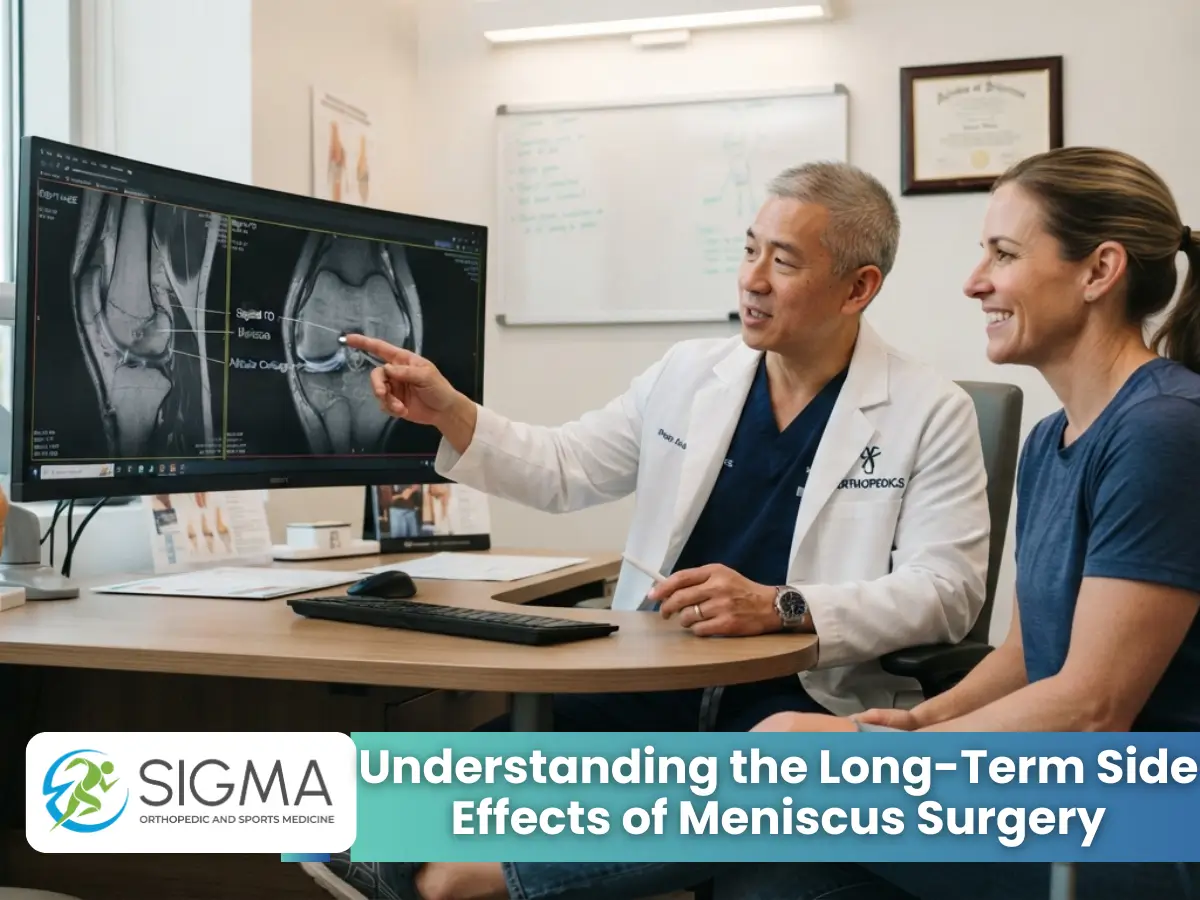
Patients also ask about the long-term side effects of meniscus surgery before deciding whether surgery is worthwhile.
Fortunately, most people recover well and return to their desired activities. However, every surgical procedure carries potential long-term considerations.
The amount of remaining meniscus plays an important role in protecting the knee. The meniscus acts as a shock absorber, distributing force across the joint during walking, running, and jumping. Removing a significant portion may increase pressure on the cartilage over time.
Potential long-term effects may include occasional stiffness after strenuous activity, intermittent swelling following heavy exercise, reduced shock absorption, and an increased likelihood of developing knee osteoarthritis years later, particularly if large portions of the meniscus were removed.
These risks don’t guarantee future problems. Maintaining a healthy body weight, strengthening the surrounding muscles, and staying physically active can significantly improve long-term joint health.
Research supported by the National Institutes of Health shows that preserving as much healthy meniscus tissue as possible generally provides better long-term outcomes than removing larger sections whenever repair is feasible.
What Are the Side Effects of Meniscus Removal?
Understanding the side effects of meniscus removal helps set realistic expectations after surgery.
A partial meniscectomy removes only the damaged portion of the meniscus while preserving as much healthy tissue as possible. This often provides faster recovery than a repair but changes how the knee distributes force.
Some patients notice occasional soreness after prolonged activity, temporary swelling after exercise, or mild stiffness in cold weather. Others experience no ongoing symptoms at all.
When larger portions of the meniscus must be removed, the remaining cartilage bears greater stress during movement. Over many years, this may contribute to cartilage wear and increase the likelihood of degenerative joint changes.
This is why orthopedic surgeons increasingly prioritize meniscus preservation whenever the tear pattern and tissue quality allow successful repair.
How to Reduce Knee Tightness During Recovery
While you can’t eliminate tightness overnight, several evidence-based strategies can help improve comfort and mobility throughout recovery.
The first priority is following your rehabilitation program consistently. Gentle range-of-motion exercises performed under the guidance of a physical therapist help prevent excessive stiffness without placing unnecessary stress on healing tissue.
Managing swelling is equally important. Applying ice after exercise, elevating the leg above heart level, and using compression when recommended by your healthcare provider can reduce joint inflammation.
Strengthening exercises should focus not only on the quadriceps but also the hamstrings, gluteal muscles, and core. A stronger lower extremity improves knee stability and reduces abnormal loading during walking and stair climbing.
Avoid dramatically increasing activity levels from one week to the next. Recovery tends to progress more smoothly when exercise intensity increases gradually instead of in large jumps.
Nutrition, adequate hydration, quality sleep, and avoiding tobacco products also support the body’s natural healing process.
Recovery Milestones: What You Can Generally Expect
Although every rehabilitation plan differs, most patients follow a similar pattern.
The first few weeks are primarily focused on controlling swelling, protecting the surgical repair, and restoring gentle knee movement.
By six to twelve weeks, strength, balance, and walking mechanics continue improving. Many patients begin returning to low-impact exercise during this stage.
Several months later, higher-level activities such as running, recreational sports, or physically demanding work may gradually resume, depending on surgical findings and individual progress.
It’s important to remember that recovery isn’t measured only by time. Strength, stability, range of motion, and overall knee function are often better indicators than the calendar alone.
When Should You Contact Your Surgeon?
While temporary stiffness is expected, some situations should never be ignored.
Contact your orthopedic surgeon promptly if you experience severe or worsening swelling, inability to bear weight after previously walking normally, increasing redness around the incision, drainage, fever, calf pain, significant instability, or sudden locking of the knee.
These symptoms don’t always indicate a serious complication, but they deserve professional evaluation to prevent delays in treatment.
The MedlinePlus Medical Encyclopedia also recommends seeking medical care for persistent swelling, worsening pain, or signs of infection following orthopedic procedures, as early treatment often leads to better outcomes.
Final Thoughts
Feeling tightness after meniscus surgery can be unsettling, but in most cases it reflects the normal healing process rather than a failed procedure. Swelling, inflammation, temporary muscle weakness, and scar tissue formation all contribute to the sensation of stiffness while your knee recovers.
The key is to focus on gradual improvement instead of expecting daily progress. Consistent rehabilitation, patience, and regular communication with your orthopedic surgeon usually lead to steady gains in mobility and function over time.
If your recovery seems to stall or symptoms become progressively worse instead of better, don’t ignore them. Early evaluation can identify complications before they become more difficult to treat.
At SIGMA Orthopedics and Sports Medicine, we believe successful meniscus recovery extends far beyond the operating room. Our patient-centered approach combines advanced orthopedic care with personalized rehabilitation guidance to help patients regain confidence, restore mobility, and safely return to the activities they enjoy.
Frequently Asked Questions
Is it normal for my knee to feel tight months after meniscus surgery?
Yes. Mild tightness can last for several months, especially after increased activity. As long as your range of motion and strength continue improving and swelling gradually decreases, occasional stiffness is often part of the normal healing process.
Can scar tissue cause knee tightness?
Yes. Scar tissue naturally develops during healing, but excessive scar tissue can restrict movement and create persistent stiffness. Early rehabilitation and guided range-of-motion exercises help reduce this risk.
Should I keep exercising if my knee feels tight?
In most cases, yes. Gentle, surgeon-approved exercises usually improve mobility. However, increasing pain, swelling, or instability during exercise should be discussed with your healthcare provider.
Is swelling normal after physical therapy?
Mild swelling following rehabilitation sessions or increased activity is common. It typically improves with rest, ice, compression, and elevation. Persistent or worsening swelling should be evaluated by your orthopedic surgeon.
Can weather make my knee feel tighter?
Some patients report increased stiffness during cold or damp weather after knee surgery. While research is mixed, changes in temperature may temporarily affect joint comfort in some individuals.
Disclaimer: This content is for informational purposes only and does not constitute medical advice. Always seek the advice of a qualified healthcare provider with any questions you may have regarding a medical condition or before starting any new medication. Never disregard professional medical advice or delay in seeking it because of something you have read in this blog.