
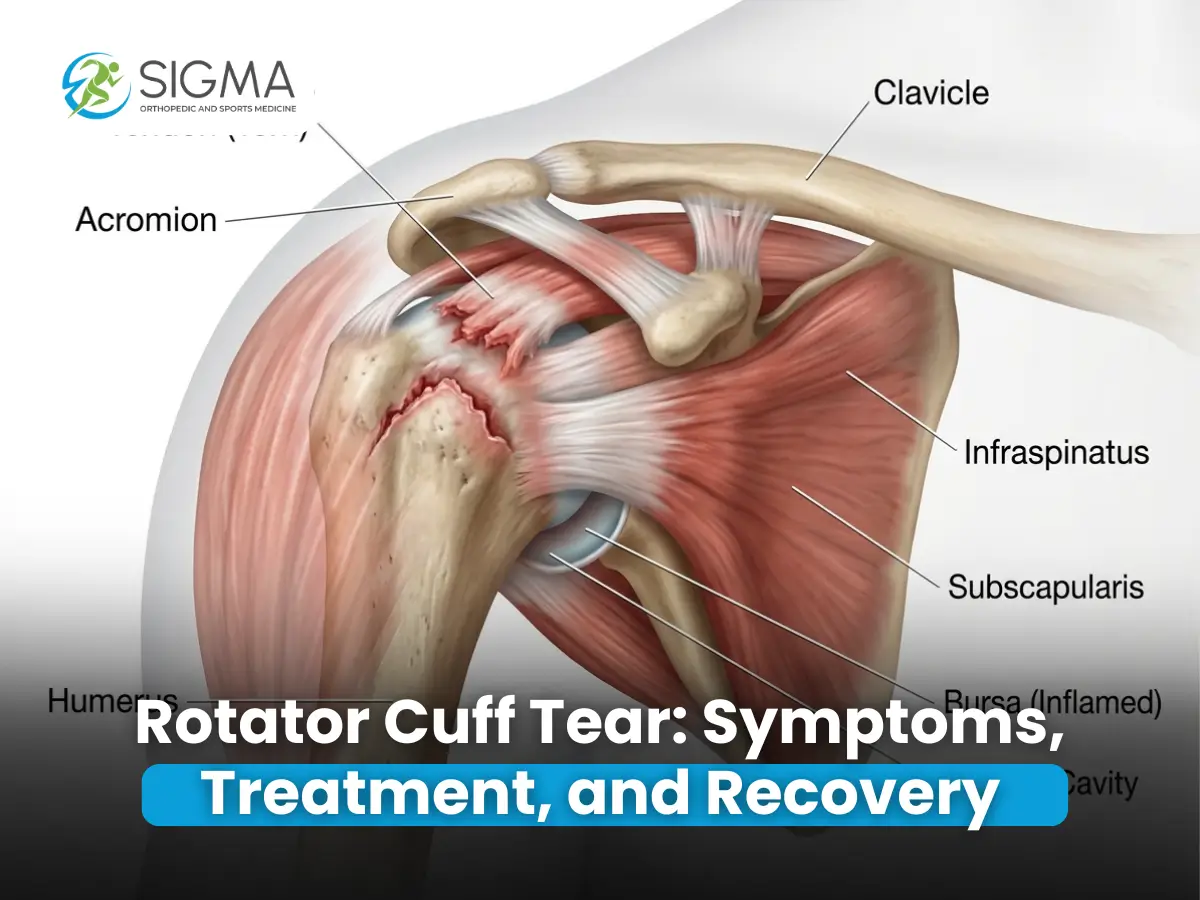
ur arm. It can happen suddenly after an injury or develop slowly over time, and the right treatment depends on how severe the tear is and how long it has been present.
The most important thing to understand early is this: not all rotator cuff tears require surgery, but delaying the wrong cases can make recovery harder and sometimes irreversible. Knowing how to recognize symptoms and act at the right time plays a major role in your outcome.
At Sigma Orthopedics, shoulder conditions like rotator cuff injuries are among the most commonly treated — with a focus on accurate diagnosis and individualized care plans that fit each patient’s lifestyle and goals.
What Is a Rotator Cuff Tear?
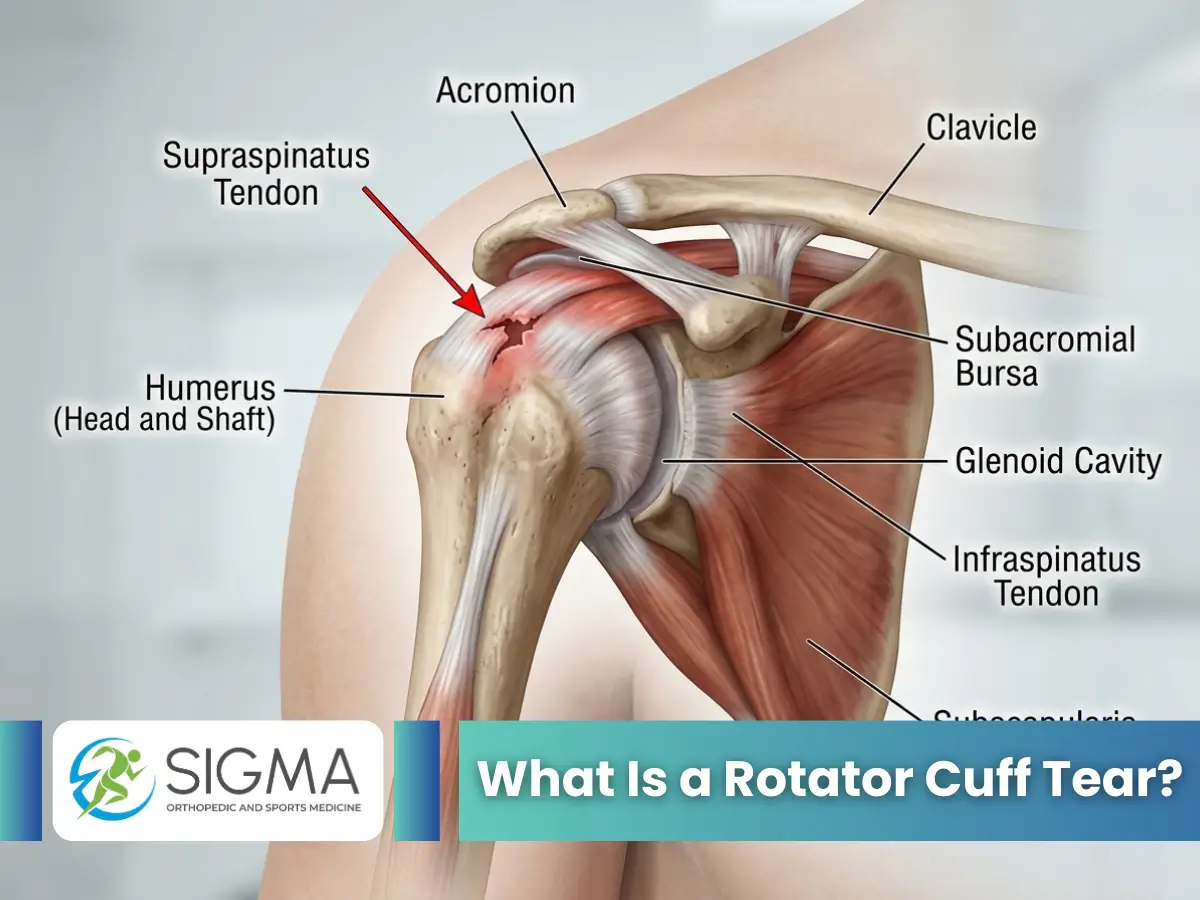
The rotator cuff is made up of four muscles and their tendons that stabilize the shoulder joint and allow controlled arm movement. These tendons keep the head of your upper arm bone centered in the socket, especially during lifting and rotation.
A tear occurs when one of these tendons becomes damaged or detached from the bone. This can range from a partial tear, where the tendon is still attached but frayed, to a full-thickness tear, where it is completely separated.
What many people don’t realize is how this affects movement mechanics. When the tendon is compromised, the shoulder no longer moves smoothly. Other muscles begin to compensate, which increases stress across the joint. Over time, this imbalance can lead to additional problems, including stiffness, inflammation, and even damage to surrounding structures.
According to the American Academy of Orthopaedic Surgeons (AAOS), rotator cuff tears are one of the most common causes of shoulder pain, especially in adults over 40. However, younger individuals who perform repetitive overhead activities are also at risk.
Symptoms of a Rotator Cuff Tear
The symptoms usually develop in patterns, and understanding those patterns can help identify how serious the injury might be.
Pain is typically the first sign. It often feels like a deep ache in the shoulder and may extend down the arm. This pain becomes more noticeable during overhead movements, reaching behind your back, or lifting objects.
Weakness is the second major symptom and often more important than pain when determining severity. If you struggle to lift your arm or notice a sudden loss of strength, this may indicate a more significant tear.
Night pain is a key indicator that is often underestimated. If the discomfort worsens when lying on the affected side or wakes you from sleep, it suggests ongoing inflammation and mechanical compression within the joint.
In more advanced cases, patients may experience clicking, grinding, or a catching sensation. These symptoms reflect changes in how the joint surfaces interact due to tendon instability.
A useful way to think about symptoms:
- Pain with movement → early or moderate issue
- Weakness + limited lifting → possible significant tear
- Night pain + weakness → higher likelihood of structural damage
Causes and Risk Factors
Rotator cuff tears develop in two main ways: sudden injury or gradual degeneration.
Acute tears happen quickly, often after a fall, lifting something heavy, or a sudden pulling motion. These injuries are more common in younger or active individuals. Athletes dealing with sports shoulder injuries from overhead sports like baseball or tennis are particularly vulnerable to this type of tear.
Degenerative tears are more common and develop over time. As tendons age, they lose blood supply and become more vulnerable to damage. Repetitive stress — especially overhead movements — gradually weakens the tendon until it begins to fray or tear.
One of the most overlooked factors is shoulder biomechanics. Poor posture, especially rounded shoulders from prolonged sitting, changes how force is distributed across the joint. This increases pressure on the rotator cuff tendons, accelerating wear.
Research from the National Institutes of Health (NIH) highlights how repeated microtrauma and reduced circulation contribute to tendon degeneration over time.
Additional risk factors include:
- Age over 40
- Repetitive overhead work or sports
- Smoking (which reduces tissue healing capacity)
- Muscle imbalances or poor shoulder stability
When to See a Doctor

Many people wait too long before seeking help, assuming the pain will resolve on its own. In some cases, this delay allows the tear to worsen.
You should seek evaluation if:
- Pain lasts more than a few weeks
- You notice weakness when lifting your arm
- Symptoms interfere with sleep
- Your range of motion is decreasing
If you’re unsure whether your symptoms require specialist care, this guide on when to see a shoulder surgeon for rotator cuff tears explains the key signs that shouldn’t be ignored.
Early diagnosis matters because small tears can grow larger over time. A tear that might have been treated with therapy alone could eventually require surgery if left untreated.
Doctors typically assess shoulder strength, movement, and pain patterns during a physical exam. Imaging tests such as MRI or ultrasound are then used to confirm the diagnosis and determine the size and type of tear.
Treatment Options (Non-Surgical and Surgical)
Treatment depends on the size of the tear, symptom severity, and how much it affects daily life.
Non-surgical treatment is often the first approach, especially for partial tears or mild symptoms. This includes physical therapy, which focuses on strengthening surrounding muscles and improving shoulder mechanics. The goal is to restore function even if the tendon itself is not fully healed.
Anti-inflammatory medications and activity modification are also used to reduce irritation and allow the shoulder to recover. In some cases, regenerative options such as PRP shoulder injections may be considered to support tendon healing without surgery.
However, surgery becomes more likely when:
- The tear is large or full-thickness
- Significant weakness is present
- Symptoms do not improve after several months of therapy
Understanding when orthopedic shoulder surgery is actually needed — and when it isn’t — is an important part of making the right call for your situation.
Rotator cuff repair aims to reattach the tendon to the bone. Most procedures today are performed arthroscopically, using small incisions and a camera to guide the repair.
According to the Hospital for Special Surgery, minimally invasive techniques have improved recovery times and reduced complications compared to traditional open surgery.
For a deeper look at how advanced techniques are applied in real cases, explore precision rotator cuff repair and how it restores shoulder strength.
It’s important to understand that surgery is not an instant fix. The success of treatment depends heavily on post-operative rehabilitation and patient commitment.
Recovery Timeline and Healing Process
Recovery depends on both the severity of the tear and the type of treatment.
With non-surgical care, improvement may begin within a few weeks, but full recovery often takes several months. Consistency with therapy is critical, as the shoulder relies on surrounding muscles to compensate for the damaged tendon.
After surgery, recovery follows a structured process. Initially, the arm is immobilized to protect the repair. Passive movement begins early to prevent stiffness, followed by gradual strengthening.
Most patients regain functional movement within four to six months, but full healing can take up to a year.
A critical factor often overlooked is tendon healing time. Tendons heal slowly because they have limited blood supply. Pushing too hard too soon can disrupt the repair, while progressing too slowly can lead to stiffness.
For a detailed breakdown of each recovery phase including what to expect week by week, this guide on rotator cuff tear recovery after surgery provides a clear timeline from immobilization through return to activity.
For patients who are active or play sports, there are also specific guides on returning to activities like golf after rotator cuff surgery — which covers the milestones to hit before resuming overhead or rotational movements safely.
What Happens If You Ignore It?
Ignoring a rotator cuff tear can lead to progressive damage.
Over time, the tear may enlarge, making it more difficult — or even impossible — to repair. The tendon can retract, and the associated muscle may shrink, reducing the chances of full recovery.
As the shoulder becomes unstable, abnormal movement patterns develop. This can lead to joint wear and eventually a condition known as rotator cuff arthropathy, a type of arthritis caused by long-term tendon dysfunction.
This is why early management is important, even if symptoms seem manageable at first.
Can It Heal Without Surgery?
The ability to heal without surgery depends on the type of tear.
Partial tears often improve with conservative treatment, especially when supported by targeted strengthening exercises.
Full-thickness tears do not reattach on their own. However, many people can still function well by strengthening surrounding muscles and adapting their activities.
The decision to proceed with surgery should be based on:
- Level of pain
- Degree of weakness
- Functional limitations
- Personal activity goals
This individualized approach leads to better outcomes than relying on imaging alone.
Prevention and Long-Term Care
Preventing shoulder injuries requires maintaining strength, flexibility, and proper movement patterns.
Strengthening the shoulder and upper back helps stabilize the joint and reduce stress on the tendons. Flexibility is equally important, as tight muscles can alter movement mechanics.
Posture plays a significant role. Keeping the shoulders aligned reduces unnecessary strain and improves overall joint function.
For those recovering or managing long-term shoulder health, these shoulder physio tips cover the key exercises and habits that support both faster recovery and lasting stability.
For those with previous injuries, continuing exercises even after recovery helps prevent recurrence and supports long-term shoulder health.
Final Thoughts
A rotator cuff tear can significantly impact daily life, but with the right approach, recovery is highly achievable.
The key is understanding the condition early, recognizing when symptoms indicate something more serious, and choosing the right treatment path. Whether managed with therapy or surgery, most people can return to normal activity with proper care and commitment.
Delaying treatment is the most common mistake — and often the most avoidable one.
If you’re experiencing shoulder pain or weakness and want an accurate diagnosis from a specialist, the team at Sigma Orthopedics provides comprehensive shoulder care, from initial evaluation through full recovery. Getting the right assessment early can make all the difference in your outcome.
FAQ
How do I know if I have a rotator cuff tear or just a strain?
A strain usually improves within a few weeks, while a tear causes ongoing pain, weakness, and difficulty lifting the arm. Imaging is often needed for confirmation.
How long does recovery take?
Non-surgical recovery may take a few months, while surgical recovery typically ranges from 4 to 12 months depending on severity.
Is surgery always required?
No, many tears can be managed without surgery, especially if symptoms are mild and function is preserved.
Can exercise make it worse?
Yes, improper exercises can increase stress on the tendon. Guided physical therapy is recommended.
What are the risks of delaying treatment?
The tear can enlarge, muscles can weaken, and long-term joint damage may occur.
Will I regain full strength after treatment?
Most people regain near-normal strength, especially with proper rehabilitation, though results vary by severity.
Can a rotator cuff tear come back?
Yes, especially if the shoulder is overused or not properly strengthened after recovery.