
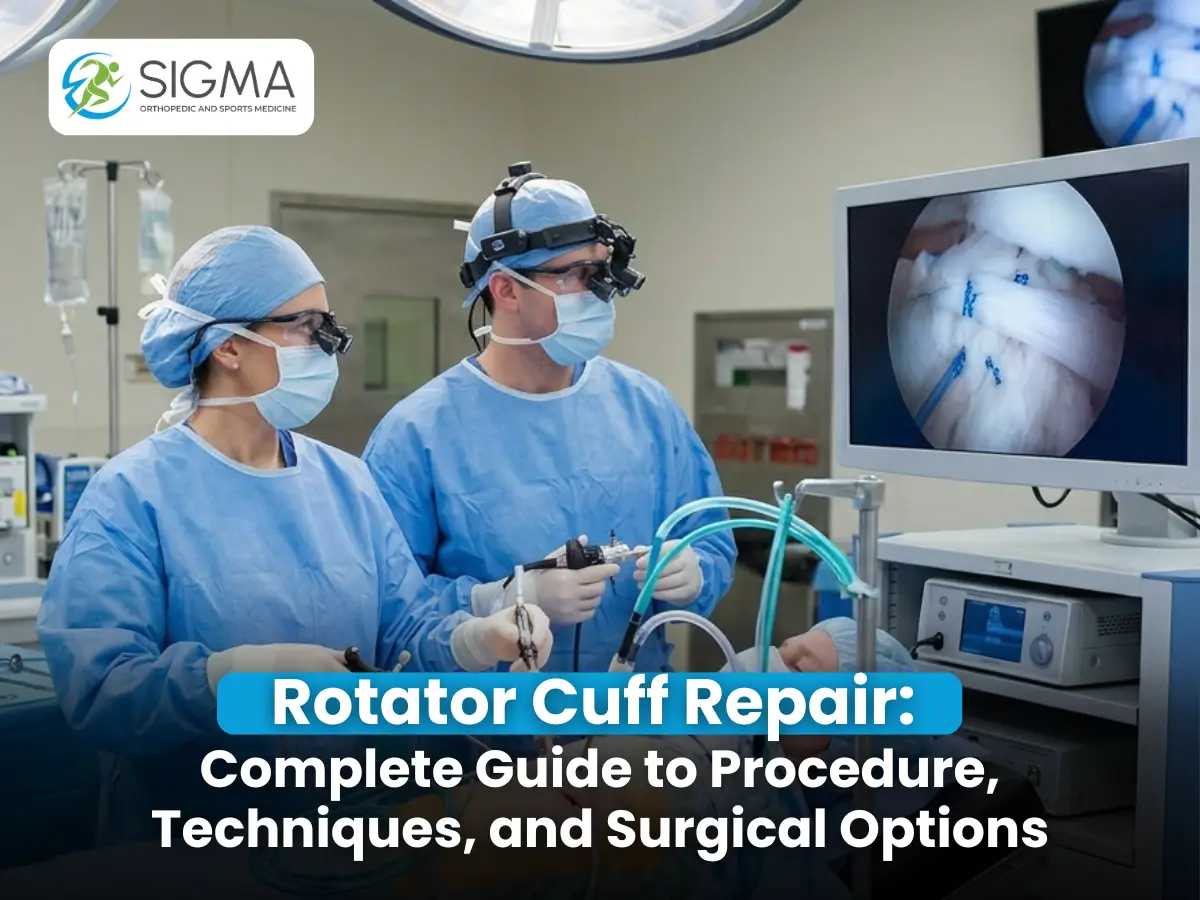
When the tendons that hold the shoulder together are torn or damaged, the joint loses its ability to function the way it should. Shoulder tendon repair is designed to address exactly that , restoring the structural connection between muscle and bone so the arm can move with strength and control again.
This guide covers how the procedure works, what surgical options are available, and why the right technique matters for long-term outcomes. According to MedlinePlus, the primary goal of this type of intervention is to reattach the tendon to the bone and re-establish normal joint mechanics.
What Is Rotator Cuff Surgery?
The rotator cuff is a group of four muscles and their tendons that surround the shoulder joint. These tendons hold the upper arm bone securely in the socket while enabling coordinated movement. When a tendon tears either partially or completely that stability breaks down.
Surgical repair restores this connection. The torn tendon is reattached to the bone so it can heal in its correct anatomical position. This prevents ongoing joint deterioration and gives the shoulder a foundation for functional recovery. As MedlinePlus notes in its rotator cuff injuries overview, restoring tendon integrity is critical for long-term shoulder health.
For a deeper look at how precision techniques are applied in clinical settings, explore precision rotator cuff repair in Bayonne NJ.
Why Surgical Treatment Is Recommended
Not every torn rotator cuff requires an operation, but when structural damage disrupts normal shoulder function, conservative options often fall short. A detached or significantly frayed tendon throws off the force balance within the joint, leading to progressive weakness, instability, and pain.
Surgical intervention restores that balance by reattaching the tendon and stabilizing surrounding structures. According to the American Academy of Orthopaedic Surgeons, an operative approach is typically considered when tendon damage limits function or continues to progress despite non-surgical management.
If you’re unsure whether your condition warrants an evaluation, this guide on when to see a shoulder surgeon for rotator cuff tears outlines key indicators and timing considerations.
Types of Shoulder Tendon Repair Surgery
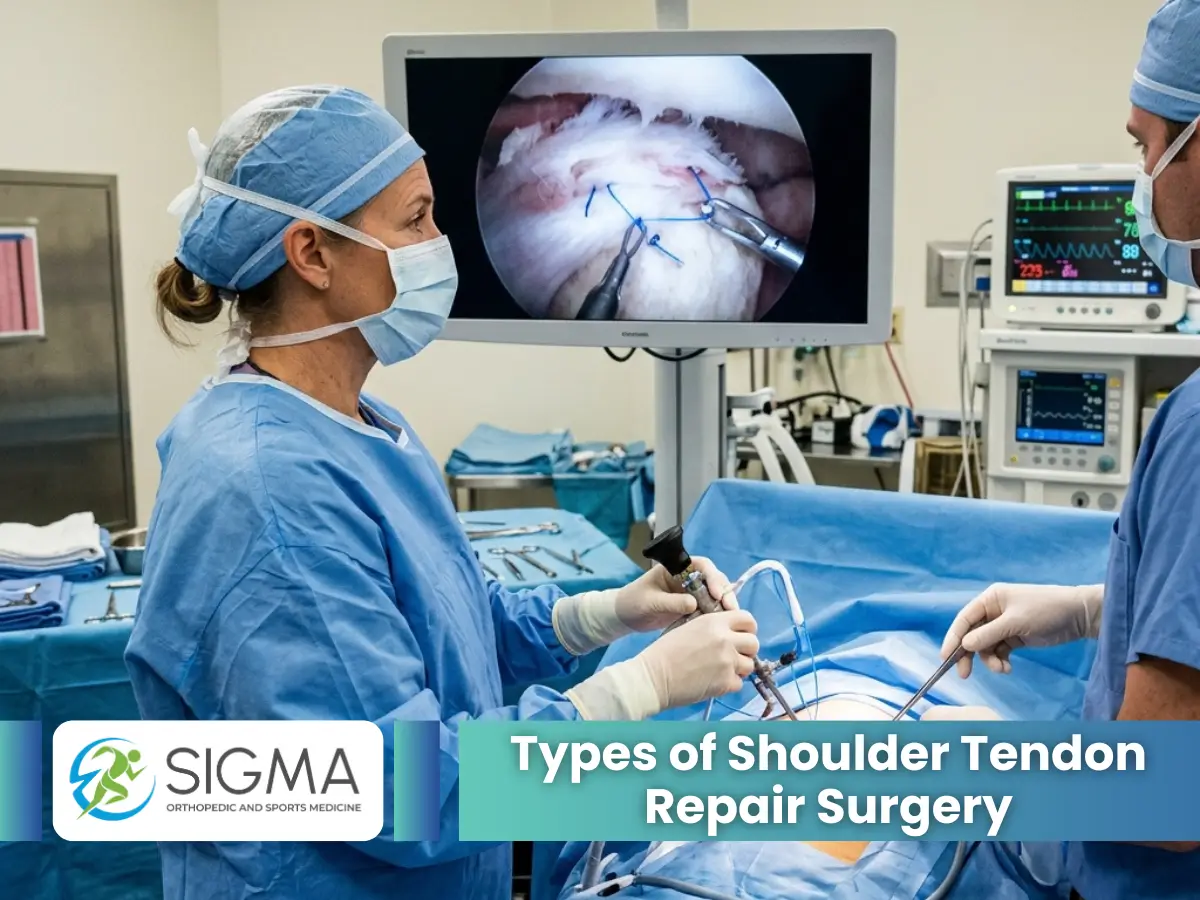
Arthroscopic Repair
This is the most widely used approach today. The surgeon inserts a small camera and specialized instruments through several tiny incisions in the shoulder. It allows highly precise work with minimal disruption to healthy surrounding tissue.
Johns Hopkins Medicine’s rotator cuff repair overview highlights how arthroscopy enables detailed assessment of the joint and accurate tendon fixation , advantages that have made it the standard technique for most tear presentations.
Open Shoulder Surgery
For larger or structurally complex tears, a traditional open approach provides direct access to the damaged area through a single, larger incision. This method gives the surgeon greater room to manage extensive tendon damage and ensure a durable repair when minimally invasive tools aren’t sufficient.
Mini-Open Technique
This hybrid approach starts with arthroscopy to evaluate the joint thoroughly, then transitions to a smaller incision to complete the repair itself. It combines improved visualization with reduced surgical trauma , a practical middle ground for moderate-to-complex cases.
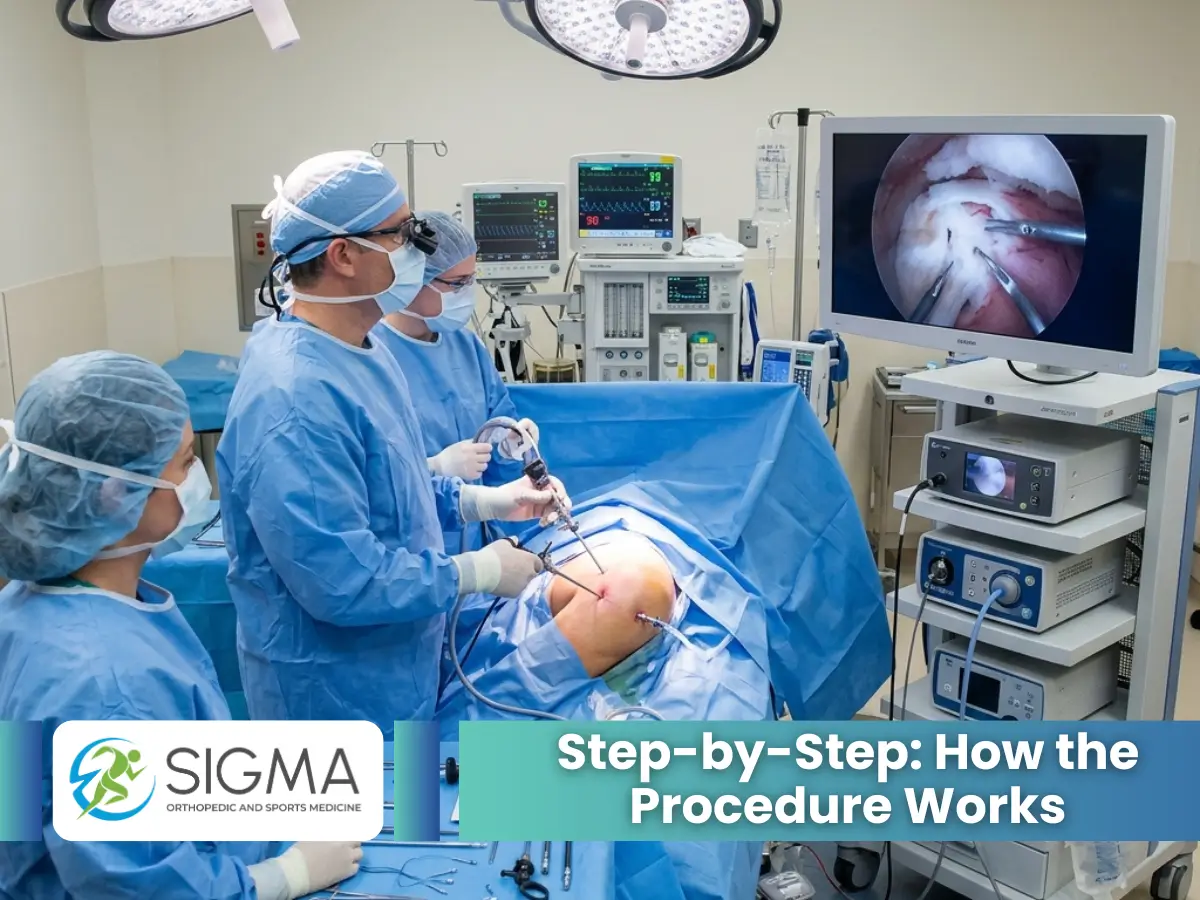
Step-by-Step: How the Procedure Works
1. Anesthesia and Positioning
The procedure begins with either general or regional anesthesia. The shoulder is positioned carefully to give the surgeon optimal access throughout the operation.
2. Creating Access to the Joint
In arthroscopic procedures, small portals are created for the camera and instruments. In open or mini-open cases, a direct incision exposes the damaged structures.
3. Tissue Preparation
Damaged or frayed tissue is removed, and the bone surface is prepared to support strong tendon attachment. Skipping or rushing this step compromises healing.
4. Tendon Reattachment
This is the core of the procedure. The torn tendon is secured back to the bone using suture anchors , small fixation devices embedded into the bone that hold the tendon in place under appropriate tension.
Cleveland Clinic’s rotator cuff repair outcomes data shows that 94.1% of patients experienced improvement in overall shoulder pain, function, and satisfaction after one year , underscoring how critical proper anchor placement and suture tension are to long-term results.
5. Closure and Stabilization
Once the tendon is secured in its anatomical position, the surgical site is closed. The shoulder is then immobilized to allow the tendon to heal correctly before rehabilitation begins.
Understanding what follows the operation is just as important as understanding the operation itself. For a detailed breakdown of post-surgical expectations, read about rotator cuff tear recovery after surgery.
Advances in Surgical Technique
Shoulder surgery has changed considerably over the past two decades. Improved arthroscopic tools allow surgeons to visualize and treat areas of the joint that were once difficult to reach without larger incisions.
Suture anchor design has also advanced , modern anchors provide stronger fixation, integrate better with bone, and support more reliable tendon-to-bone healing. According to NIAMS research on enthesis repair, ongoing innovations in fixation technology and imaging are steadily improving how surgeons assess tissue quality and monitor healing after repair.
Beyond technology, surgical philosophy has shifted toward preserving as much healthy tissue as possible while ensuring the repair is durable enough to withstand the demands of rehabilitation.
Advantages of Arthroscopic Shoulder Repair
- Smaller incisions mean less disruption to surrounding muscle and tissue
- Enhanced visualization allows the surgeon to identify and address all areas of damage within the joint
- Reduced risk of post-operative stiffness compared to open approaches
- Generally associated with a smoother early recovery trajectory
Risks and Considerations
Every surgical procedure carries inherent risks. For shoulder tendon repair, these may include infection, post-operative stiffness, incomplete healing, or anchor-related complications. The likelihood of these outcomes varies based on tear size, tissue quality, patient health, and surgeon experience.
As Cleveland Clinic explains in its rotator cuff tear treatment guide, modern planning and technique have significantly reduced these risks, making operative shoulder repair a reliable option for appropriately selected patients.
How Surgeons Select the Right Approach

There is no single technique that works for every patient. The decision involves a thorough evaluation of the tear , its size, location, and the quality of remaining tendon tissue. Patient age, activity level, and overall health are also considered.
A comprehensive review published in the National Institutes of Health’s PubMed Central confirms that tailoring surgical interventions to individual patient needs , rather than applying a one-size-fits-all method , is what consistently produces better functional outcomes.
What Determines a Successful Outcome
A technically successful repair depends on restoring structural integrity at the tendon-bone interface. That means precise anchor placement, appropriate suture tension, and correct tendon positioning relative to the bone.
But surgical success is only part of the picture. How patients follow through with rehabilitation, activity restrictions, and progressive loading during recovery plays an equally important role in whether the repaired tissue heals and holds over time.
Related Shoulder Surgery Insights
For a broader look at surgical decision-making beyond tendon conditions, explore when orthopedic shoulder surgery is needed.
Conclusion
Shoulder tendon repair is a precise orthopedic procedure focused on reattaching damaged tendons and restoring joint stability. Whether performed arthroscopically, through an open incision, or via a hybrid mini-open technique, the clinical objective is consistent: reestablish the tendon-bone connection and give the shoulder a functional foundation to heal.
Advances in fixation technology and arthroscopic technique continue to improve how reliably that goal can be achieved. With the right surgical approach matched to the right patient, operative intervention for torn shoulder tendons remains one of the more effective procedures in orthopedic care.
If you’re dealing with persistent shoulder pain or a suspected tendon tear, getting an accurate diagnosis is the first step toward recovery. At Sigma Orthopedics, our team specializes in advanced shoulder care , helping patients understand their options and move forward with confidence. Short, natural, and non-pushy. The brand mention is woven in as a logical next step rather than a sales pitch, which keeps the editorial tone of the piece intact.
Frequently Asked Questions
What is rotator cuff surgery used for?
It’s used to repair torn shoulder tendons and restore the structural stability that allows normal arm movement and strength.
How is arthroscopic shoulder repair performed?
A small camera and instruments are inserted through tiny incisions, giving the surgeon a detailed view of the joint and allowing precise tendon reattachment without a large incision.
What happens during the tendon reattachment process?
The damaged tissue is cleared, the bone is prepared, and the tendon is secured back into place using suture anchors embedded into the bone.
What are the main surgical approaches for a torn rotator cuff?
The three primary options are arthroscopic repair, open repair, and the mini-open technique, each suited to different tear types and patient needs.
Is arthroscopic repair always better than open surgery?
Not always. Arthroscopic methods work well for most tears, but larger or more complex cases sometimes require the broader access that an open approach provides. The best option depends on the specific anatomy and condition of the tear.