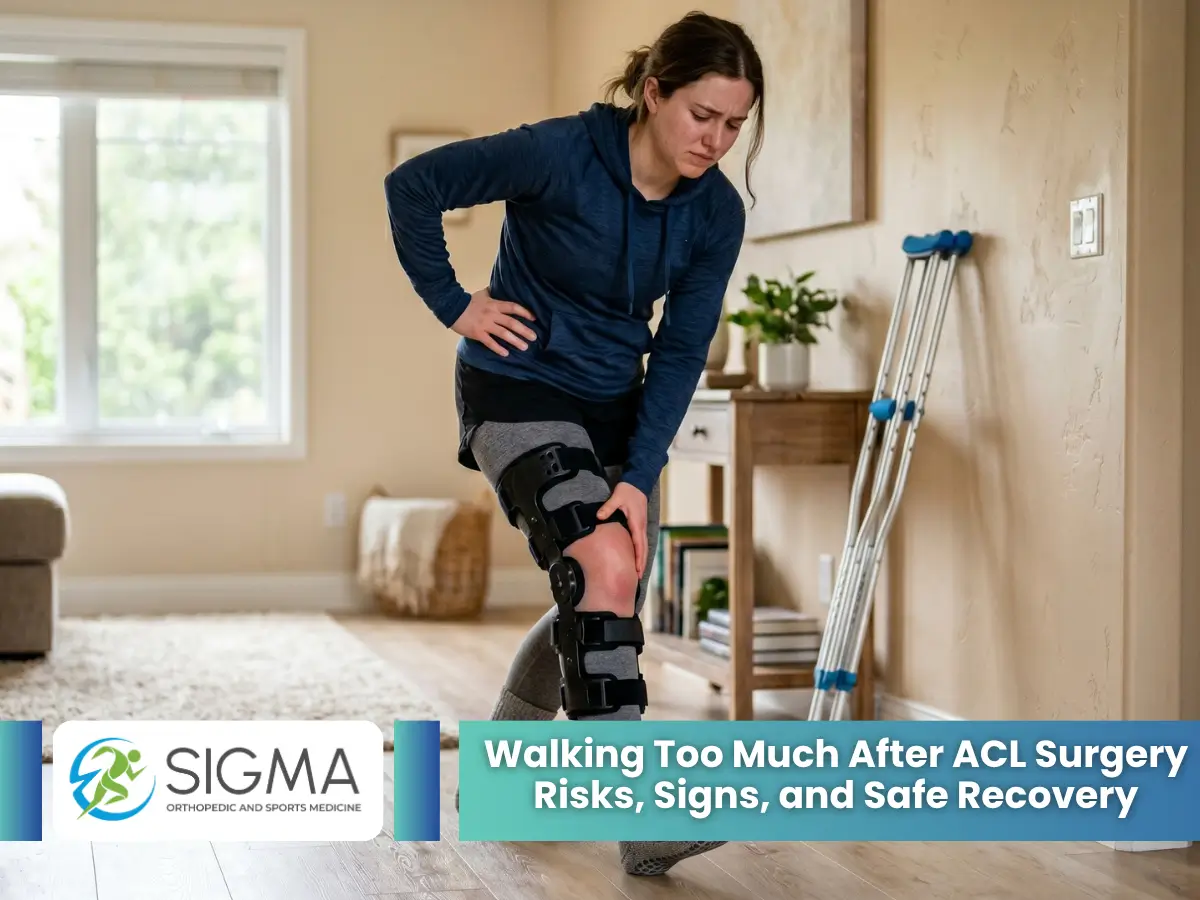
Walking too much after ACL surgery can slow your recovery by increasing swelling, pain, and stress on the healing graft. While gentle movement is an important part of rehabilitation, your knee needs a carefully controlled balance between activity and rest during the first few weeks after surgery.
Many patients feel better after the initial pain decreases and assume they can return to normal walking sooner than recommended. However, the reconstructed ligament goes through a complex healing process. Too much weight-bearing, excessive walking, or ignoring your surgeon’s guidelines may cause unnecessary inflammation and delay your return to sports and everyday activities.
Understanding what your knee can tolerate during each phase of recovery is essential. At Sigma Orthopedics & Sports Medicine, patients receive personalized recovery to protect the healing ACL while restoring strength, stability, and confidence.
Why Your ACL Needs Time to Heal After Surgery
The anterior cruciate ligament (ACL) is one of the major stabilizing ligaments in the knee. During reconstruction, a surgeon replaces the torn ligament with a tissue graft, which then must integrate with your body and develop a new blood supply.
According to the National Institutes of Health, ACL graft healing occurs gradually over several months as the tissue remodels and becomes stronger. Returning to high levels of activity before this process is complete may increase the risk of complications.
The first several weeks after surgery are particularly important because the knee is recovering from both the injury and the surgical procedure. Swelling, limited range of motion, muscle weakness, and discomfort are normal during this period.
Many people ask whether walking is harmful after ACL reconstruction. The answer depends on timing, surgical recommendations, and individual progress. Controlled walking is beneficial because it improves circulation, reduces the risk of blood clots, and helps restore normal movement patterns. The problem occurs when patients exceed what their recovering knee can handle.
What Happens If You Walk Too Much After ACL Surgery?
It often causes the knee to become irritated before it has fully recovered from the physical demands placed on it.
One of the first signs of overactivity is increased swelling. The knee may look larger, feel tight, or become more difficult to bend and straighten. Swelling can also interfere with muscle activation, especially in the quadriceps, which plays a critical role in knee stability.
Another common symptom is increased pain later in the day. You might feel fine while walking but notice throbbing, aching, or stiffness several hours afterward. This delayed response is often your body’s way of indicating that the knee experienced more stress than it was ready to handle.
Excessive walking may also affect your ability to perform rehabilitation exercises correctly. A tired, swollen knee cannot move efficiently, which can slow progress in physical therapy.
Research from the American Academy of Orthopaedic Surgeons explains that successful ACL recovery requires a structured rehabilitation program that progressively restores motion, strength, and function rather than rushing back into normal activity.
How Much Walking Is Safe During Early ACL Recovery?
There is no single number of steps that is safe for every patient. The appropriate amount of walking depends on factors such as the type of graft used, whether additional procedures like meniscus repair were performed, your overall health, and your surgeon’s specific instructions.
During the first few days after surgery, walking is usually limited to essential activities such as moving around your home, using the bathroom, or attending medical appointments. Most patients initially use crutches and gradually increase weight-bearing based on their surgeon’s recommendations.
The timeline for walking without crutches after ACL surgery varies significantly. Some individuals can transition away from crutches within one to two weeks, while others require more time, especially when additional repairs are involved.
Patients who are approximately 2 weeks after ACL and meniscus surgery often have stricter limitations because the repaired meniscus may need extra protection. Following the rehabilitation protocol provided by your orthopedic team is crucial to prevent unnecessary stress on healing tissues.
A good rule is to monitor your knee’s response. If walking causes increased swelling that lasts until the next day, more pain, or reduced movement, your activity level may be too high.
Recognizing When Your Knee Is Not Handling Activity Well
Your knee will often provide warning signals when you are progressing too quickly. Learning to recognize these signs can help you adjust your activity before a minor setback becomes a more significant problem.
Common bad signs after ACL surgery include persistent swelling that does not improve with rest, worsening pain, a noticeable loss of range of motion, increased warmth around the knee, or a feeling that the knee is unstable.
Some discomfort and swelling are expected during rehabilitation. However, symptoms that continue to worsen rather than gradually improve should be discussed with your surgeon or physical therapist.
Additionally, severe pain, fever, significant redness, drainage from the surgical incision, or sudden calf pain should receive prompt medical evaluation because these symptoms may indicate complications unrelated to normal recovery.
ACL Recovery Timeline: What to Expect Week by Week
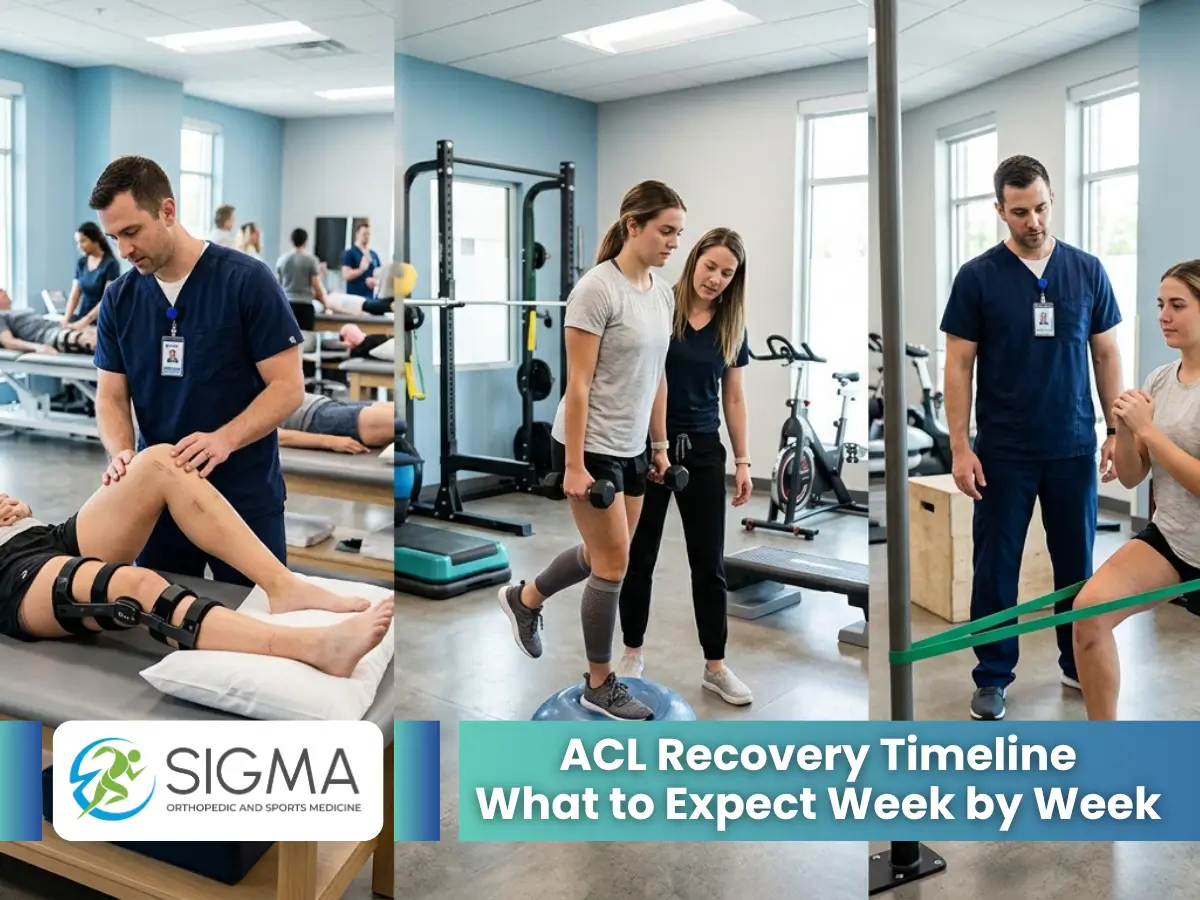
Every ACL recovery journey is different, but understanding the general timeline can help you set realistic expectations. The recovery process is not only about reducing pain; it involves restoring mobility, rebuilding muscle strength, improving balance, and gradually returning the knee to higher-level activities.
Weeks 1–2: Controlling Pain and Restoring Movement
The first two weeks focus on protecting the surgical site and reducing inflammation. Most patients spend this stage managing swelling with ice, elevation, compression, and prescribed rehabilitation exercises.
Your surgeon may recommend crutches during this phase to prevent excessive pressure on the knee. The transition to full weight-bearing depends on your individual recovery and whether additional procedures were performed during surgery.
Many patients wonder whether they are walking enough or too little. The goal is not to achieve a certain number of steps but to develop a normal walking pattern without increased pain or swelling afterward.
Early rehabilitation often includes gentle range-of-motion exercises, quadriceps activation, and controlled movements designed to prevent stiffness. Research published by the American Physical Therapy Association emphasizes that early physical therapy plays a major role in regaining knee function and improving long-term outcomes after ACL reconstruction.
Weeks 3–6: Improving Strength and Normal Walking
As your knee becomes more stable, your rehabilitation program usually becomes more active. During this period, many patients work toward achieving normal walking mechanics, improved flexibility, and stronger leg muscles.
Your physical therapist may introduce more challenging movements such as stationary cycling, controlled strengthening exercises, and balance training.
However, feeling better does not mean the ACL graft is fully healed. Some patients make the mistake of increasing their walking distance, taking long shopping trips, or standing for hours because their pain has decreased. These activities may cause the knee to swell and slow overall progress.
Monitoring your body’s response remains important throughout this stage. A mild increase in soreness can be normal after rehabilitation, but persistent swelling or worsening discomfort may indicate that your activity level needs adjustment.
Months 2–6: Building Stability and Returning to Activity
During the following months, rehabilitation focuses on restoring strength, coordination, and confidence in the knee. The quadriceps, hamstrings, glutes, and core muscles all contribute to protecting the ACL during movement.
Many patients begin more advanced exercises, including controlled jumping, agility drills, and sport-specific training later in the recovery process when cleared by their medical team.
Returning to activities too quickly is one of the most common reasons patients experience setbacks. A successful recovery depends on meeting strength and movement goals rather than simply reaching a specific date on the calendar.
Exercises That Help You Recover Safely After ACL Surgery
A structured rehabilitation program is essential for rebuilding a strong and functional knee. The best exercises for ACL rehab are introduced gradually based on your healing stage and physical abilities.
Early exercises often focus on restoring knee extension and activating the quadriceps muscles. As healing progresses, strengthening exercises become more challenging to improve stability and reduce the risk of future injury.
Common rehabilitation activities may include heel slides, straight leg raises, quadriceps sets, stationary biking, controlled squats, step exercises, and balance training. These exercises should be performed using the guidance of your physical therapist because incorrect technique or advancing too quickly can place unnecessary stress on the knee.
Exercises and Activities to Avoid During Early Recovery
Although movement is important, certain activities can interfere with the healing process if performed too soon.
High-impact exercises such as running, jumping, cutting, or sudden changes in direction should generally be avoided until your surgeon confirms that your knee has regained enough strength and stability.
Deep squatting, twisting motions, heavy lifting, and intense lower-body workouts may also be restricted during the early phases of recovery, particularly if you had additional procedures such as meniscus repair.
Another common mistake is comparing your recovery with someone else’s experience. Two patients who have the same surgery may progress at different rates depending on their age, fitness level, surgical findings, and dedication to rehabilitation.
The safest approach is to follow your personalized recovery plan and communicate with your healthcare team whenever you experience new symptoms or concerns.
Managing Pain During ACL Recovery
Pain is expected after ACL surgery, especially during the first few days and weeks. Effective pain management helps patients participate more comfortably in rehabilitation and regain normal movement.
The best pain medication after ACL surgery depends on your medical history, level of discomfort, and your surgeon’s recommendations. Doctors may prescribe short-term medications immediately after surgery and may also recommend over-the-counter options when appropriate.
Non-medication strategies are equally important. Ice therapy, elevation, compression, proper rest, and following your physical therapy schedule can significantly reduce discomfort.
It is important not to rely on pain medication as a signal that you can increase activity. A knee that feels comfortable due to medication may still be recovering internally, and excessive activity can still lead to swelling and irritation.
When Can You Return to Normal Activities After ACL Surgery?
Returning to normal activities after ACL reconstruction depends on how well your knee heals and whether you achieve specific rehabilitation goals. There is no universal timeline because every patient progresses differently.
Many people can return to desk work within a few weeks, while jobs that involve prolonged standing, climbing, lifting, or physical labor may require a longer recovery period. Walking comfortably without a limp is an important milestone, but it does not necessarily mean the knee is ready for demanding activities.
Most patients gradually return to light recreational activities after several months of rehabilitation. However, sports involving running, cutting, pivoting, and sudden direction changes typically require a much longer recovery period. Your orthopedic surgeon and physical therapist will often evaluate your strength, balance, movement quality, and knee stability before clearing you for full sports participation.
Patience is one of the most important parts of ACL recovery. Trying to accelerate the process can lead to prolonged swelling, weakness, altered movement patterns, and potentially increase the risk of reinjury.
How to Protect Your ACL Graft During Recovery
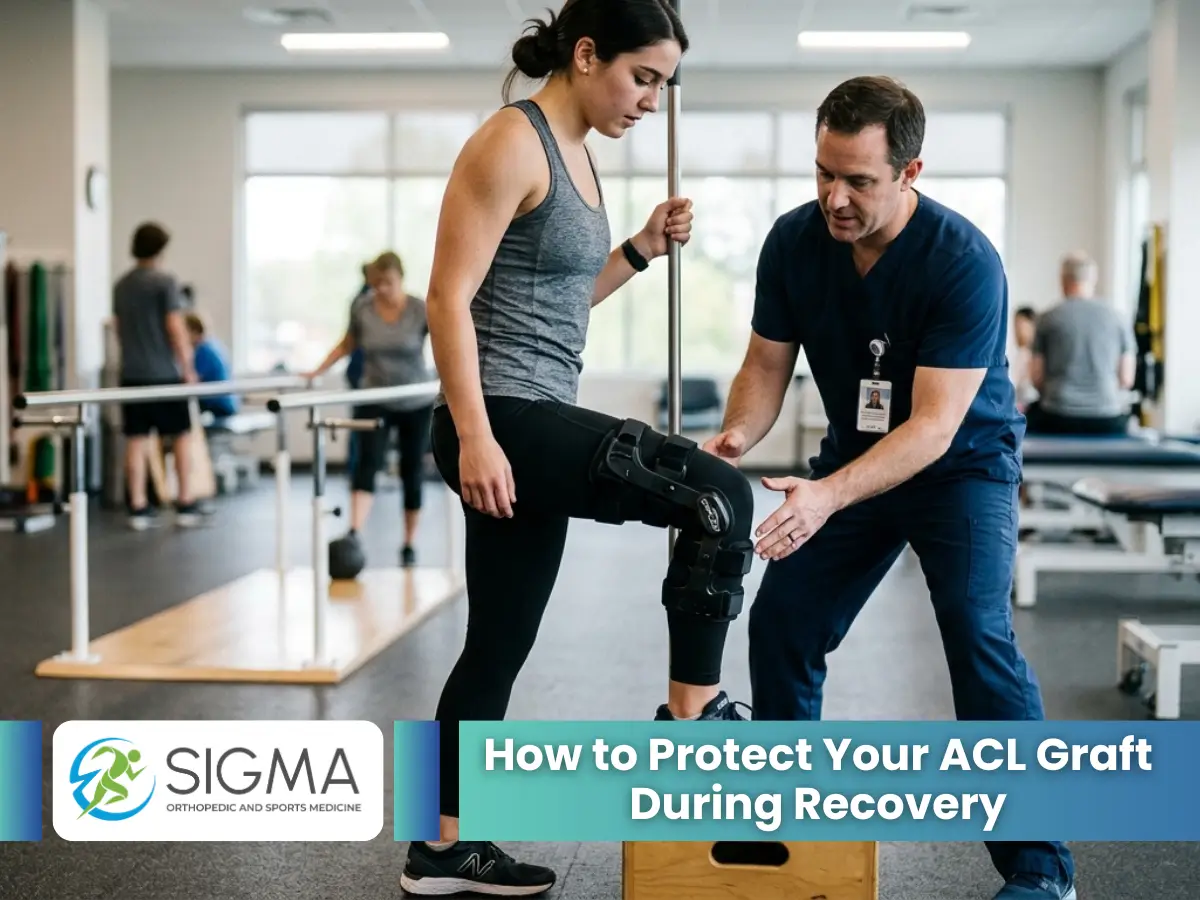
Protecting your reconstructed ACL requires consistent attention to your body’s signals and your rehabilitation plan.
The most successful recoveries usually come from a balanced approach—remaining active enough to maintain mobility and strength while avoiding activities that overload the healing tissues.
Pay attention to changes in your knee after daily activities. If your knee becomes more swollen, painful, or stiff after a long day of walking or standing, it may be a sign that your current activity level is too aggressive.
Maintaining good sleep, proper nutrition, and regular physical therapy sessions also contributes to tissue healing and muscle recovery. According to the American Academy of Orthopaedic Surgeons and the National Institutes of Health, a progressive rehabilitation approach is essential for restoring knee function and safely returning to an active lifestyle.
When Should You Contact Your Orthopedic Surgeon?
Some symptoms are part of normal healing, while others may require medical evaluation. You should contact your surgeon if you experience increasing swelling that does not improve with rest, worsening pain over time, difficulty moving your knee, or a new sensation of instability.
Urgent medical attention may be necessary if you notice signs of infection, including fever, significant redness around the incision, unusual drainage, or severe warmth surrounding the knee.
Sudden calf pain, excessive swelling in the lower leg, or shortness of breath should also be treated as potentially serious symptoms because they may indicate complications that require immediate evaluation.
Final Thoughts
Walking is a necessary part of recovering after ACL reconstruction, but more is not always better. The key is gradual progression based on your body’s response, your surgeon’s guidance, and your rehabilitation milestones. A short walk that allows your knee to recover comfortably is more beneficial than pushing through pain and causing additional swelling.
Every ACL recovery journey is unique. Whether you are in the first few days after surgery or progressing through later rehabilitation stages, having a personalized treatment plan can make a significant difference in your long-term outcome.
At Sigma Orthopedics & Sports Medicine, our team focuses on individualized care, advanced treatment approaches, and comprehensive rehabilitation strategies to help patients recover safely and return to the activities they enjoy. Following professional guidance, listening to your body, and staying committed to therapy are the best ways to achieve a strong and successful recovery.
Frequently Asked Questions
Excessive walking during the early stages of recovery may not immediately tear the graft, but it can increase swelling, pain, and inflammation that interfere with proper rehabilitation. Repeatedly overloading the knee before it is ready may also place unnecessary stress on healing tissues.
Mild swelling after activity can be a normal part of recovery, especially during the first several weeks. However, swelling that continues to increase, limits your ability to bend or straighten the knee, or does not improve with rest should be discussed with your healthcare provider.
Possible warning signs include a sudden popping sensation, severe pain, significant swelling, new instability, or the feeling that your knee gives out during movement. These symptoms do not always mean the graft has failed, but they should be evaluated by your surgeon.
Many patients begin walking with a normal gait pattern within several weeks, but the timeline varies based on individual healing, muscle strength, and whether additional procedures such as meniscus repair were performed.
Some patients are allowed to put weight on the leg shortly after surgery, while others need crutches for a longer period. The timing depends on your surgeon’s protocol, the type of reconstruction performed, and your overall knee condition.
If pain increases after walking, reduce your activity level, rest, elevate your leg, and use ice as recommended by your healthcare team. If the pain continues to worsen or is accompanied by significant swelling or instability, contact your orthopedic surgeon for further evaluation.
Disclaimer: This content is for informational purposes only and does not constitute medical advice. Always seek the advice of a qualified healthcare provider with any questions you may have regarding a medical condition or before starting any new medication. Never disregard professional medical advice or delay in seeking it because of something you have read in this blog.