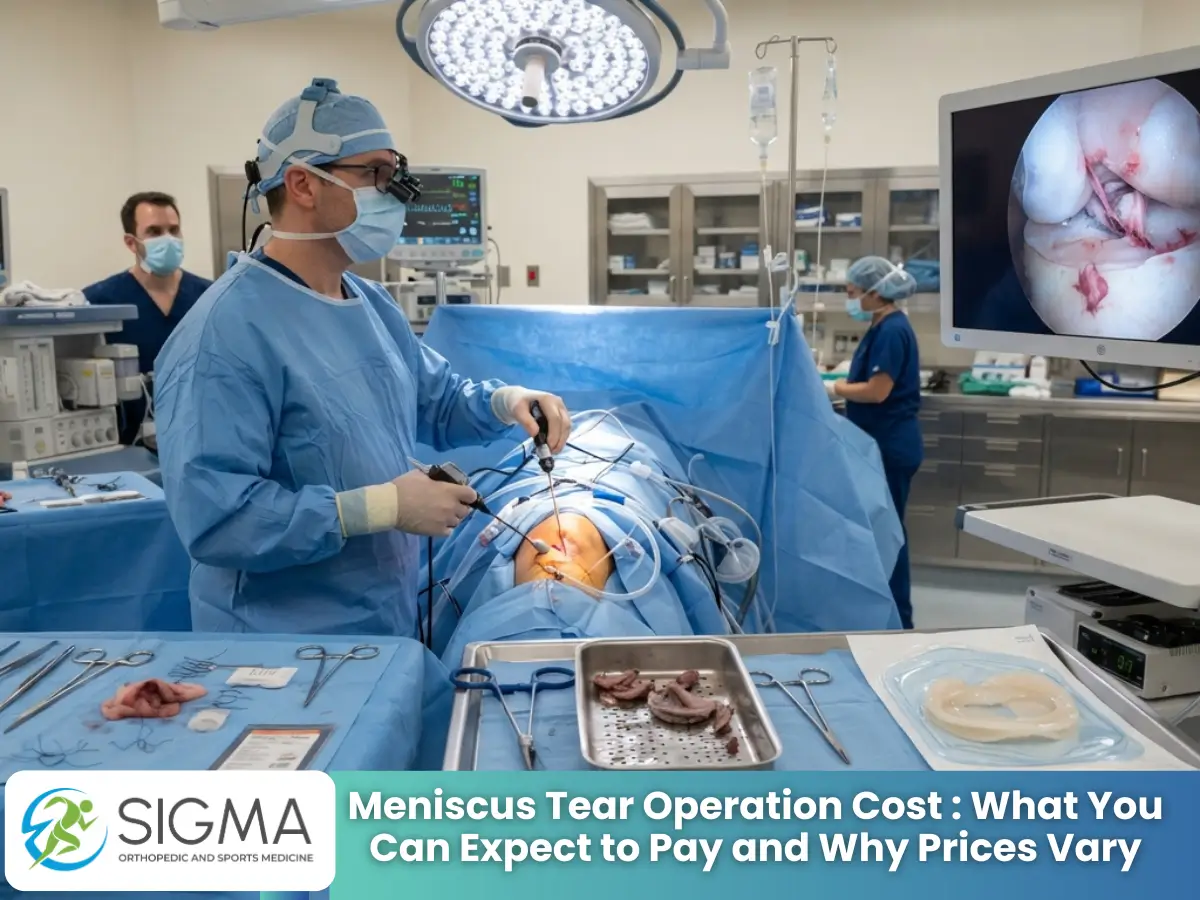
If you’re wondering about the meniscus tear operation cost, the short answer is that it depends on the type of procedure, where it’s performed, your insurance coverage, and your surgeon’s experience. In the United States, patients may pay anywhere from a few thousand dollars with insurance to well over $20,000 without coverage, depending on whether they need a simple repair, a partial meniscectomy, or a more advanced meniscus transplant.
Understanding what contributes to the total cost is just as important as knowing the final number. Surgery is only one part of the overall expense. Imaging, anesthesia, facility fees, physical therapy, follow-up visits, and recovery time all influence the financial impact. Making treatment decisions based solely on price can sometimes lead to higher long-term costs if the underlying knee problem is not addressed properly.
This guide explains how knee surgery costs are determined, what you can expect to pay for different procedures, how insurance affects pricing, and why choosing the right treatment plan often provides greater value than simply finding the lowest quote.
Why Meniscus Surgery Costs Can Vary So Much
One of the biggest surprises for patients is how much pricing differs between hospitals, outpatient surgery centers, and even neighboring cities. Unlike many medical services, orthopedic procedures don’t have one standard price across the country.
Several factors influence the final bill. Your diagnosis, the complexity of the tear, whether additional ligament or cartilage procedures are needed, and the location of your surgery all contribute to the overall expense. Even two patients with similar injuries may receive very different estimates because their treatment plans are not identical.
Insurance companies also negotiate different reimbursement rates with healthcare providers. That means the amount billed isn’t necessarily the amount you’ll actually pay.
What Does Meniscus Surgery Actually Include?
When patients receive a cost estimate, they often assume it only covers the operation itself. In reality, several services are bundled into the overall treatment.
The surgeon’s professional fee covers planning the procedure, performing surgery, and post-operative management. The surgical facility charges for the operating room, equipment, nursing staff, and recovery area. An anesthesiologist provides either general or regional anesthesia depending on your medical needs.
Before surgery, your orthopedic specialist typically orders imaging studies, including X-rays or MRI scans, to confirm the diagnosis and evaluate surrounding cartilage and ligaments. Laboratory work, medical clearance, and medications may also be necessary.
Recovery creates additional expenses. Most patients participate in structured physical therapy, attend multiple follow-up appointments, and may require braces, crutches, or other supportive equipment during healing.
Looking at the complete treatment journey provides a much clearer picture of what you’ll ultimately spend.
Understanding the Different Types of Meniscus Surgery

Not every torn meniscus requires the same procedure. The location, size, blood supply, and pattern of the tear determine which treatment offers the best chance of restoring knee function.
Partial Meniscectomy
A partial meniscectomy removes only the damaged portion of the meniscus while preserving as much healthy tissue as possible. This is often recommended when the torn section cannot heal because it has poor blood supply or is severely fragmented.
Because the procedure is generally less complex than a repair, recovery tends to be faster. Many patients return to normal daily activities within several weeks, although athletic participation may take longer depending on rehabilitation.
While this surgery may appear less expensive initially, preserving meniscal tissue whenever possible remains important because removing too much cartilage can increase stress on the knee joint over time.
Meniscus Repair
Instead of removing damaged tissue, a repair uses specialized sutures or implants to reconnect the torn meniscus and encourage natural healing.
The price of meniscus repair surgery is often higher than a partial meniscectomy because it requires additional surgical time, specialized fixation devices, and a longer rehabilitation program. However, for younger patients or individuals with tears located in areas that receive good blood flow, preserving the meniscus can help protect the knee from future degeneration.
Recovery generally takes longer because the repaired tissue must heal before returning to full activity. Patients usually follow a structured rehabilitation program designed to gradually restore strength, flexibility, and stability.
The American Academy of Orthopaedic Surgeons explains that preserving the meniscus whenever appropriate can improve long-term knee health and reduce future joint damage in carefully selected patients.
Meniscus Transplant
A meniscus transplant is a specialized procedure performed when a patient has previously lost most or all of the meniscus and continues to experience pain, swelling, or instability.
Rather than repairing existing tissue, surgeons implant donor meniscal cartilage that closely matches the patient’s anatomy. Because of the surgical complexity, donor tissue processing, and advanced planning involved, meniscus transplant cost is substantially higher than traditional repair procedures.
Not everyone qualifies for this operation. Surgeons carefully evaluate age, alignment, cartilage condition, ligament stability, and overall knee health before recommending transplantation.
Although more expensive upfront, transplantation may delay arthritis progression in appropriately selected patients and improve quality of life for active individuals who wish to preserve their natural knee.
Is Meniscus Replacement the Same as a Meniscus Transplant?
Many people searching online use the phrase meniscus replacement surgery cost, but this term can be confusing because it may refer to different procedures.
In most cases, “replacement” refers to a meniscus transplant using donor tissue. However, newer technologies involving synthetic implants or scaffold materials have also emerged for selected patients, though availability remains limited.
These advanced treatments are generally offered only by specialized orthopedic centers after a comprehensive evaluation. Because they involve newer surgical techniques and highly specialized equipment, pricing can differ considerably from standard arthroscopic procedures.
Patients should discuss all available options with an experienced orthopedic surgeon rather than assuming every type of replacement offers the same benefits or long-term outcomes.
Insurance Coverage: What Will You Actually Pay?
Health insurance often covers medically necessary knee surgery, but your personal costs depend on much more than simply having coverage.
Your deductible, copayment, coinsurance percentage, annual out-of-pocket maximum, and whether your surgeon and facility are considered in-network all influence your financial responsibility.
Insurance providers also review whether conservative treatments such as physical therapy, medications, or injections—have been attempted before approving surgery. Some plans require prior authorization before scheduling an operation.
Patients who receive care outside their insurance network may face significantly higher expenses, even if the procedure itself is covered.
Before committing to surgery, request a written estimate from both your orthopedic practice and your insurance company. Comparing both documents can help identify unexpected charges before the procedure takes place.
The National Institute of Arthritis and Musculoskeletal and Skin Diseases (NIAMS) also recommends discussing treatment options with your physician to ensure surgery is appropriate based on symptoms, imaging findings, and functional limitations rather than MRI results alone.
What Other Costs Should You Plan For?
The operation itself is rarely the only expense associated with recovery. Many patients underestimate the financial impact of rehabilitation and time away from work.
Physical therapy often continues for several weeks or months depending on the procedure performed. Prescription medications, mobility aids, compression devices, and follow-up imaging may add to overall expenses. Individuals with physically demanding jobs may also experience temporary income loss during recovery.
Travel expenses deserve consideration as well. Some patients choose highly experienced orthopedic specialists located outside their immediate area, which may involve transportation, lodging, or additional time away from work.
Evaluating these indirect costs alongside the surgical estimate provides a more realistic understanding of the total investment required for successful treatment.
Average Price Ranges for Different Meniscus Procedures
Although every case is unique, understanding general price ranges can help you prepare for discussions with your surgeon and insurance provider. Keep in mind that these figures are estimates and can vary based on your location, healthcare facility, and treatment plan.
The cost of meniscus repair surgery typically falls higher than a partial meniscectomy because the procedure requires specialized implants and a longer operating time. Patients without insurance may also receive different pricing depending on whether surgery is performed in a hospital or an outpatient surgery center.
A meniscus transplant is generally the most expensive option because it involves donor tissue, advanced surgical planning, and a highly specialized surgical team. While the meniscus transplant cost may initially seem significant, it is usually considered only for carefully selected patients who have already lost much of their natural meniscus and continue to experience persistent pain.
It’s also worth remembering that the lowest estimate is not always the best value. A comprehensive treatment plan that preserves knee function and reduces the need for future procedures can ultimately save money over the long term.
Why Two Patients Can Receive Very Different Price Estimates

Even when two people have the same diagnosis, their treatment costs can differ considerably.
Age plays an important role because younger patients are often candidates for tissue-preserving procedures, while older individuals with arthritis may require different treatment approaches. The location and pattern of the tear also influence surgical complexity.
A simple tear that can be treated arthroscopically may require less operating time than a complex root tear or bucket-handle tear that demands advanced repair techniques.
Surgeon experience is another consideration. Orthopedic sports medicine specialists who routinely perform complex knee preservation procedures may charge different professional fees than general orthopedic practices. While experience may increase upfront costs, it can also improve outcomes for appropriately selected patients.
The surgical facility itself also affects pricing. Ambulatory surgery centers frequently have lower facility fees than hospitals for routine arthroscopic procedures, although hospitals remain the preferred setting for patients with more complex medical conditions.
Is a More Expensive Surgery Always Better?
Not necessarily.
The goal of treatment is not to choose the most expensive procedure but to select the one that provides the greatest long-term benefit for your specific knee injury.
For example, repairing the meniscus instead of removing damaged tissue may involve a longer recovery and a higher initial bill. However, preserving the meniscus can reduce excessive stress on the knee joint and may lower the risk of developing osteoarthritis later in life.
Conversely, attempting a repair on a tear that has little chance of healing may result in additional surgery if the repair fails.
An experienced orthopedic surgeon evaluates your MRI findings, physical examination, activity level, age, and personal goals before recommending the most appropriate option. That individualized approach is far more valuable than comparing prices alone.
Does Insurance Cover Meniscus Surgery?
Many insurance plans cover medically necessary arthroscopic knee surgery, but coverage varies from one policy to another.
Before approving surgery, insurers commonly review medical records to confirm that conservative treatments have been attempted when appropriate. These treatments may include rest, activity modification, anti-inflammatory medications, physical therapy, or injections.
Patients should also understand that insurance approval does not necessarily eliminate all expenses. Deductibles, coinsurance, and out-of-network charges can still represent a substantial portion of the final bill.
Before your procedure, ask for a detailed financial estimate that separates the surgeon’s fee, anesthesia, facility charges, imaging, and rehabilitation costs. Having this information beforehand reduces the likelihood of unexpected medical bills.
How to Reduce Your Overall Treatment Costs
While surgery should never be chosen based solely on price, there are practical ways to reduce unnecessary expenses.
Choosing an in-network provider is often one of the most effective strategies. Many orthopedic practices also have financial counselors who can explain payment plans or financing options before surgery.
If your physician recommends outpatient surgery rather than hospitalization, facility costs may also be lower. Completing physical therapy as directed after surgery may reduce the risk of complications or repeat procedures, potentially lowering long-term healthcare expenses.
Patients should avoid delaying necessary treatment simply because of uncertainty about costs. A meniscus tear that continues to worsen may eventually damage the surrounding cartilage, making treatment more complicated and potentially more expensive.
Questions to Ask Before Scheduling Surgery
Having an open discussion with your orthopedic surgeon helps you understand both the medical and financial aspects of treatment.
Consider asking whether your tear can be repaired instead of removed, what your expected recovery timeline looks like, whether additional procedures may be required, and what expenses are included in your estimate.
You should also ask whether physical therapy is included in your treatment plan, how long you may be away from work, and whether your insurance requires prior authorization before surgery.
Being informed allows you to make confident decisions rather than relying solely on online cost estimates.
Why Experience Matters More Than Price
Choosing a surgeon based only on the lowest quoted price can sometimes lead to disappointing outcomes.
Successful knee preservation depends on accurate diagnosis, appropriate patient selection, surgical precision, and carefully supervised rehabilitation. These factors often influence long-term results far more than the initial procedure cost.
Patients who receive personalized treatment plans are more likely to return to work, sports, and everyday activities with improved knee function. Investing in experienced orthopedic care can reduce the likelihood of future procedures, prolonged rehabilitation, or chronic knee pain.
At SIGMA Orthopedics and Sports Medicine, every treatment plan is built around the patient’s specific injury, activity level, and long-term goals. Rather than recommending a one-size-fits-all solution, the focus is on preserving healthy knee function whenever possible and helping patients make informed decisions about both their health and their investment in care.
Final Thoughts
Learning the true meniscus tear operation cost involves much more than comparing prices online. Every patient’s injury, treatment plan, insurance coverage, recovery needs, and long-term goals are different, which is why estimates can vary so widely.
The best decision is rarely the cheapest one it is the treatment that offers the greatest opportunity for lasting pain relief, restored mobility, and protection of your knee for years to come. Asking questions, understanding every component of your estimate, and choosing an experienced orthopedic specialist can help you avoid unexpected expenses while improving your chances of a successful recovery.
If you’re considering surgery or exploring alternatives, SIGMA Orthopedics and Sports Medicine provides individualized evaluations designed to help patients understand every available option. An informed treatment decision today can make a meaningful difference in your recovery, your activity level, and your long-term joint health.
Frequently Asked Questions
How much does meniscus surgery usually cost without insurance?
The total cost varies depending on the procedure, surgeon, and facility. Patients paying without insurance may face bills ranging from several thousand dollars for routine arthroscopic surgery to substantially more for complex reconstructive procedures or transplantation.
Why is a meniscus repair more expensive than removing the torn tissue?
Repairing the meniscus requires additional surgical time, specialized fixation devices, and a longer rehabilitation program. Although the upfront cost may be higher, preserving healthy meniscal tissue can benefit long-term knee function.
Is meniscus transplant covered by insurance?
Some insurance providers cover medically necessary meniscus transplantation when specific clinical criteria are met. Coverage varies by plan, so patients should verify eligibility and authorization requirements before scheduling surgery.
Can I avoid surgery if I have a meniscus tear?
Not every tear requires surgery. Some small or stable tears respond well to physical therapy, activity modification, and other conservative treatments. Your orthopedic surgeon can determine the most appropriate treatment based on your symptoms, physical examination, and imaging results.
How long does recovery usually take?
Recovery depends on the procedure performed. Patients undergoing a partial meniscectomy often recover more quickly than those having a meniscus repair or transplant because repaired tissue requires time to heal before returning to higher-impact activities.
Does physical therapy increase the total cost?
Yes, rehabilitation is an important part of recovery and should be included when estimating total treatment expenses. While it represents an additional cost, physical therapy plays a significant role in restoring strength, mobility, and knee stability.
What factors have the biggest impact on surgery costs?
The type of procedure, surgeon’s experience, geographic location, surgical facility, anesthesia, insurance coverage, rehabilitation, and any additional knee procedures performed during surgery all contribute to the final cost.