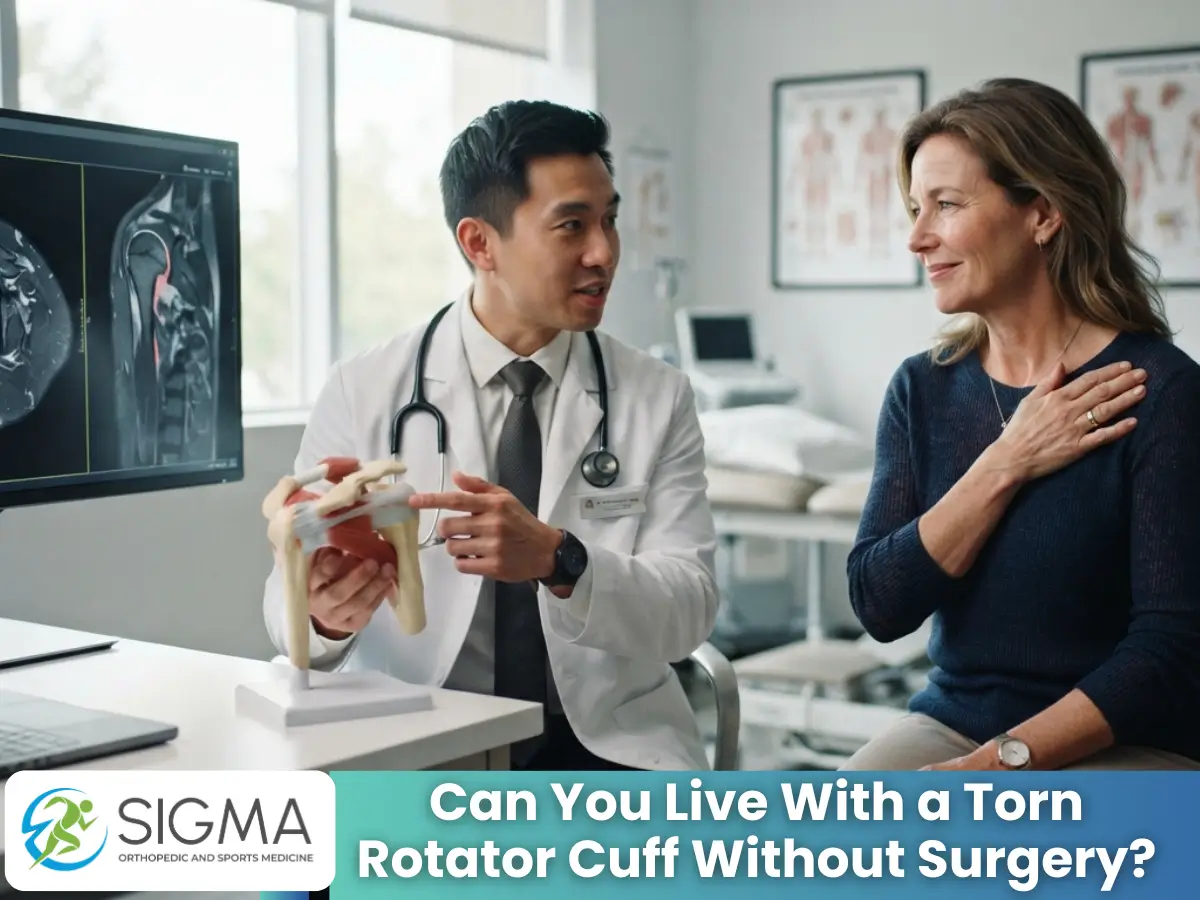
Shoulder pain can make simple tasks like reaching into a cabinet, lifting groceries, or sleeping comfortably feel nearly impossible. If you’ve been diagnosed with a torn rotator cuff without surgery being recommended right away, you may wonder whether it’s truly safe to avoid an operation. The short answer is yes many people can successfully live with a rotator cuff tear without surgery, especially if the tear is small, symptoms are manageable, and shoulder function remains relatively good. However, the right treatment depends on the size of the tear, your activity level, age, and long-term goals.
While some tears respond well to physical therapy, activity modification, and pain management, others gradually worsen and lead to weakness, chronic pain, or permanent muscle changes. Understanding the difference can help you make informed decisions about your shoulder health before the problem becomes more difficult to treat.
When Is It Safe to Manage a Rotator Cuff Tear Without Surgery?
The answer depends less on the tear itself and more on how it affects your daily life. Not every rotator cuff tear requires surgery, and many patients recover enough strength and comfort to return to work, exercise, and everyday activities through conservative treatment alone.
Why Some People Do Well Without Surgery
The rotator cuff consists of four muscles and their tendons that stabilize the shoulder and help lift and rotate the arm. When one of these tendons tears, nearby muscles often compensate for some lost function. Combined with structured rehabilitation, these muscles can restore shoulder movement even if the tendon never fully repairs itself.
Research has shown that many partial-thickness tears and some small full-thickness tears can remain stable for years when treated appropriately. A personalized rehabilitation program often focuses on improving shoulder mechanics rather than simply eliminating the tear.
When Living With a Tear Is Reasonable
People often do well without surgery when they still have good shoulder motion, manageable discomfort, and minimal weakness. Older adults with lower physical demands frequently experience significant improvement through physical therapy and lifestyle adjustments.
Someone who enjoys walking, gardening, desk work, or recreational activities may never need surgery if symptoms remain controlled. The goal becomes reducing pain while preserving shoulder function rather than restoring the tendon to its original anatomy.
However, choosing nonsurgical care should always involve regular follow-up because some tears enlarge over time, especially if left untreated.
Understanding What Happens During a Rotator Cuff Tear
A rotator cuff tear is more than a simple injury. It changes how the shoulder moves, distributes force, and maintains stability.
The Shoulder’s Support System
The shoulder offers the greatest range of motion of any joint in the body. That flexibility comes from a complex network of muscles, tendons, ligaments, and bones working together.
The rotator cuff keeps the upper arm centered within the shoulder socket during movement. When one tendon tears, the remaining muscles must work harder to compensate. Over time, this imbalance may create additional stress on surrounding tissues, sometimes leading to inflammation or further degeneration.
For a helpful overview of shoulder anatomy, the National Library of Medicine’s MedlinePlus provides reliable educational resources that explain how the rotator cuff functions within the shoulder joint.
Common Causes of Rotator Cuff Tears
Not every tear happens after a dramatic accident. Many develop gradually over several years as tendons naturally weaken with age.
Degenerative tears are especially common after age 50 and often occur from repetitive overhead activities, reduced blood supply to the tendon, and normal wear. On the other hand, traumatic tears may result from falling on an outstretched arm, lifting something unexpectedly heavy, or sports injuries that place sudden stress on the shoulder.
Both mechanisms can produce similar symptoms, but traumatic tears in younger, active individuals often require earlier surgical evaluation.
What Does a Torn Rotator Cuff Feel Like?
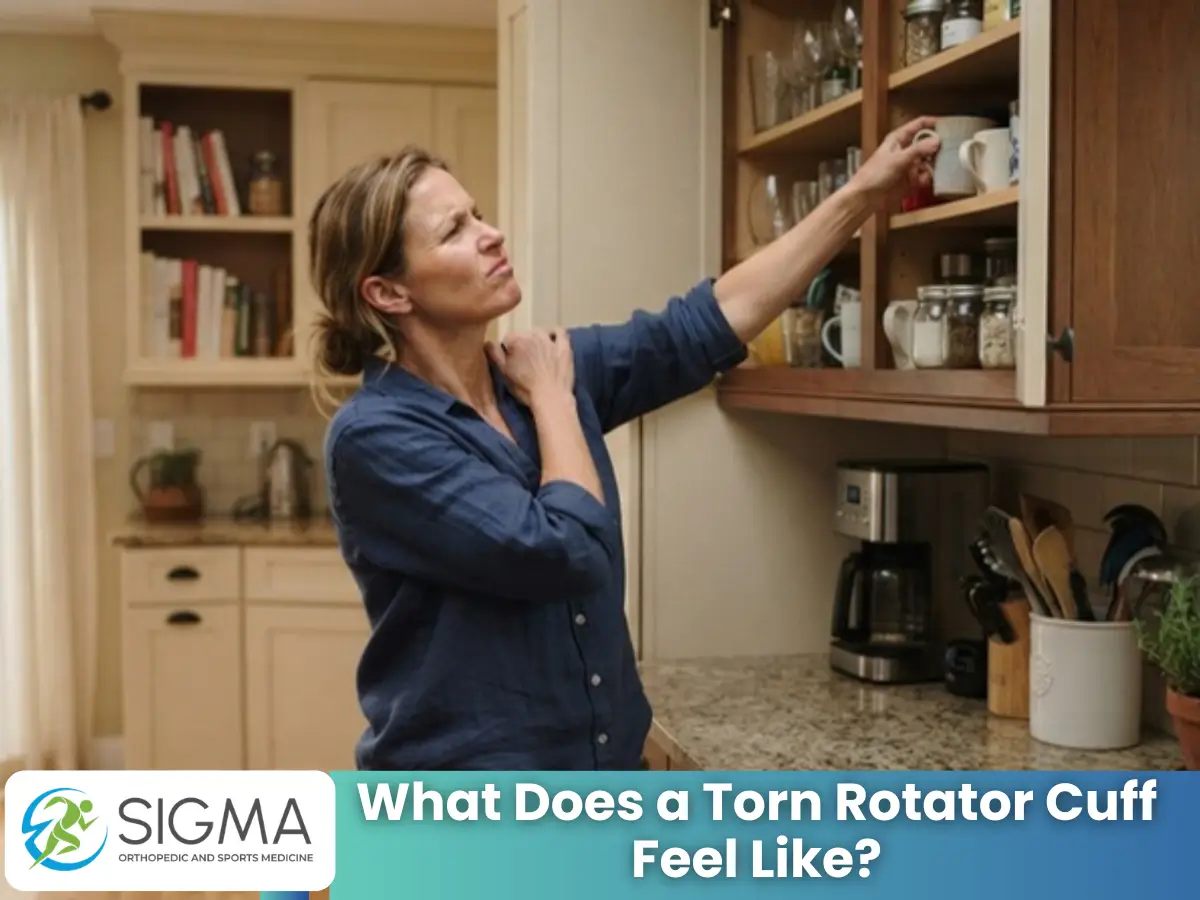
One of the most common questions patients ask is what does a torn rotator cuff feel like. The symptoms vary depending on the size and location of the injury, but certain patterns appear repeatedly.
Pain That Changes Throughout the Day
Many people first notice a dull ache along the outside of the shoulder. The discomfort often becomes worse when reaching overhead, lifting objects, or extending the arm away from the body.
Nighttime pain is particularly common because lying on the injured shoulder places pressure on the damaged tendon. Some patients wake repeatedly because they cannot find a comfortable sleeping position.
These early symptoms are sometimes mistaken for a simple strained rotator cuff, delaying proper diagnosis until weakness becomes more noticeable.
Weakness Rather Than Severe Pain
Interestingly, larger tears don’t always cause more pain. Instead, many patients describe unexpected weaknesses.
Simple activities such as pouring coffee, fastening a seatbelt, or placing dishes on a high shelf suddenly become difficult. The arm may feel unreliable rather than intensely painful.
Other shoulder tear symptoms may include clicking sensations, reduced range of motion, stiffness after inactivity, and fatigue during repetitive arm movements.
Because these symptoms overlap with arthritis, bursitis, frozen shoulder, and a torn shoulder ligament, imaging studies and physical examination are often necessary to determine the exact cause.
Can a Torn Rotator Cuff Heal on Its Own?
A common misconception is that every tendon eventually reconnects naturally. Unfortunately, that’s usually not how tendon healing works.
The Difference Between Healing and Feeling Better
Many patients ask, can a torn rotator cuff heal on its own? In most full-thickness tears, the tendon does not grow back together without surgical repair.
However, symptoms often improve substantially despite the tear remaining present. Physical therapy strengthens surrounding muscles, reduces inflammation, improves shoulder mechanics, and teaches movement patterns that place less stress on the damaged tendon.
As pain decreases and strength improves, many patients feel “healed” even though imaging would still show the tear.
Which Tears Have Better Healing Potential?
Partial-thickness tears generally have a better chance of becoming symptom-free with conservative care than complete tears.
Inflammation surrounding the tendon often resolves, allowing patients to regain function. On the other hand, complete tendon separation usually cannot reconnect naturally. Without treatment, some tears slowly enlarge and may eventually become more difficult or impossible to repair surgically.
The American Academy of Orthopaedic Surgeons (AAOS) explains that treatment decisions should consider pain, strength, function, and tear progression rather than MRI findings alone.
Who Can Successfully Avoid Surgery?
Avoiding surgery isn’t about ignoring the injury. It’s about selecting the treatment most likely to produce the best long-term outcome.
Patients Who Often Respond Well
Many people achieve excellent results without surgery when symptoms are relatively mild and shoulder function remains acceptable.
Older adults with degenerative tears often improve through supervised rehabilitation, anti-inflammatory strategies, and gradual strengthening. Individuals whose jobs don’t involve repetitive overhead lifting also tend to have favorable outcomes with conservative care.
In these situations, a torn tendon in shoulder may remain visible on imaging while causing little disruption to daily life.
When Lifestyle Matters More Than MRI Results
Treatment decisions should always reflect how you use your shoulder.
Someone training for competitive baseball has very different functional demands than someone who mainly performs office work. Likewise, a construction worker may require greater shoulder strength than someone approaching retirement.
Instead of treating the MRI alone, orthopedic specialists evaluate pain levels, range of motion, muscle strength, occupational demands, recreational goals, and overall health before recommending surgery.
This individualized approach is one reason practices like SIGMA Orthopedics and Sports Medicine emphasize comprehensive evaluations that match treatment plans to each patient’s lifestyle rather than relying solely on imaging findings.
In addition, evidence published through the National Center for Biotechnology Information (NCBI) has shown that carefully selected patients treated with structured rehabilitation can maintain meaningful improvements in pain and shoulder function for years without immediate surgery, although continued monitoring remains important.
When Does Surgery Become the Better Option?

Although many patients can avoid an operation, there are situations where delaying surgery may reduce the chances of a successful recovery. The decision isn’t based on MRI results alone; it depends on how the tear affects your strength, mobility, and quality of life.
Signs Conservative Treatment Is No Longer Enough
If pain continues despite several months of physical therapy, medication, and activity modification, surgery may become the next logical step. Persistent weakness that prevents lifting the arm, performing work duties, or participating in sports often indicates that the damaged tendon is no longer functioning adequately.
Another concern is progressive loss of shoulder function. A tear that gradually enlarges can lead to muscle atrophy and fatty degeneration, changes that may become irreversible over time. This is why regular follow-up appointments are important, even when symptoms initially improve.
Traumatic Tears Often Need Earlier Treatment
Not every rotator cuff injury should be managed conservatively. A sudden injury from a fall, heavy lifting, or sports accident that causes immediate weakness may represent a complete tendon rupture. In younger or highly active individuals, early surgical repair often provides the best opportunity to restore normal shoulder strength.
Prompt evaluation is particularly important if you cannot raise your arm after an injury or notice significant bruising and weakness. According to the National Institute of Arthritis and Musculoskeletal and Skin Diseases (NIAMS), early diagnosis helps determine whether nonsurgical treatment is appropriate or if timely repair is more likely to preserve long-term shoulder function.
What Does Recovery Without Surgery Usually Look Like?
Recovering without surgery does not mean simply waiting for the shoulder to improve. Successful nonsurgical treatment follows a structured plan designed to reduce pain, restore movement, and strengthen the muscles that support the shoulder.
The First Few Weeks
During the early phase, the primary goal is reducing inflammation and protecting the injured tendon from additional stress. Your physician may recommend temporarily limiting overhead activities while beginning gentle range-of-motion exercises.
Ice, anti-inflammatory medications when appropriate, and guided physical therapy often help control pain while preventing stiffness. Remaining completely inactive is generally discouraged because prolonged immobilization can lead to reduced flexibility and muscle weakness.
Building Strength and Confidence
As pain begins to improve, rehabilitation shifts toward strengthening the rotator cuff muscles that remain intact, along with the shoulder blade stabilizers. These muscles play a major role in restoring normal movement patterns and reducing strain on the injured tendon.
Therapists gradually introduce resistance exercises tailored to the patient’s progress. Most individuals notice improved daily function long before they regain full strength, making consistency with therapy more important than exercising aggressively.
How Long Does Recovery Usually Take?
One of the most common concerns after diagnosis involves recovery expectations. While every injury is different, understanding the general timeline helps set realistic goals.
Rotator Cuff Recovery Time Depends on Several Factors
There is no single answer for rotator cuff recovery time because healing varies according to the size of the tear, the patient’s age, overall health, and commitment to rehabilitation.
Small or partial tears often show noticeable improvement within six to twelve weeks of consistent physical therapy. Larger tears managed without surgery may continue improving for six months or longer as surrounding muscles become stronger and shoulder mechanics improve.
People recovering from a strained rotator cuff generally improve faster than those with a complete tendon tear because the tendon has not separated entirely.
Why Recovery Is Different for Everyone
The rotator cuff tear recovery time isn’t determined solely by tissue healing. Pain reduction, improved flexibility, and muscle conditioning all contribute to functional recovery.
Some patients regain excellent shoulder function even though imaging still shows a tear. Others continue experiencing weakness despite less pain because the damaged tendon cannot generate the same strength as before.
Factors such as diabetes, smoking, repetitive overhead work, and delayed treatment may also slow rotator cuff injury healing time, emphasizing the importance of individualized rehabilitation rather than comparing recovery with someone else’s experience.
Can You Prevent the Tear From Getting Worse?
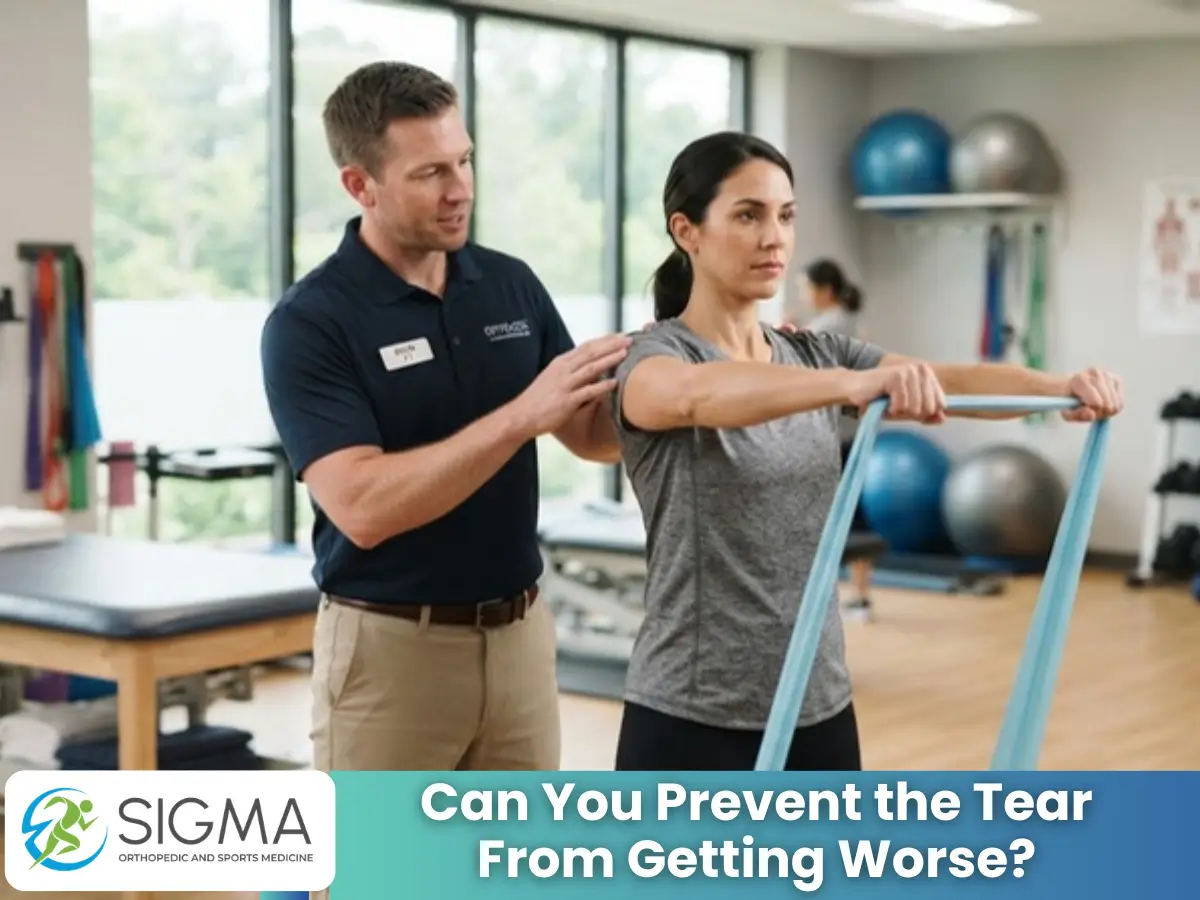
Living with a rotator cuff tear successfully often depends on how well you protect the shoulder after diagnosis. Daily habits can significantly influence long-term outcomes.
Smart Activity Modification
Avoiding activities that repeatedly aggravate the shoulder gives irritated tissues an opportunity to calm down. This doesn’t mean eliminating movement altogether. Instead, patients are encouraged to stay active while modifying painful motions.
For example, lifting objects closer to the body, reducing repetitive overhead reaching, and taking frequent breaks during physical work can reduce unnecessary strain on the shoulder.
Learning proper movement mechanics through physical therapy often becomes one of the most valuable parts of nonsurgical treatment.
Maintain Shoulder Strength
Even after symptoms improve, continuing a home exercise program helps maintain shoulder stability. Weak supporting muscles increase stress on the injured tendon and may contribute to symptom recurrence.
Exercises targeting the rotator cuff, shoulder blade muscles, and upper back improve posture and distribute forces more evenly throughout the shoulder complex. Maintaining flexibility also reduces stiffness that can develop after periods of inactivity.
Patients experiencing persistent symptoms of a rotator cuff tear despite following their rehabilitation plan should schedule a reevaluation rather than assuming the discomfort will eventually disappear.
Living Well With a Rotator Cuff Tear
Receiving a diagnosis of a torn rotator cuff can feel overwhelming, but it doesn’t automatically mean surgery is unavoidable. Many people continue working, exercising, traveling, and enjoying everyday activities through well-designed nonsurgical treatment plans.
The key is understanding that success isn’t measured by whether the tendon completely heals on an MRI. Instead, it’s measured by pain relief, restored function, improved strength, and maintaining the lifestyle that matters most to you.
At the same time, it’s important not to ignore worsening symptoms. Increasing weakness, declining shoulder function, or persistent pain despite rehabilitation may indicate that the tear is progressing and deserves another evaluation.
Working closely with an experienced orthopedic specialist ensures that treatment decisions evolve as your condition changes. At SIGMA Orthopedics and Sports Medicine, patients receive individualized evaluations that consider their goals, activity level, imaging findings, and overall health to determine whether conservative care or surgical treatment offers the best long-term outcome. Early assessment and ongoing monitoring help maximize shoulder function while reducing the risk of permanent damage.
Frequently Asked Questions
Can you live with a torn rotator cuff without surgery?
Yes. Many people successfully manage a rotator cuff tear without surgery through physical therapy, activity modification, and pain management. Whether this approach is appropriate depends on the size of the tear, symptoms, age, and activity level.
Can a torn rotator cuff heal on its own?
Most complete tears do not naturally reconnect. However, many patients experience significant symptom improvement because surrounding muscles become stronger and shoulder mechanics improve with rehabilitation.
What does a torn rotator cuff feel like?
A torn rotator cuff commonly causes shoulder pain, weakness when lifting the arm, discomfort at night, reduced range of motion, and difficulty performing overhead activities. Some people also notice clicking or catching sensations.
How do I know if I have a strained rotator cuff or a torn tendon?
A strain usually involves overstretched or mildly damaged muscle or tendon fibers and often improves within weeks. A complete torn tendon in the shoulder typically causes greater weakness and may require imaging such as ultrasound or MRI for confirmation.
What is the average shoulder muscle tear recovery time?
Minor muscle strains may recover within several weeks, while larger tendon injuries can require several months of rehabilitation. Recovery depends on injury severity, age, overall health, and adherence to physical therapy.
Can physical therapy replace surgery?
For many patients with small or degenerative tears, physical therapy can provide excellent pain relief and restore shoulder function without surgery. However, complete traumatic tears or significant functional loss may still require surgical repair.
What activities should I avoid with a rotator cuff tear?
Until your shoulder improves, avoid repetitive overhead lifting, heavy pushing or pulling, sudden jerking motions, and activities that significantly increase pain. Your physical therapist can recommend safe modifications based on your specific injury.
Disclaimer: This content is for informational purposes only and does not constitute medical advice. Always seek the advice of a qualified healthcare provider with any questions you may have regarding a medical condition or before starting any new medication. Never disregard professional medical advice or delay in seeking it because of something you have read in this blog.