
Hip pain that lingers on the outside of your hip isn’t always arthritis or simple muscle soreness. In many cases, it can be caused by a tear in one of the muscles that stabilizes your pelvis while you walk. The good news is that many people with a mild or moderate tear recover successfully without an operation. Gluteus medius tear recovery time without surgery typically ranges from three to six months, although recovery depends on the size of the tear, your overall health, and how closely you follow a structured rehabilitation program.
Recovery isn’t just about waiting for the tendon to heal. It involves reducing inflammation, restoring strength, improving hip stability, and gradually returning to everyday activities without placing excessive stress on the injured tissue. Understanding what happens during each stage of recovery can help you avoid setbacks and improve your long-term outcome.
Understanding the Gluteus Medius and Why It Matters
The gluteus medius is one of the primary muscles responsible for stabilizing your pelvis whenever you stand on one leg. Every step you take requires this muscle to keep your hips level and your body balanced. It also helps move your leg away from your body and assists with hip rotation during walking, climbing stairs, and athletic movements.
Just beneath it lies the gluteus minimus, a smaller muscle that works alongside the gluteus medius to support hip stability and movement. Because these tendons share similar functions and attach close together on the greater trochanter of the femur, injuries often affect both structures. A gluteus minimus tendon tear may occur alongside a gluteus medius injury, making diagnosis and treatment slightly more complex.
When either tendon becomes damaged, simple daily activities such as walking, standing from a chair, or sleeping on the affected side can become surprisingly painful.
What Causes a Gluteus Medius Tear?
Unlike sudden sports injuries that involve dramatic trauma, many gluteal tendon tears develop gradually over time. Repetitive stress slowly weakens the tendon until small fibers begin to separate. Eventually, even a minor twist or awkward movement can trigger noticeable pain.
Several factors increase the likelihood of developing this injury.
Age-Related Tendon Degeneration
As tendons age, their blood supply naturally decreases. This makes them less capable of repairing everyday microscopic damage. Adults over 50 are therefore more likely to experience degenerative tendon tears even without a specific injury.
Repetitive Overuse
Long-distance runners, hikers, tennis players, and people whose jobs require prolonged standing place repeated stress on the hip abductors. Over time, this continuous loading can weaken tendon fibers.
Sudden Trauma
Although less common, falls directly onto the hip or unexpected twisting motions can produce acute tendon injuries.
Hip Biomechanics
Weak core muscles, leg-length differences, poor walking mechanics, previous hip surgery, or chronic lower back problems may increase stress on the gluteal tendons and contribute to injury.
Signs You May Have a Gluteus Medius Tear
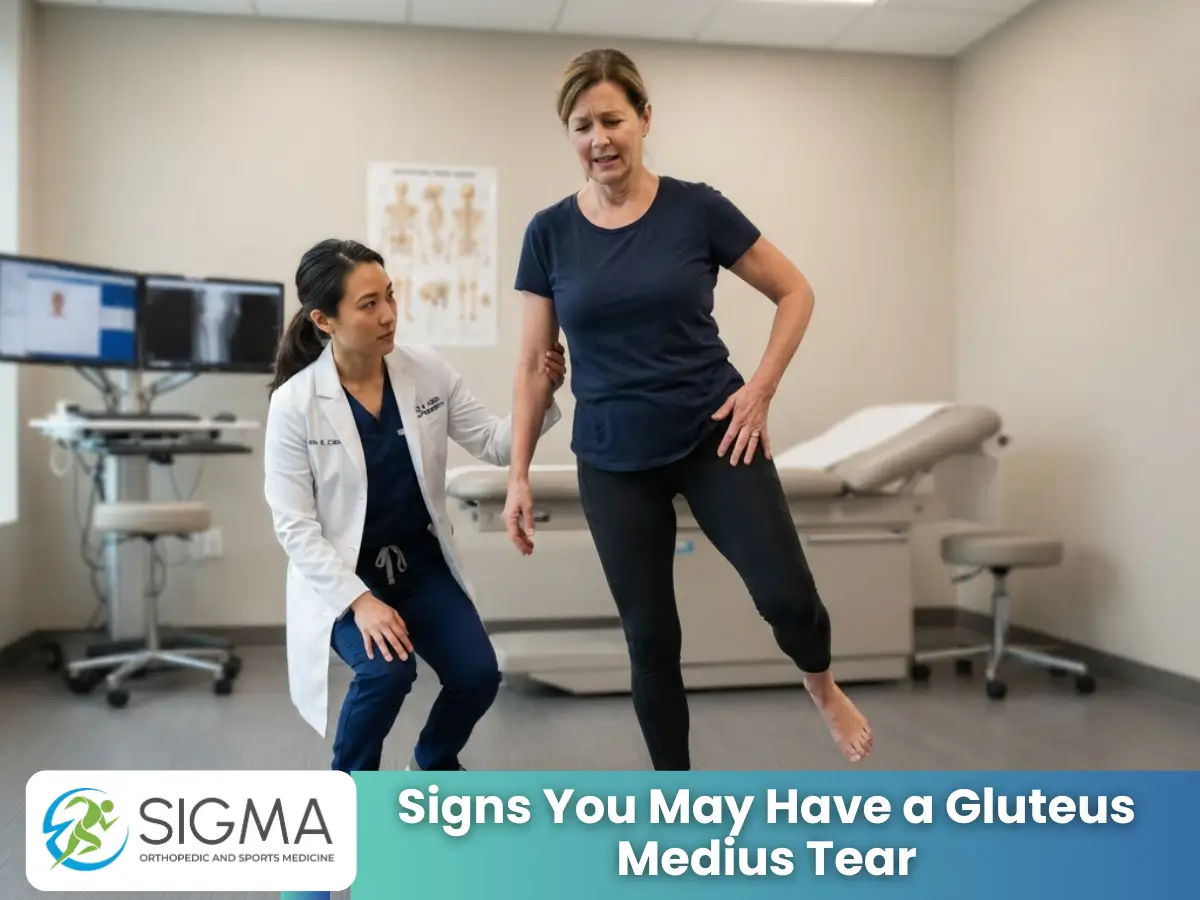
The symptoms often resemble bursitis or general hip pain, causing many people to delay proper evaluation.
Common symptoms include persistent pain on the outside of the hip that becomes worse during walking, climbing stairs, prolonged standing, or lying on the affected side. Many people notice discomfort after sitting for long periods before standing again.
Some patients also describe weakness rather than severe pain. They may feel unstable while walking or notice their pelvis dropping slightly when standing on one leg. This altered walking pattern, sometimes called a Trendelenburg gait, develops because the injured tendon cannot fully support the body’s weight.
If the tear progresses, everyday activities become increasingly difficult, including carrying groceries, getting into a car, or walking longer distances.
How Doctors Diagnose a Gluteal Tendon Tear
A proper diagnosis is important because treatment differs significantly from arthritis, lumbar spine disorders, or trochanteric bursitis.
Your orthopedic specialist will begin with a physical examination that evaluates hip strength, tenderness, walking pattern, and pain during specific movements. Standing on one leg or resisting hip abduction often reproduces symptoms.
Imaging studies are usually recommended when symptoms persist.
Magnetic resonance imaging (MRI) remains the most accurate test because it shows both partial and complete tendon injuries while also revealing surrounding muscle quality. Ultrasound can also identify many tendon abnormalities and is sometimes used because it allows dynamic assessment during movement.
The National Institute of Arthritis and Musculoskeletal and Skin Diseases (NIAMS) provides additional information about tendon injuries and how imaging helps guide treatment decisions.
Can Most Gluteus Medius Tears Heal Without Surgery?
Many can.
Small tears, degenerative changes, and partial tendon injuries frequently improve through conservative treatment when addressed early. The tendon itself may not always return to its original appearance on MRI, but symptoms often improve significantly as inflammation decreases and surrounding muscles become stronger.
A partial tear of gluteus minimus tendon is often treated using similar nonsurgical principles because both tendons work together to stabilize the hip.
Successful nonoperative treatment generally includes activity modification, physical therapy, pain management, and progressive strengthening rather than complete rest.
Patients who begin treatment soon after symptoms develop often experience better results than those who continue painful activities for several months before seeking care.
Recovery Timeline Without Surgery
One of the most common questions patients ask is how long recovery actually takes. While every case differs, healing generally follows predictable stages.
Weeks 1–2: Calming the Injury
The first phase focuses on reducing irritation rather than aggressively strengthening the hip.
Your healthcare provider may recommend temporarily limiting activities that worsen symptoms, especially prolonged walking, running, or climbing stairs. Sleeping with a pillow between the knees often reduces pressure on the injured tendon during the night.
Ice applied for short periods several times daily may decrease pain after activity. If appropriate, anti-inflammatory medications may also provide temporary symptom relief under medical guidance.
During this stage, many patients begin gentle range-of-motion exercises without placing excessive load on the tendon.
Weeks 3–6: Restoring Gentle Movement
As pain gradually decreases, rehabilitation shifts toward restoring normal movement patterns.
Physical therapists typically introduce controlled strengthening exercises targeting the hip abductors, core muscles, and surrounding pelvic stabilizers. Balance training often begins early because proper pelvic control reduces stress on the healing tendon.
Patients frequently notice that daily walking becomes easier during this phase, although longer distances may still produce discomfort if activity increases too quickly.
One important principle during recovery is avoiding the temptation to push through pain. Tendons respond better to gradual, progressive loading than sudden increases in activity.
Why Physical Therapy Plays Such an Important Role

Exercise is often the single most effective treatment for gluteal tendon injuries.
Rather than focusing only on the injured muscle, rehabilitation addresses the entire movement chain. Weakness in the core, pelvis, lower back, and surrounding hip muscles frequently contributes to continued tendon overload.
A skilled physical therapist gradually rebuilds strength while correcting movement patterns that may have caused the injury in the first place.
According to the American Physical Therapy Association (APTA), progressive strengthening programs help improve tendon function and reduce pain for many musculoskeletal conditions when tailored to the individual patient.
Patients who consistently attend therapy while performing prescribed home exercises often recover more predictably than those relying solely on medication or rest.
Weeks 7–12: Building Strength and Confidence
By this stage, many people notice meaningful improvements in pain and mobility. Walking becomes more comfortable, climbing stairs is easier, and sleeping on the affected side may no longer be as painful. However, the tendon is still healing, and this is not the time to return to high-impact activities without guidance.
Rehabilitation becomes more focused on increasing strength, endurance, and control. Your therapist may gradually introduce resistance bands, step-ups, side-stepping exercises, and single-leg balance activities. These movements improve the ability of the gluteal muscles to stabilize the pelvis during everyday activities.
It’s also common to begin working on functional movements such as squatting, lunging, and controlled stair climbing. These exercises prepare the hip for real-life demands while minimizing unnecessary stress on the healing tendon.
Patients who remain consistent with their rehabilitation program during this phase often experience steady progress instead of frustrating setbacks.
Months 3–6: Returning to Normal Activities
For many people, this is when recovery becomes more noticeable. Pain continues to decrease, strength improves, and confidence in daily movement returns.
Those who enjoy recreational sports may gradually resume activities like cycling, swimming, hiking, or golf if approved by their healthcare provider. Higher-impact sports, including running or tennis, usually require additional strength and stability before returning safely.
It’s important to understand that the absence of pain does not necessarily mean the tendon has fully recovered. Tendons remodel slowly, and continuing your strengthening routine helps reduce the chance of reinjury.
Some individuals recover sooner, while others require six months or longer depending on the severity of the injury and other health factors.
Factors That Affect Recovery Time
No two patients heal at exactly the same pace. Several factors influence how quickly symptoms improve and whether nonsurgical treatment is successful.
The size and location of the tear are among the biggest factors. Small partial tears generally recover more quickly than large or chronic injuries involving significant tendon degeneration.
Age also plays an important role because tendon healing naturally slows over time. Older adults often require longer rehabilitation but can still achieve excellent outcomes with consistent treatment.
Overall health matters as well. Conditions such as diabetes, smoking, obesity, and inflammatory disorders may slow tissue healing and prolong recovery.
Perhaps the most controllable factor is adherence to rehabilitation. Patients who perform their prescribed exercises consistently and avoid activities that overload the tendon often recover more successfully than those who stop therapy once symptoms begin improving.
Best Exercises During Recovery
Choosing the right exercises is just as important as performing them correctly. Early rehabilitation focuses on improving muscle activation without placing excessive stress on the injured tendon. As healing progresses, exercises become more challenging to rebuild strength and stability.
Commonly prescribed exercises for gluteus medius tear rehabilitation include side-lying leg raises, clamshells, bridges, standing hip abduction, lateral band walks, and single-leg balance drills. These exercises target the muscles responsible for stabilizing the pelvis while gradually increasing tendon load.
Core strengthening is also an essential part of recovery. A stable trunk reduces unnecessary stress on the hips during walking, lifting, and athletic activities.
Exercises should never cause sharp pain. Mild muscle fatigue is expected, but increasing hip pain after a workout usually indicates that the tendon has been overloaded and the program should be adjusted.
Activities to Avoid While Healing
Knowing what not to do can be just as valuable as knowing what exercises to perform.
Repeatedly climbing stairs, running on uneven surfaces, carrying heavy loads on one side, or standing for prolonged periods may aggravate symptoms during the early stages of healing.
Crossing the affected leg over the opposite knee for long periods can also compress the injured tendon and increase irritation.
Many people instinctively stretch the outside of the hip because it feels tight. However, aggressive stretching of an irritated gluteal tendon may actually worsen symptoms during the early phases of recovery. Your therapist can recommend stretches that are appropriate for your stage of healing.
What Happens if the Tear Doesn’t Improve?
Although conservative treatment is successful for many patients, not every tendon heals well without surgery.
Persistent pain after several months of structured rehabilitation, worsening weakness, or increasing difficulty walking may indicate that the tendon has not responded adequately to nonsurgical treatment.
In some cases, repeat imaging shows that the tear has enlarged or that the tendon has significantly retracted from its attachment.
When symptoms continue to interfere with daily life despite comprehensive rehabilitation, your orthopedic specialist may discuss surgical repair as the next option.
When Is Surgery Necessary?
Surgery is usually reserved for patients with complete tears, significant tendon retraction, or persistent symptoms that fail to improve after months of appropriate nonsurgical care.
Modern surgical techniques often use minimally invasive arthroscopy or small-incision repairs to reattach the tendon securely to the bone. Rehabilitation following surgery is longer than conservative treatment and often requires protected weight-bearing before progressive strengthening begins.
Some patients who require surgery also have associated injuries involving the gluteus minimus tendon tear repair, particularly when both stabilizing tendons have been damaged. Repairing both tendons can improve hip stability and long-term function when conservative measures are no longer sufficient.
Your orthopedic surgeon will consider imaging findings, physical examination results, activity level, and overall health before recommending surgery.
What Is the Long-Term Outlook?
Most individuals with partial tendon injuries who commit to rehabilitation regain comfortable function and return to normal daily activities.
Even when MRI continues to show structural changes, many patients report little or no pain because surrounding muscles compensate and the tendon becomes less inflamed.
Recovery is often gradual rather than dramatic. Improvements typically occur month by month rather than week by week.
For active adults, continuing a maintenance strengthening program after formal therapy ends remains one of the best ways to reduce future tendon problems.
Patients researching gluteus minimus before and after treatment often focus on imaging results, but the more meaningful measure of success is improved strength, reduced pain, restored mobility, and the ability to return to activities that matter most.
Similarly, individuals experiencing ongoing gluteus minimus pain should remember that persistent symptoms do not automatically mean surgery is required. A thorough evaluation can determine whether the discomfort is coming from the tendon itself, nearby bursae, the lower back, or another hip condition.
For reliable patient education about tendon health and musculoskeletal conditions, MedlinePlus provides evidence-based information reviewed by medical experts.
When Should You See an Orthopedic Specialist?

While mild hip pain may improve with rest, certain symptoms deserve prompt medical evaluation.
Seek medical attention if your pain persists for more than several weeks despite activity modification, if walking becomes increasingly difficult, if weakness continues to worsen, or if you develop a noticeable limp that doesn’t improve.
Early diagnosis allows treatment to begin before a small tendon injury progresses into a larger tear that may require more extensive intervention.
An orthopedic evaluation also helps rule out other conditions that can mimic gluteal tendon injuries, including hip arthritis, lumbar spine disorders, stress fractures, or bursitis.
Final Thoughts
Recovering from a gluteal tendon injury requires patience, but many people achieve excellent results without surgery. A structured rehabilitation program, gradual strengthening, and realistic expectations often provide significant pain relief and restore normal function over time. While recovery timelines vary, staying consistent with therapy and avoiding activities that overload the tendon are among the most important factors influencing success.
If your hip pain continues despite conservative treatment, seeking an evaluation from an experienced orthopedic specialist can help determine whether additional imaging or alternative treatment options are appropriate. At SIGMA Orthopedics and Sports Medicine, patients receive comprehensive evaluations and personalized treatment plans designed to restore mobility while minimizing unnecessary surgery. Whether you’re an active athlete or simply want to return to comfortable daily living, SIGMA Orthopedics and Sports Medicine focuses on evidence-based care tailored to your goals and long-term joint health.
Frequently Asked Questions
How long does a gluteus medius tear take to heal without surgery?
Most partial tears improve within three to six months when treated with physical therapy, activity modification, and a progressive strengthening program. Larger or chronic tears may require a longer recovery period.
Can a gluteus medius tear heal on its own?
Many mild and partial tears can improve without surgery, especially when supported by appropriate rehabilitation. Simply resting without strengthening the surrounding muscles is usually not enough for optimal recovery.
Is walking good for a gluteus medius tear?
Gentle walking is often encouraged once pain begins to improve. However, long walks or walking that increases pain should be limited until strength and stability improve.
What is the fastest way to recover from a gluteal tendon tear?
The most effective approach combines an accurate diagnosis, individualized physical therapy, gradual strengthening, activity modification, and following your healthcare provider’s recommendations rather than rushing back into normal activities.
How do I know if I need surgery?
Persistent pain, worsening weakness, difficulty walking, complete tendon tears, or failure to improve after several months of conservative treatment may indicate that surgical repair should be considered. An orthopedic specialist can determine the best treatment based on your symptoms and imaging results.
Can I exercise with a gluteus medius tear?
Yes, but the exercises should be carefully selected based on your stage of recovery. Low-impact strengthening and stability exercises are generally preferred over running, jumping, or heavy resistance until the tendon has healed sufficiently.
Disclaimer: This content is for informational purposes only and does not constitute medical advice. Always seek the advice of a qualified healthcare provider with any questions you may have regarding a medical condition or before starting any new medication. Never disregard professional medical advice or delay in seeking it because of something you have read in this blog.