

When comparing cobalt chrome vs titanium knee replacement, there is no one-size-fits-all winner. Cobalt chrome is widely known for its exceptional durability and wear resistance, while titanium is valued for its lighter weight, excellent biocompatibility, and ability to integrate with bone. The best option depends on your anatomy, lifestyle, implant design, and your surgeon’s recommendation.
Many patients focus on the surgery itself and rarely think about the materials inside a knee implant. However, implant materials can influence comfort, longevity, bone health, and long-term outcomes. Modern orthopedic implants are engineered to withstand millions of movement cycles, so the choice of material matters more than most people realize.
W{hy Implant Materials Matter More Than Most Patients Realize
A knee replacement implant must perform reliably for years under significant stress. Every step, stair climb, or squat places pressure on the joint. The implant material needs to be strong, corrosion-resistant, and safe for the body over the long term.
Orthopedic engineers choose materials based on several key factors:
- Wear resistance
- Strength under load
- Corrosion resistance
- Compatibility with human tissue
- Ability to bond with bone
- Long-term durability
Most modern knee implants are not made from a single material. Instead, they combine metals and medical-grade polyethylene plastic to optimize performance.
What Is Cobalt Chrome and Why Is It Commonly Used in Knee Replacements?
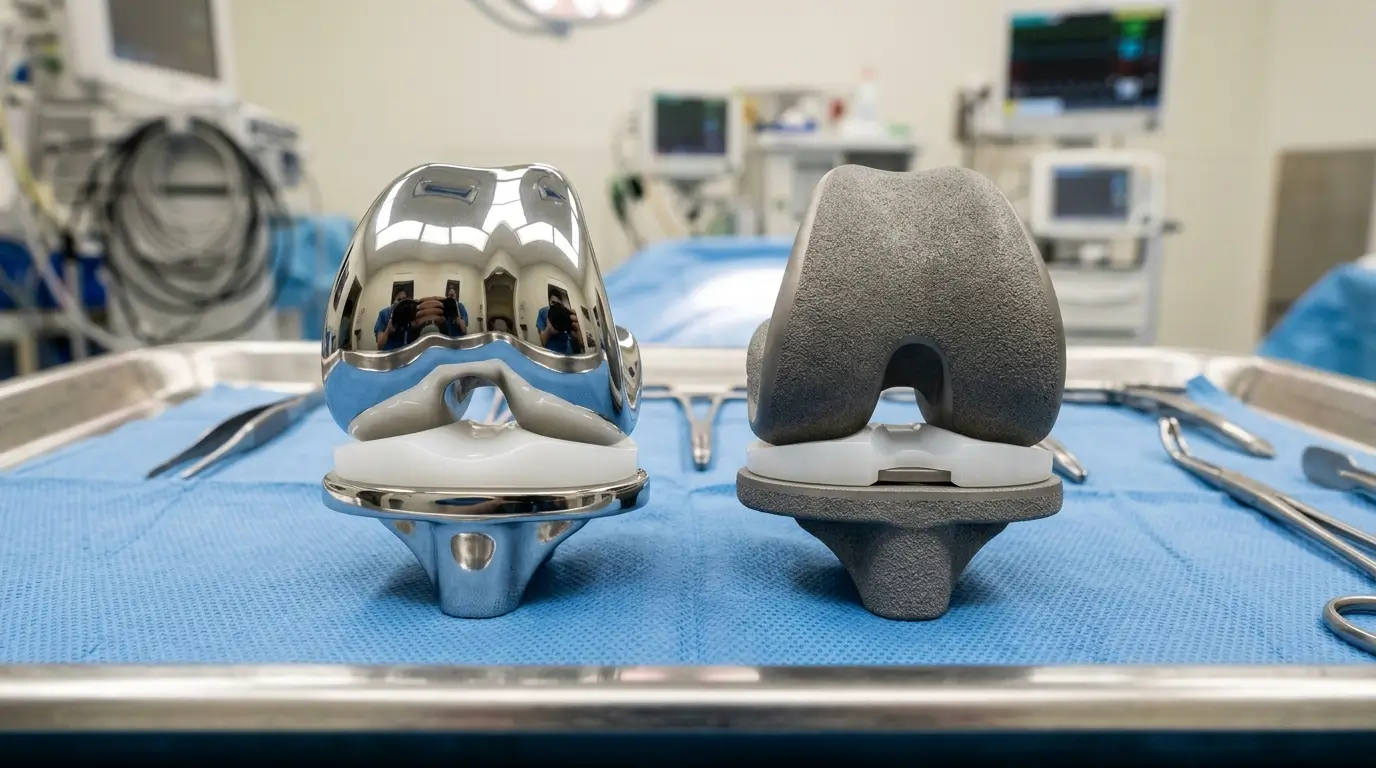
Cobalt chrome, also called cobalt-chromium alloy, has been a cornerstone of orthopedic implants for decades. It is extremely hard and resistant to wear, which makes it ideal for surfaces that experience constant friction.
In a knee replacement, the femoral component often uses cobalt chrome because it must glide smoothly against the polyethylene insert during movement. The hardness of the alloy helps maintain a polished surface over time, reducing surface damage and wear.
Advantages of Cobalt Chrome
Cobalt chrome offers several important benefits:
- Excellent wear resistance
- High strength under heavy loads
- Strong resistance to corrosion
- Long clinical track record
- Reliable performance in active patients
Because the knee is a weight-bearing joint, durability is especially important. Cobalt chrome has proven effective in maintaining structural integrity even after years of daily use.
Potential Drawbacks
Although cobalt chrome is generally safe, it can release tiny metal ions over time as microscopic wear occurs. Most patients never notice any problem, but a small percentage may have sensitivity to metallic materials.
Patients with a history of metal allergies should discuss this with their orthopedic surgeon before surgery. In some cases, alternative implant materials or coatings may be considered.
What Makes Titanium Different?
Titanium is one of the most widely used materials in modern orthopedic surgery. It is used in joint replacements, fracture fixation devices, spinal implants, and many other procedures because of its excellent biocompatibility.
Unlike cobalt chrome, titanium is lighter and slightly more flexible. Its mechanical properties are closer to natural bone, which may help reduce stress shielding. Stress shielding occurs when an overly rigid implant causes surrounding bone to bear less load, potentially affecting bone density over time.
Advantages of Titanium
Titanium provides several unique benefits:
- Excellent biocompatibility
- Strong resistance to corrosion
- Lighter weight than cobalt chrome
- Better potential for bone integration
- Lower stiffness compared with harder alloys
One of titanium’s biggest strengths is osseointegration, the process where bone grows directly onto the implant surface. This makes titanium especially useful in cementless implant designs that rely on biological fixation.
Potential Drawbacks
Titanium is strong, but it is generally not as hard or wear-resistant as cobalt chrome. For surfaces that experience direct friction, manufacturers often prefer harder materials. That is why many knee replacement systems use titanium for structural components and cobalt chrome for articulating surfaces.
Cobalt Chrome vs Titanium: A Side-by-Side Comparison
Durability
Cobalt chrome is generally more wear-resistant than titanium. Its hardness helps maintain a smooth articulating surface over many years of movement. Titanium remains durable but is not typically the preferred material for high-friction bearing surfaces.
Bone Integration
Titanium has a major advantage in promoting bone growth into the implant surface. This makes it particularly valuable for cementless knee replacements and other procedures that depend on long-term biological fixation.
Comfort and Weight
Titanium is lighter than cobalt chrome. While most patients cannot feel the difference once implanted, the reduced weight contributes to its popularity in orthopedic device design.
Corrosion Resistance
Both materials resist corrosion well, but titanium forms a natural protective oxide layer that provides exceptional long-term stability inside the body.
Metal Allergy Concerns
Patients with known metal sensitivities may benefit from discussing titanium-based options with their surgeon. Although allergic reactions are uncommon, titanium is often considered a favorable choice for individuals concerned about metal compatibility.
Does Implant Material Affect Recovery or Longevity?
Many patients assume that the implant material alone determines how long a knee replacement will last. In reality, longevity depends on several factors:
- Surgical technique
- Implant alignment
- Patient weight
- Activity level
- Bone quality
- Rehabilitation and physical therapy
- Overall health conditions
A well-positioned implant often performs better than a poorly positioned implant regardless of the material used. Modern knee replacements can last 15–20 years or longer, especially when patients maintain a healthy weight and follow rehabilitation guidelines.
Why Implant Design Often Matters More Than the Metal Itself
This is an important point many articles overlook. Implant material is only one part of the equation. The overall implant design, including geometry, surface coating, fixation method, and polyethylene quality, often has a greater impact on long-term success.
For example, a knee implant may use:
- A cobalt-chromium femoral component for wear resistance
- A titanium tibial baseplate for bone integration
- A highly cross-linked polyethylene insert for smooth movement
This hybrid approach allows manufacturers to combine the strengths of multiple materials. Instead of asking which metal is better, patients should focus on whether the entire implant system is appropriate for their anatomy and lifestyle.
Modern Advances in Knee Replacement Materials
Orthopedic technology continues to evolve. Newer implants may include advanced surface coatings, improved polyethylene inserts, and porous titanium structures that encourage stronger bone attachment.
Some innovations aim to reduce wear particles, improve stability, and extend implant longevity. Researchers are also exploring highly porous metals and bioactive coatings that may further improve osseointegration in the future.
How Titanium Is Used Beyond Knee Replacement Surgery
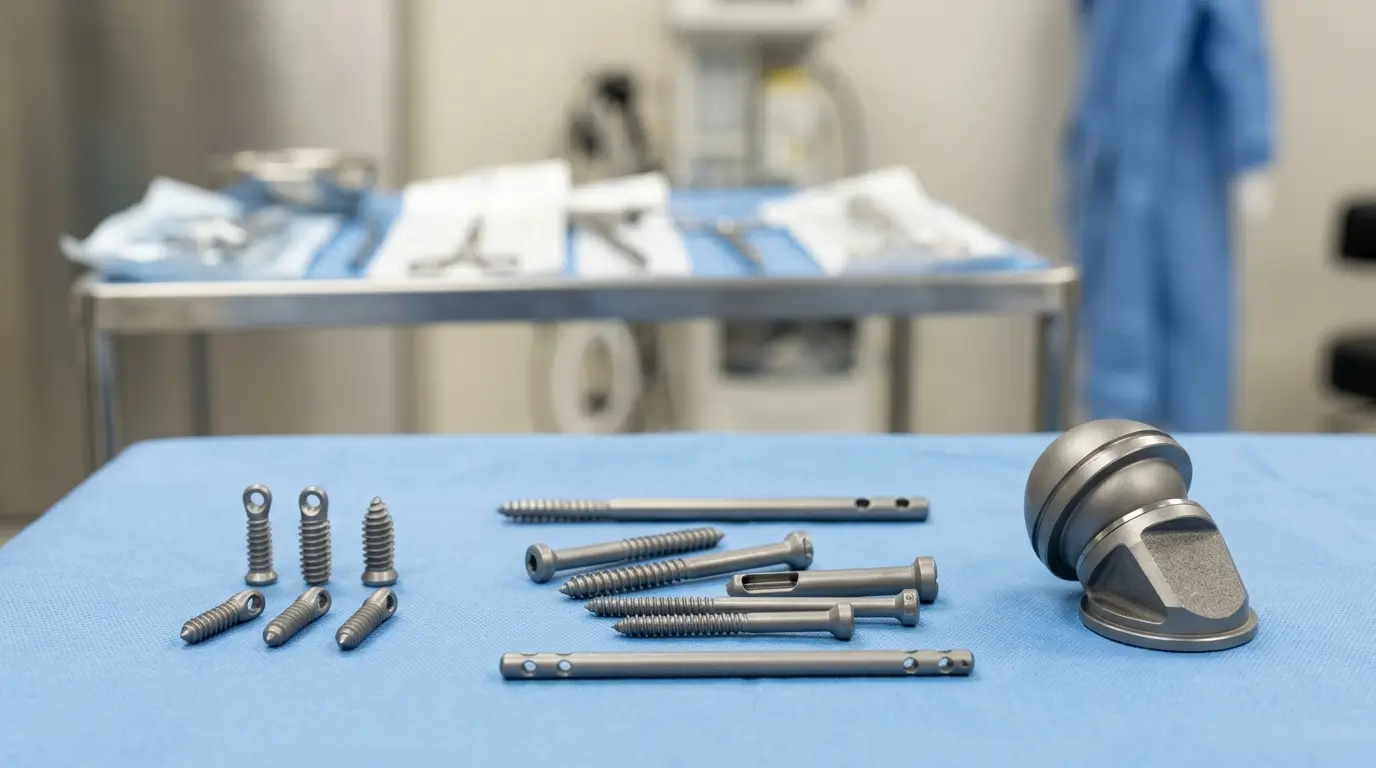
Titanium is not limited to knee implants. It plays a major role across orthopedic surgery, particularly in shoulder procedures.
Titanium in Shoulder Surgery
In shoulder surgery, titanium is commonly used in:
- Shoulder arthroscopy anchors for rotator cuff repair
- Titanium anchor shoulder systems that secure tendons to bone
- Titanium screws for shoulder surgery to stabilize fractures or repairs
- Titanium shoulder replacement components in joint reconstruction
- Titanium rod in shoulder fixation for complex trauma cases
Patients often ask, “What does a rotator cuff do?” The rotator cuff is a group of muscles and tendons that stabilize the shoulder joint and allow lifting, rotating, and positioning of the arm. When these tendons tear, surgeons may use anchors and screws to repair them.
PEEK vs Titanium in Orthopedic Implants
Another common comparison is PEEK vs titanium. PEEK (polyether ether ketone) is a high-performance polymer used in certain orthopedic implants.
Advantages of PEEK
PEEK offers benefits such as:
- Radiolucency, meaning it does not interfere with imaging studies
- Elastic properties closer to bone
- Lightweight design
When Titanium Is Preferred
Titanium remains the more established material for many load-bearing orthopedic procedures because of its proven strength, corrosion resistance, and bone integration. In shoulder surgery, peek anchor shoulder devices and other peek anchor material systems may be selected for specific clinical situations, but titanium continues to be widely trusted for long-term fixation.
Questions to Ask Your Orthopedic Surgeon Before Surgery
Before undergoing knee replacement, consider asking:
- Which implant system will be used?
- Will the implant contain cobalt chrome, titanium, or both?
- Is the procedure cemented or cementless?
- Do I have any risk factors for metal sensitivity?
- How long has this implant design been in clinical use?
- What outcomes have you seen with this system?
- How long is the expected recovery process?
These conversations can help you better understand your options and feel more confident about your treatment plan.
Final Thoughts
The debate around cobalt chrome vs titanium knee replacement is not about choosing a universally superior material. Both have proven track records and important strengths.
Cobalt chrome excels in durability and wear resistance, making it ideal for high-contact joint surfaces. Titanium offers exceptional biocompatibility, lighter weight, and superior bone integration. Many modern implant systems successfully combine both materials to optimize performance.
If you are considering knee replacement surgery, the most important decision is working with an experienced orthopedic specialist who can match the implant design to your specific needs. At Sigma Orthopedics & Sports Medicine, patient education is an essential part of treatment planning, helping individuals understand their options before moving forward with surgery. Whether you are evaluating implant materials or exploring advanced joint replacement techniques, informed decisions lead to better outcomes.
FAQ Section
Is cobalt chrome stronger than titanium for knee replacement?
Cobalt chrome is generally harder and more wear-resistant than titanium. This makes it especially useful for articulating surfaces that experience constant friction during movement.
Does titanium last longer than cobalt chrome?
Not necessarily. Implant longevity depends on surgical technique, implant design, alignment, patient health, and activity level. Both materials have demonstrated excellent long-term clinical performance.
Can you be allergic to cobalt chrome implants?
A small percentage of patients may have sensitivity to metallic materials. Individuals with known metal allergies should discuss implant options with their surgeon before surgery.
Why do many knee replacements contain both titanium and cobalt chrome?
Manufacturers often combine materials to leverage their strengths. Cobalt chrome provides wear resistance, while titanium promotes bone integration and biological compatibility.
Are titanium implants safe for MRI scans?
Most modern titanium orthopedic implants are considered MRI-compatible. Patients should still inform imaging providers about any implanted medical devices before undergoing an MRI.
What is the difference between PEEK and titanium implants?
PEEK is a high-performance polymer with elastic properties closer to bone and minimal imaging interference. Titanium is stronger, more corrosion-resistant, and better established for many load-bearing orthopedic procedures.
What does a rotator cuff do?
The rotator cuff stabilizes the shoulder joint and helps control arm movement, including lifting, rotating, and positioning the arm. Injuries to the rotator cuff are commonly treated with arthroscopic repair using anchors and screws.
Disclaimer: This content is for informational purposes only and does not constitute medical advice. Always seek the advice of a qualified healthcare provider with any questions you may have regarding a medical condition or before starting any new medication. Never disregard professional medical advice or delay in seeking it because of something you have read in this blog.