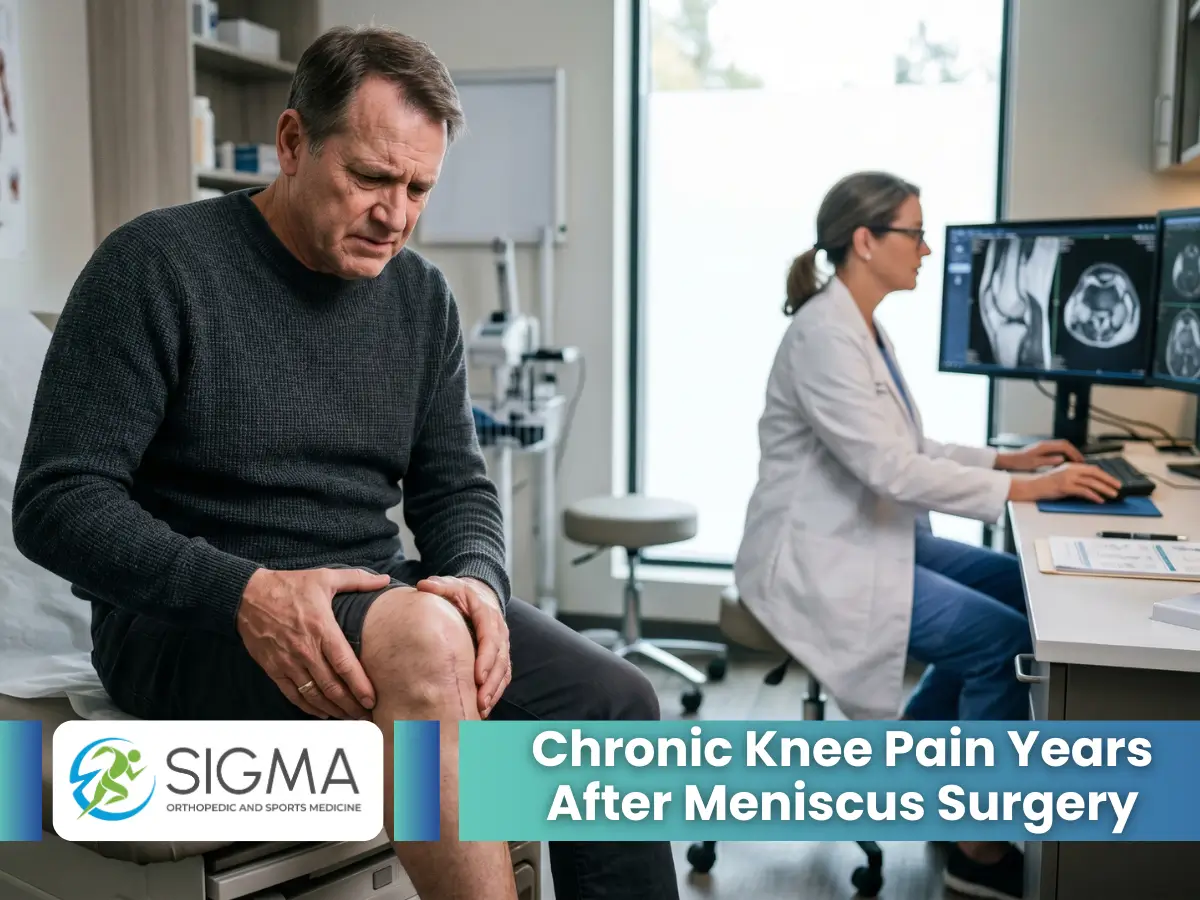
Persistent knee pain years after meniscus surgery can develop even when the original operation seemed successful. Common explanations include cartilage wear, changes in how force moves through the knee, inflammation, scar tissue, muscle weakness, or a new injury. The right treatment depends on identifying the cause—not assuming the meniscus has torn again.
If pain is worsening, the knee repeatedly swells or gives way, or you cannot fully move it, arrange an assessment with an orthopedic clinician. A sudden major swelling, a hot and red knee with fever, inability to bear weight, or a locked knee needs prompt medical attention.
Why can knee pain return years after meniscus surgery?
The meniscus is a crescent-shaped piece of cartilage that helps distribute load and absorb shock between the thighbone and shinbone. Surgery may repair a tear or remove the damaged portion. When some meniscal tissue is removed, the knee has less cushioning, which can increase pressure on the joint surfaces. This does not mean every patient will develop arthritis, but it can contribute to cartilage wear over time.
The phrase long-term side effects of meniscus surgery can refer to several different issues, and not all are direct complications of the operation. Symptoms may reflect the original injury, the amount of tissue removed, natural age-related changes, activity demands, or a separate condition that developed later. Common long-term problems after meniscus surgery can include recurring pain, stiffness, swelling, or cartilage changes, but the cause should be assessed rather than assumed.
Common long-term problems after meniscus surgery
Cartilage wear and osteoarthritis
Cartilage changes can lead to aching during walking, stiffness after sitting, swelling after activity, or grinding sensations when bending the knee. These symptoms may develop gradually. An examination and, when appropriate, weight-bearing X-rays can help assess joint-space narrowing and signs of osteoarthritis.
Post-meniscectomy syndrome
Post meniscectomy syndrome describes persistent symptoms after part or all of the meniscus has been removed. People may notice deep aching, recurrent swelling, or reduced tolerance for standing, walking, and exercise. The term does not identify one single cause, so a clinician should assess cartilage health, alignment, strength, and the amount of meniscal tissue remaining.
Scar tissue, stiffness, or reduced movement
Healing naturally involves scar formation, but stiffness can also arise from inflammation, weakness, or joint changes. Difficulty straightening or bending the knee should not automatically be blamed on scar tissue. A clinician can assess the range of motion and determine whether rehabilitation, imaging, or further investigation is appropriate.
Swelling or pain behind the knee
Fluid inside the knee can sometimes contribute to a Baker’s cyst, which may cause fullness or discomfort behind the joint. Tendon irritation and other conditions can cause similar symptoms. Sudden calf swelling or pain needs prompt medical assessment because it can have causes unrelated to the meniscus.
Buckling or a possible new tear
A knee that gives way may reflect pain-related muscle inhibition, weakness, instability, or another injury. A new meniscus tear is possible, especially after a twisting injury, but pain alone cannot confirm it. Locking, catching, or swelling should be evaluated in context rather than treated as proof that the original surgery failed.
How is chronic knee pain diagnosed?
The assessment usually starts with your symptoms, the type of surgery performed, the timing of pain, and what makes it better or worse. Your clinician may examine knee motion, tenderness, strength, alignment, walking pattern, and stability. Bring previous imaging or operative records if available.
X-rays can help identify osteoarthritis or changes in joint spacing. MRI may be useful when the clinician needs to assess remaining meniscal tissue, cartilage, ligaments, or other soft tissues. Imaging is selected based on the examination; not everyone needs an MRI. The American Academy of Orthopaedic Surgeons’ meniscus tear information explains the role of the meniscus and common evaluation methods.
What treatment can help years after surgery?
Treatment is based on the cause and severity of symptoms. Many patients start with non-surgical care, including a physical therapy program tailored to strength, mobility, balance, and daily activities. Low-impact activities such as cycling or swimming may be more comfortable than repeated jumping or running while symptoms are being evaluated.
A clinician may also discuss activity modification, weight management when relevant, a brace for selected problems, or medication when safe for the patient. Injections may be considered in some cases, but benefits differ by treatment and diagnosis; they do not restore removed meniscal tissue. The Mayo Clinic’s overview of knee pain causes provides additional background on conditions that can cause knee symptoms.
Further surgery is considered only when examination and imaging identify a problem for which an operation is likely to help. Options depend on the findings and may include treatment for a new tear, selected cartilage-preserving procedures, or joint replacement for advanced arthritis. Another arthroscopy is not automatically the best answer for long-standing pain.
Is meniscus removal recovery time relevant years later?
Recovery timelines mainly describe the weeks and months after an operation, whereas pain that returns years later needs a fresh assessment. Recovery also differs between partial meniscectomy, in which damaged tissue is trimmed, and meniscus repair, in which tissue is stitched to heal. For rehabilitation details, see SIGMA’s meniscus surgery recovery timeline. If your main symptom is persistent tightness or difficulty bending, the related guide on [knee tightness after meniscus surgery may also be useful.
How can you protect your knee long term?
Build strength gradually, follow a sustainable activity plan, and avoid pushing through increasing swelling or sharp pain. Keeping the quadriceps, hamstrings, hips, and calf muscles strong can support movement and function. Choose activities that match your symptoms and follow a clinician’s advice when pain persists. The CDC’s guidance on physical activity and arthritis discusses how regular activity can help people manage joint conditions.
SIGMA Orthopedics and Sports Medicine can assess persistent knee symptoms and discuss appropriate next steps. An individualized evaluation helps distinguish joint degeneration from a new injury or another cause of pain.
Frequently asked questions
What are the long-term side effects of meniscus surgery?
Possible long-term issues include recurring pain, stiffness, swelling, reduced activity tolerance, and cartilage degeneration. Some people have no lasting symptoms; the outcome depends on the original injury, the procedure, and other factors.
Can knee pain return 10 or 20 years after meniscus surgery?
Yes. Cartilage wear, osteoarthritis, a new injury, or changes in muscle strength can cause symptoms years later. An evaluation can help identify the cause.
What is post meniscectomy syndrome?
It is a term for persistent symptoms after meniscal tissue has been removed. It describes a pattern of symptoms rather than a diagnosis that explains every patient’s pain.
Does long-term knee pain mean the meniscus tore again?
Not necessarily. Arthritis, inflammation, weakness, scar-related stiffness, or other joint problems can cause similar symptoms. Examination and selected imaging help distinguish them.
When should I see a specialist?
Seek an assessment for persistent or worsening pain, repeated swelling, buckling, locking, or difficulty with everyday movement. Seek urgent care for a hot, red knee with fever, inability to bear weight, sudden major swelling, or a locked knee.