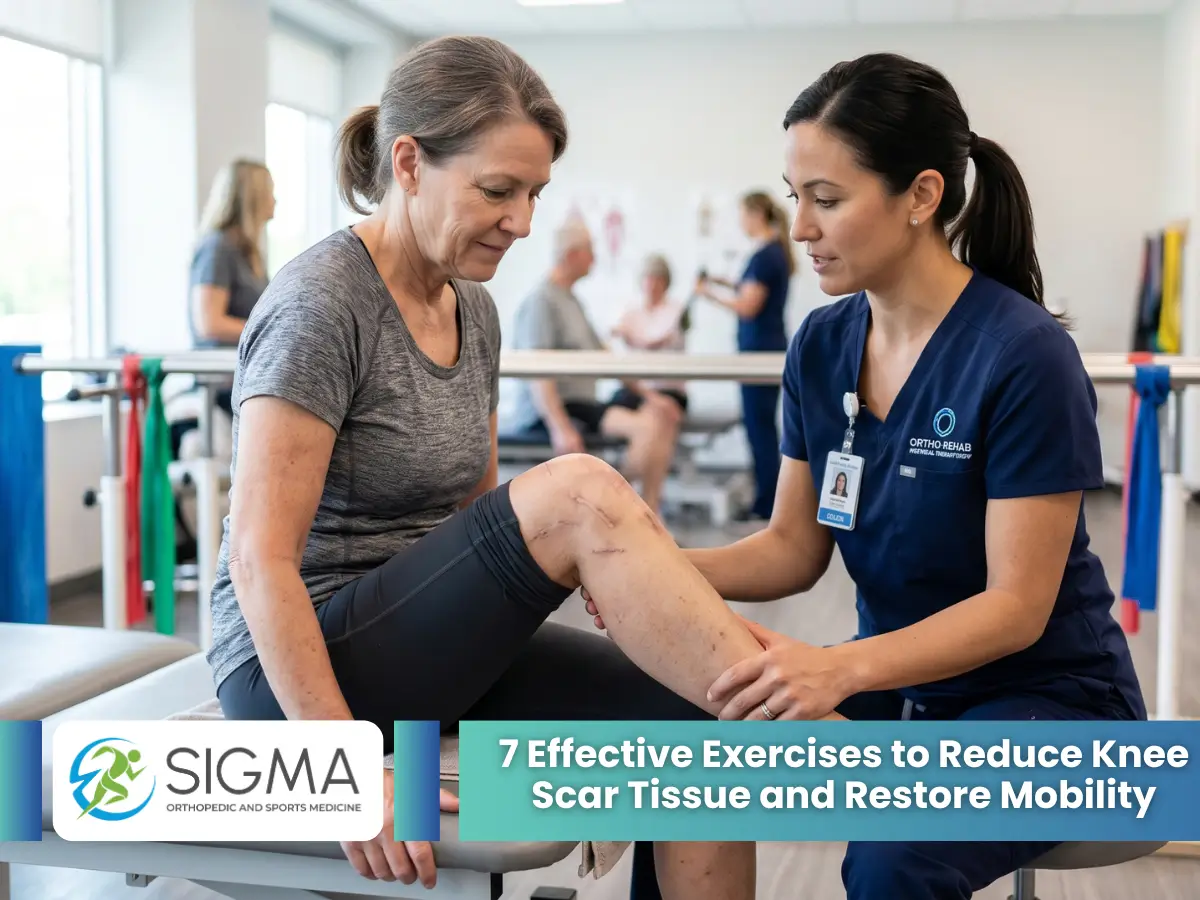
If your knee feels stiff, tight, or difficult to bend months after surgery or an injury, scar tissue may be limiting your movement. The good news is that targeted exercises, combined with consistent rehabilitation, can help improve mobility, reduce stiffness, and restore function. While severe cases sometimes require medical intervention, many people can make significant progress through the right movement program.
Scar tissue is a natural part of healing. After surgery, trauma, or inflammation, the body produces collagen fibers to repair damaged tissue. However, when these fibers become excessive or disorganized, they can restrict normal joint movement and create discomfort. Understanding how scar tissue affects the knee, and what you can do about it can make a major difference in your recovery.
Understanding Scar Tissue in the Knee
The knee is a complex joint made up of bones, cartilage, ligaments, tendons, muscles, and connective tissues. Whenever one of these structures is injured or surgically repaired, healing begins almost immediately.
During the healing process, scar tissue forms to stabilize the area. Ideally, this tissue gradually remodels and becomes more flexible over time. However, some individuals develop excessive adhesions, which are bands of fibrous tissue that can restrict movement and create stiffness.
This condition can occur after:
- Total knee replacement
- ACL reconstruction
- Meniscus surgery
- Fracture repair
- Ligament repair procedures
- Significant knee injuries involving swelling and inflammation
Many patients describe symptoms such as difficulty fully bending or straightening the knee, a feeling of tightness, pain during movement, and reduced flexibility.
Why Scar Tissue Causes Long-Term Stiffness
Healthy knee movement depends on multiple structures gliding smoothly against one another. Excessive scar tissue can disrupt this process.
When adhesions develop around tendons, muscles, or the joint capsule, they limit normal motion. Over time, reduced movement may lead to muscle weakness, altered walking patterns, and additional stress on surrounding joints.
This is why early rehabilitation after surgery is so important. Movement helps guide collagen fibers into a more organized pattern, reducing the risk of long-term restrictions.
According to the American Academy of Orthopaedic Surgeons, maintaining mobility during recovery is one of the most important factors in preventing postoperative stiffness and restoring function.
Can You Break Up Scar Tissue Without Surgery?
Many people wonder about the best approach to improve mobility naturally.
The reality is that scar tissue cannot simply be “broken” apart like a solid object. Instead, targeted movement, stretching, strengthening, and manual therapy can help remodel tissue, improve flexibility, and reduce adhesions over time.
However, severe motion loss may require additional medical treatments such as manipulation under anesthesia or arthroscopic scar tissue removal.
Signs That Scar Tissue May Be Limiting Your Recovery
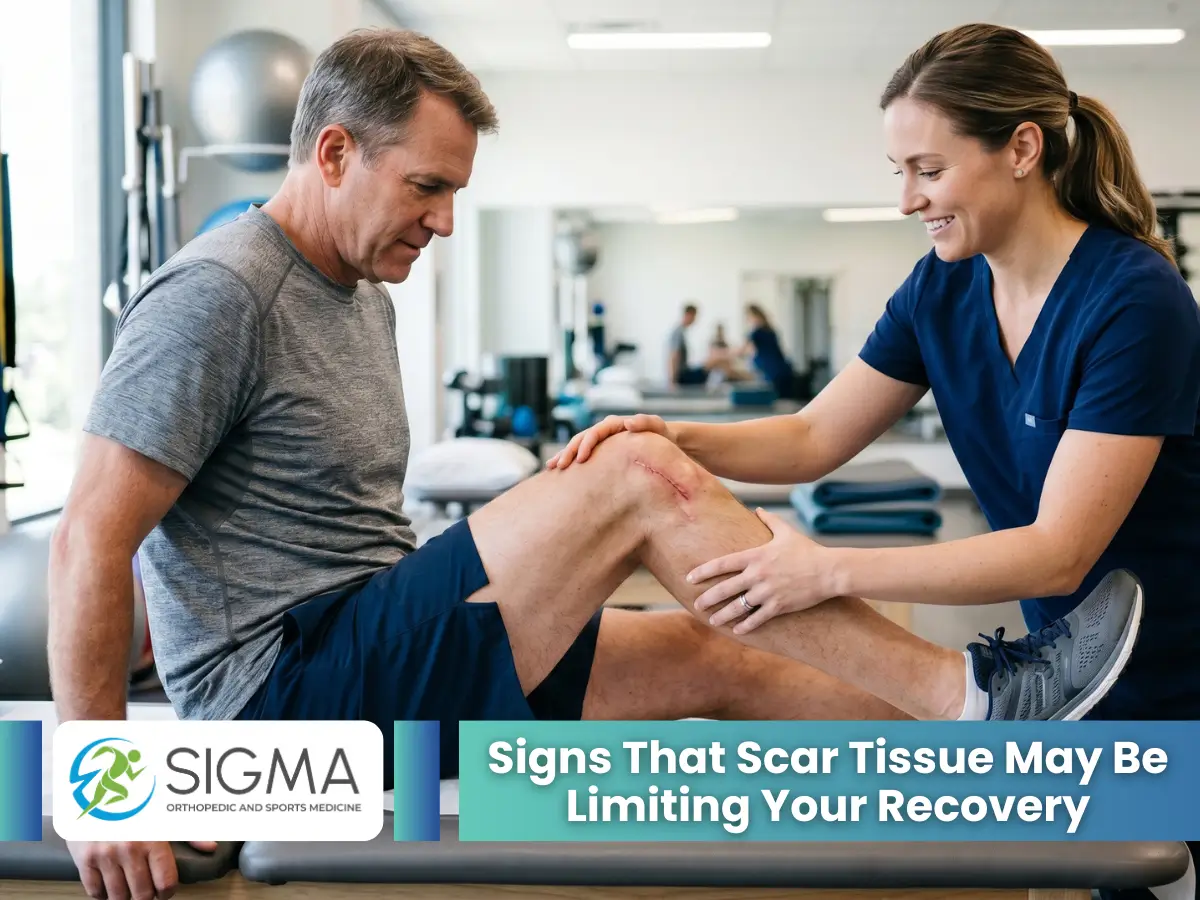
Not every stiff knee is caused by adhesions. However, certain symptoms may suggest excessive scar formation.
You may notice:
- Persistent difficulty bending the knee
- Trouble fully straightening the leg
- Tightness that does not improve with activity
- Pain at the end range of motion
- Reduced walking efficiency
- Difficulty climbing stairs
- A sensation that the knee is “stuck”
These symptoms are commonly reported among individuals dealing with hardened scar tissue in knee structures after surgery.
Exercise 1: Heel Slides
Heel slides are often introduced early in rehabilitation because they help improve knee flexion while minimizing stress on healing tissues.
Begin by lying on your back with both legs extended. Slowly slide your heel toward your buttocks while bending the knee as far as comfortable. Pause briefly before returning to the starting position.
Perform the movement slowly and focus on gradually increasing your range of motion.
This exercise encourages mobility throughout the joint while helping remodel healing tissue.
Exercise 2: Seated Knee Flexion Stretch
This exercise helps restore bending motion in a controlled manner.
Sit on a chair with both feet flat on the floor. Slowly slide the affected foot backward underneath the chair until a gentle stretch is felt.
Hold the position for several seconds before returning to the starting position.
Over time, this movement can help improve flexibility in patients experiencing stiffness related to a scar tissue knee condition.
Exercise 3: Prone Knee Hangs
Restoring full knee extension is just as important as regaining bending ability.
Lie face down on a bed with your lower leg hanging off the edge. Allow gravity to gently straighten the knee.
Remain relaxed and avoid forcing the movement.
Many rehabilitation specialists use this exercise to improve extension deficits commonly seen after surgery.
Exercise 4: Stationary Cycling
One of the most effective low-impact mobility exercises is stationary cycling.
The circular motion promotes lubrication within the joint, encourages tissue remodeling, and improves flexibility.
Initially, you may need to adjust the seat height or perform partial revolutions. As mobility improves, full rotations typically become easier.
Cycling is frequently recommended during recovery from scar tissue after meniscus surgery because it allows repetitive movement without excessive joint loading.
Exercise 5: Quadriceps Sets
Muscle weakness often accompanies stiffness.
To perform a quadriceps set, sit or lie with your leg straight. Tighten the muscles at the front of your thigh by pressing the back of the knee toward the floor.
Hold briefly before relaxing.
Strengthening the quadriceps supports better knee mechanics and can improve overall function.
Exercise 6: Step-Ups
Once basic mobility has improved, step-ups help restore strength and functional movement.
Use a low step and slowly step up with the affected leg. Control the movement as you return to the starting position.
This exercise helps rebuild confidence, strength, and coordination while encouraging normal joint mechanics.
Exercise 7: Controlled Wall Slides
Stand with your back against a wall and slowly slide downward into a partial squat. Only move within a comfortable range.
Wall slides combine strengthening and mobility work, making them useful during later rehabilitation stages.
When performed consistently, they can help improve movement patterns affected by postoperative stiffness.
The Role of Manual Therapy and Soft Tissue Mobilization
Exercise alone is not always enough.
Physical therapists often use manual therapy techniques to complement rehabilitation. These treatments may include joint mobilizations, soft tissue massage, myofascial release, and scar mobilization.
Research suggests that combining therapeutic exercise with hands-on treatment may produce better outcomes than exercise alone in certain patients.
Manual therapy can be especially valuable when addressing breaking up scar tissue after knee replacement procedures, where significant postoperative stiffness may develop.
Recovery After Knee Replacement and Scar Tissue Formation
A knee replacement scar is a normal part of healing. Most patients experience gradual improvements in mobility during the months following surgery.
However, excessive scar tissue can occasionally lead to arthrofibrosis, a condition characterized by painful stiffness and limited motion.
Risk factors may include:
- Delayed rehabilitation
- Significant swelling
- Infection
- Multiple surgeries
- Poor pain control
- Genetic tendencies toward excessive scar formation
Patients concerned about how to break up scar tissue after knee surgery should focus on consistent exercise, swelling management, and adherence to their rehabilitation program.
Early intervention often produces the best outcomes.
What Many Recovery Guides Miss
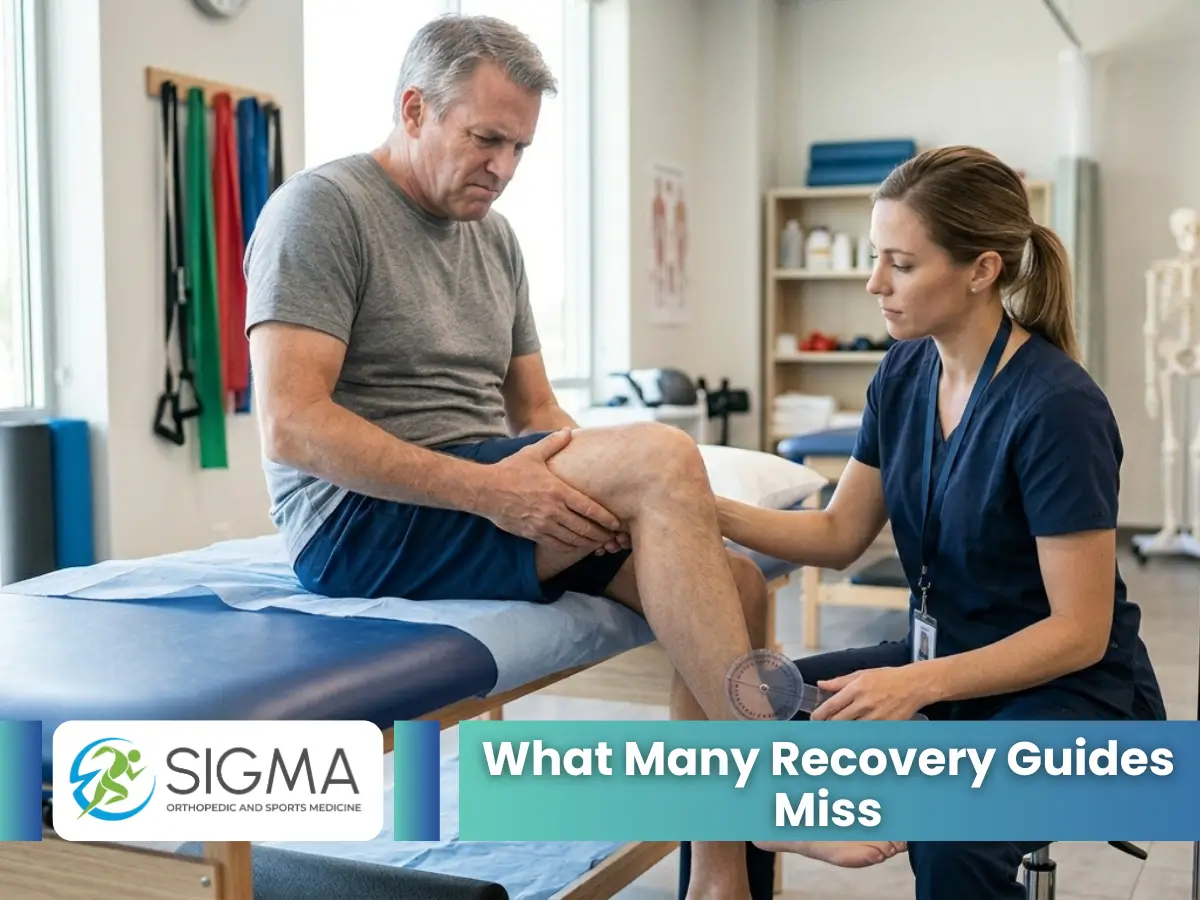
Many online resources focus only on stretching. However, long-term improvement requires a broader approach.
Successful recovery often depends on several factors working together:
Mobility exercises help restore movement.
Strength training supports proper joint mechanics.
Swelling control reduces tissue irritation.
Consistent walking promotes circulation.
Adequate protein intake supports tissue healing.
Sleep allows recovery processes to occur efficiently.
Addressing only one component may limit progress.
This comprehensive approach often produces better results than relying on a single intervention.
When Scar Tissue Requires Medical Evaluation
Sometimes stiffness persists despite months of rehabilitation.
If significant motion limitations remain, an orthopedic specialist may recommend additional imaging or evaluation.
Treatment options can include:
- Advanced physical therapy
- Manipulation under anesthesia
- Arthroscopic lysis of adhesions
- Revision surgery in rare situations
Persistent loss of motion should not be ignored, particularly if it interferes with daily activities.
At Sigma Orthopedics & Sports Medicine, patients experiencing prolonged stiffness after surgery are carefully evaluated to determine whether conservative treatment remains appropriate or whether additional intervention may be beneficial.
Preventing Future Scar Tissue Problems
The best strategy is prevention.
Following postoperative instructions, attending therapy appointments, managing swelling, and maintaining regular movement can significantly reduce the risk of excessive adhesions.
The healing process varies between individuals, but consistent rehabilitation remains one of the most effective ways to preserve knee function.
Resources from the National Institutes of Health and the American Physical Therapy Association also emphasize the importance of early mobility and structured rehabilitation in improving long-term outcomes.
Final Thoughts
Recovering from knee surgery or injury can be frustrating, especially when stiffness limits your progress. Fortunately, most cases improve with a combination of mobility work, strengthening exercises, and consistent rehabilitation.
The most effective approach is not trying to force scar tissue apart but gradually encouraging healthy tissue remodeling through movement. Whether you are recovering from a replacement procedure, ligament reconstruction, or meniscus repair, patience and consistency are critical.
If knee stiffness continues to interfere with your daily life, consulting an orthopedic specialist can help identify the cause and guide the next steps. At Sigma Orthopedics & Sports Medicine, helping patients regain mobility, reduce pain, and return to the activities they enjoy remains a central focus of care.
Frequently Asked Questions
Can scar tissue in the knee go away on its own?
Scar tissue does not completely disappear, but it can remodel and become more flexible over time. Consistent exercise and rehabilitation often improve symptoms significantly.
What is the best exercise for improving knee mobility?
Heel slides are commonly recommended because they gently improve knee flexion while minimizing stress on the joint.
How long does scar tissue take to soften after surgery?
The remodeling process can continue for many months. Many patients notice improvements between three and twelve months after surgery, although timelines vary.
Is walking good for knee scar tissue?
Yes. Walking promotes circulation, encourages joint movement, and helps maintain mobility. However, it should be performed within comfortable limits.
When should I see a doctor about knee stiffness?
If you cannot fully bend or straighten your knee, experience worsening pain, or stop making progress despite rehabilitation, a medical evaluation is recommended.
Can physical therapy remove scar tissue?
Physical therapy does not remove scar tissue directly, but it can help remodel tissue, improve mobility, reduce stiffness, and restore function.
Is scar tissue common after meniscus surgery?
Yes. Some degree of scar formation is normal after surgery. Most patients recover well, but excessive adhesions can occasionally contribute to ongoing stiffness and limited range of motion.
Disclaimer: This content is for informational purposes only and does not constitute medical advice. Always seek the advice of a qualified healthcare provider with any questions you may have regarding a medical condition or before starting any new medication. Never disregard professional medical advice or delay in seeking it because of something you have read in this blog.