
Hip replacement is not automatically the right answer for every person with hip arthritis. If your pain is manageable, your diagnosis is uncertain, or nonsurgical treatment is still helping, there may be good reasons to delay or avoid surgery for now. On the other hand, waiting too long when severe hip pain is limiting your movement and quality of life can lead to muscle weakness, reduced activity, and a harder recovery later.
The decision should be based on more than an X-ray. Your symptoms, physical function, underlying condition, overall health, treatment response, age, activity goals, and personal preferences all matter.
What Does Hip Replacement Actually Treat?
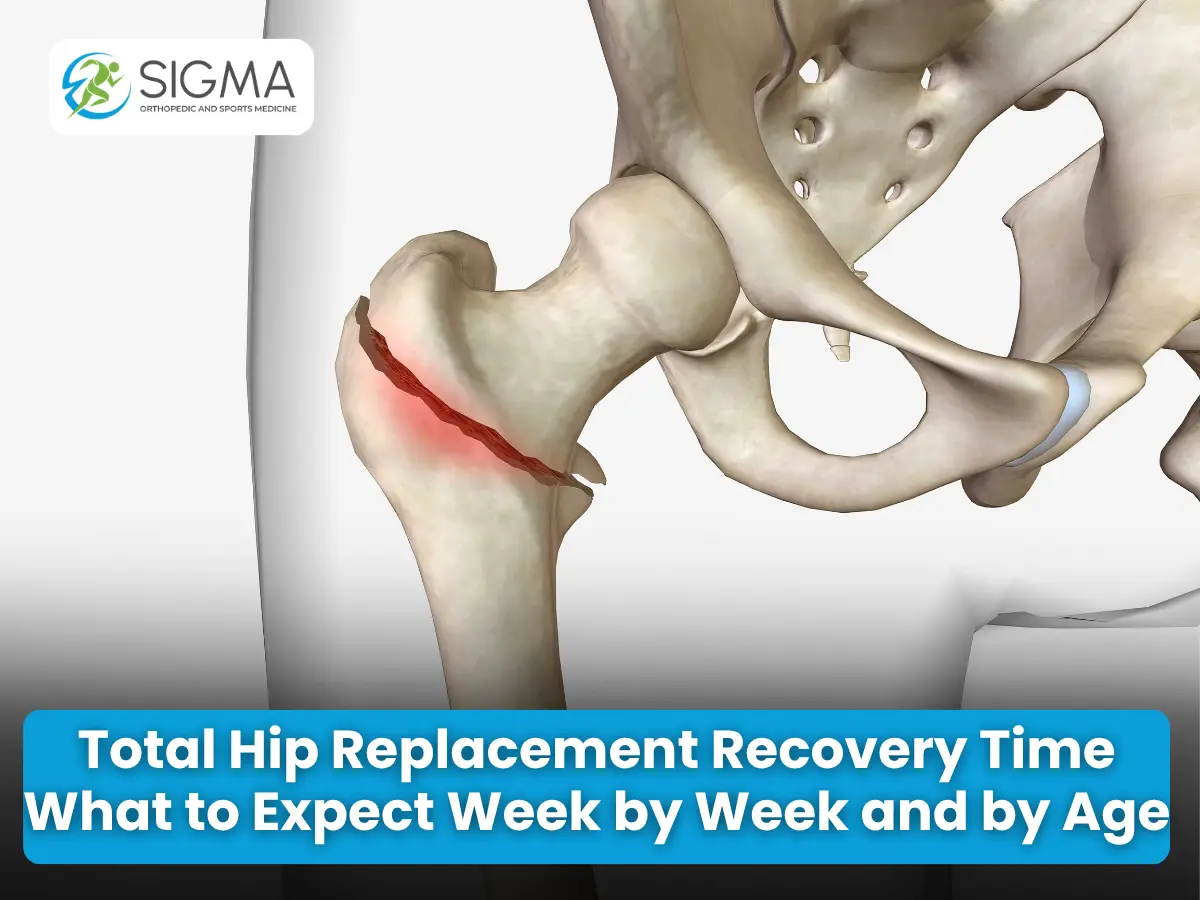
A total hip replacement removes damaged portions of the hip joint and replaces them with artificial components. It is most commonly used for advanced osteoarthritis, but it may also be recommended for conditions such as rheumatoid arthritis, osteonecrosis, or certain hip fractures.
The goal is not simply to make an abnormal X-ray look better. The purpose is to reduce significant pain and restore function when the damaged joint is interfering with normal life.
According to the National Institute of Arthritis and Musculoskeletal and Skin Diseases’ hip replacement guidance, doctors may first recommend pain management, physical therapy, exercise, activity modification, and assistive devices before considering replacement. Surgery becomes more reasonable when these approaches no longer provide enough relief.
That distinction is important because some people have substantial arthritis on an X-ray but relatively little pain. Others have moderate imaging changes but severe symptoms. Treatment decisions should account for both the images and the person experiencing them.
When Are There Reasons Not to Have Hip Replacement?
There are several situations in which avoiding or postponing hip replacement can be reasonable. The most important is when the symptoms are not severe enough to justify the risks and recovery associated with major surgery.
If you can walk, sleep, work, exercise, and complete daily activities with manageable discomfort, your surgeon may recommend continuing conservative treatment rather than replacing the joint immediately.
Another reason is that the source of pain may not be clear. Hip pain can come from the hip joint, but it can also originate in the lower back, tendons, bursae, muscles, or nerves. Replacing the hip will not correct a problem that is actually coming from another structure.
Surgery may also need to be postponed when a patient’s overall health makes the procedure less appropriate at that particular time. Certain medical problems, infections, poor skin condition, uncontrolled health issues, or other surgical risk factors may need to be addressed first.
In other words, the question should not be, “Can I get a hip replacement?” It should be, “Is hip replacement the best treatment for my symptoms right now?”
Can You Avoid Hip Replacement With Nonsurgical Treatment?
Sometimes, yes. However, nonsurgical treatment does not rebuild severely damaged cartilage or permanently reverse advanced osteoarthritis.
The purpose of conservative care is to control pain, maintain mobility, strengthen the muscles around the hip, and help you remain active. For some patients, this can provide enough relief to postpone surgery for a meaningful period of time.
Physical therapy can be particularly useful when weakness, stiffness, or poor movement mechanics are contributing to symptoms. A therapist can develop exercises that improve hip strength and range of motion without repeatedly aggravating the joint.
Low-impact activities can also be easier on an arthritic hip. Swimming, cycling, and appropriate walking programs may allow you to stay active while placing less stress on the joint than running or jumping.
Weight management can be helpful as well. The CDC notes that even modest weight loss in adults with overweight or obesity can reduce arthritis-related pain and disability.
These strategies do not guarantee that you will never need surgery. They are better viewed as ways to manage symptoms and preserve function while determining whether replacement is truly necessary.
What Are the Best Ways of Preventing Hip Replacement Surgery?

There is no guaranteed method for preventing a hip replacement once advanced joint damage has developed. However, taking care of the hip earlier may help manage symptoms and preserve function.
Regular physical activity is one of the most useful habits. Strong muscles around the hip can provide better support and make everyday movement easier. Exercise should be adjusted to your symptoms rather than stopped completely because of fear of arthritis.
Maintaining a healthy weight is another important factor. Excess body weight increases the mechanical demand placed on weight-bearing joints. For people who are overweight, gradual weight loss can reduce joint stress and may improve pain and mobility.
Protecting the hip from unnecessary injury also matters. Repeated high-impact activity, poor movement patterns, and untreated injuries can contribute to joint problems in some people.
Early evaluation is equally important. Persistent hip pain should not automatically be assumed to be arthritis. Identifying the actual cause may reveal a condition that can be treated without replacement.
The CDC’s guidance on osteoarthritis management supports physical activity, healthy weight management, joint protection, and working with a healthcare professional as important parts of managing osteoarthritis.
What Happens If You Delay Hip Replacement?
Delaying surgery does not automatically mean that your eventual hip replacement will fail or become impossible. In fact, MedlinePlus notes that in many cases, postponing joint replacement does not make the procedure less effective later.
The bigger concern is what happens to your body while you are waiting.
Severe hip pain often causes people to move less. You may stop walking as far, avoid stairs, give up exercise, or spend more time sitting. Over time, that reduced activity can cause the muscles around the hip and leg to become weaker.
Weakness can then make movement even harder. You may develop a cycle in which pain leads to inactivity, inactivity leads to weakness, and weakness makes normal movement more difficult.
You may also start changing the way you walk to protect the painful hip. That altered movement pattern can place additional stress on the opposite hip, knees, back, or other areas.
This does not mean that everyone who postpones surgery will develop these problems. The effect depends on the severity and cause of the hip condition, how active you remain, your general health, and how long symptoms persist.
Is Waiting Better Than Having Surgery Too Early?
Sometimes it is.
Hip replacement is a major operation, and there is little reason to undergo it simply because an X-ray shows arthritis if your symptoms are mild and your daily life is not significantly affected.
Artificial hips can provide excellent pain relief and function, but implants are not biological joints. They can wear, loosen, dislocate, become infected, or require additional surgery. Younger patients may also have more years of activity ahead of them, which can influence lifetime surgical planning.
That does not mean younger people should automatically avoid replacement. Modern implants have improved, and age by itself should not determine whether someone receives surgery.
The more useful question is whether your current symptoms justify the benefits and risks of the procedure.
A patient who has manageable pain and remains active may reasonably choose continued monitoring. A patient who can barely walk, cannot sleep because of pain, and has failed appropriate nonsurgical treatment may have a very different risk-benefit balance.
What Are the Downsides of Hip Replacement?
Understanding the reasons someone may hesitate about surgery is just as important as understanding its benefits.
Hip replacement requires a period of healing and rehabilitation. You may temporarily need a walker, cane, or other support. Your ability to drive, work, exercise, and perform certain household activities can be restricted during recovery.
There are also surgical risks. These can include infection, blood clots, fracture, dislocation, nerve or blood-vessel injury, leg-length differences, implant loosening, and the possibility of additional surgery.
The Mayo Clinic’s overview of hip replacement describes several potential complications, including infection, blood clots, fracture, and dislocation.
This does not mean complications are expected. Hip replacement is generally considered a successful operation, but no surgery is completely risk-free.
For that reason, surgery should be recommended when the expected improvement in pain and function is meaningful enough to justify those risks.
How Long Are You Out of Work After Hip Replacement?
There is no single recovery timeline that applies to everyone.
Someone with a desk job may be able to return to work sooner than someone whose job requires climbing, lifting, prolonged standing, or heavy physical labor. Your surgical approach, overall health, strength, rehabilitation progress, and the specific demands of your job can also affect the timeline.
The American Academy of Orthopaedic Surgeons notes that returning to work after hip replacement may take anywhere from several weeks to several months depending on the type of work and the individual’s recovery.
That is why an online estimate should not be treated as a personal medical clearance.
If your job is physically demanding, your surgeon may recommend temporary modifications even after you return to the workplace. Planning those restrictions before surgery can make the transition easier.
Are There Permanent Restrictions After Hip Replacement Surgery?
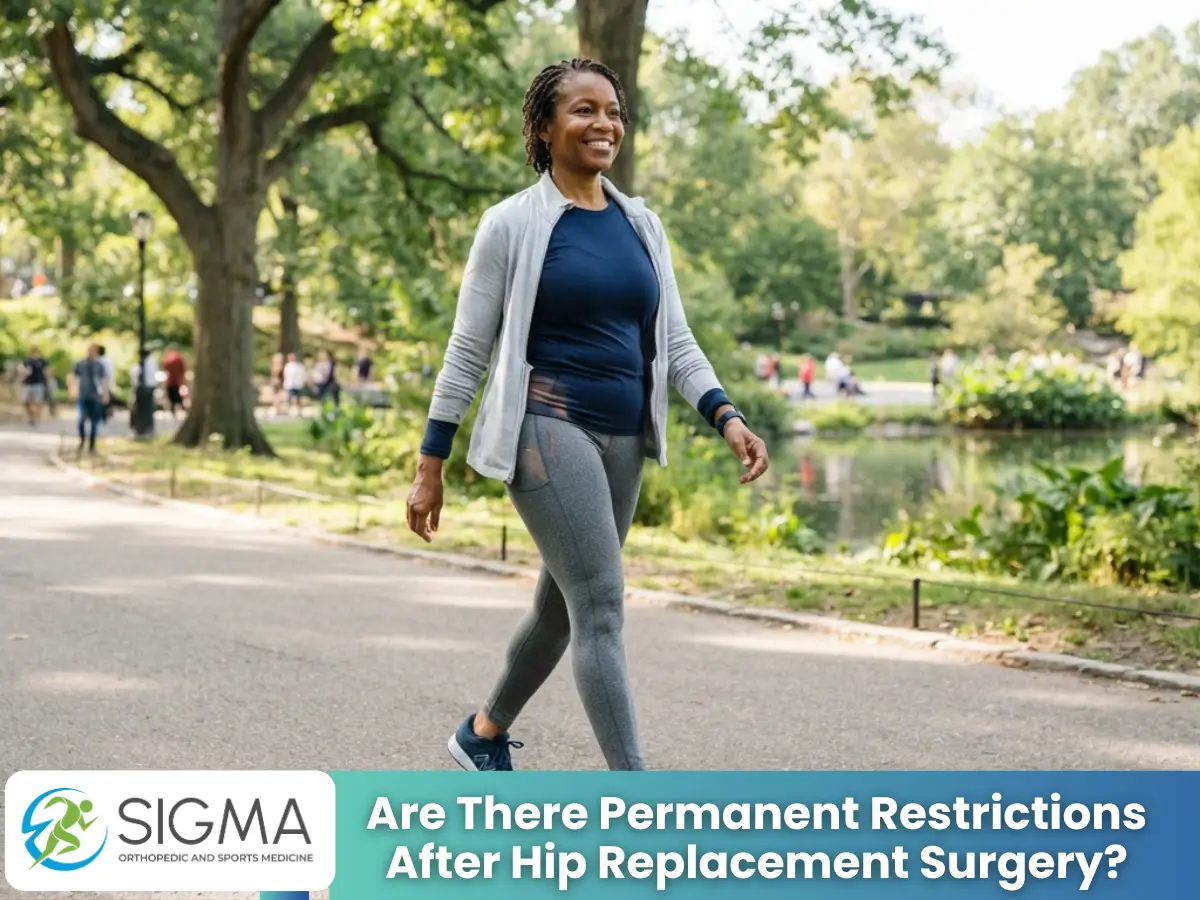
Most people do not live with a long list of permanent restrictions after a successful hip replacement.
Early restrictions are generally more significant because the tissues are healing and the new joint needs time to stabilize. Some patients are asked to avoid certain bending positions, crossing their legs, or other movements for a limited period.
The specific precautions depend on factors such as the surgical approach and your surgeon’s protocol.
According to AAOS, many common hip precautions are temporary, and for many patients the restrictions can be relaxed after approximately six to eight weeks. However, individual recommendations differ, so your surgeon’s instructions should always take priority.
Long-term activity recommendations are usually more about protecting the artificial joint than preventing normal daily movement. Low-impact activities such as walking, swimming, cycling, golf, and some forms of tennis are commonly compatible with an artificial hip.
High-impact activities may be discouraged because repeated impact can place additional stress on the implant.
So, when people search for “permanent restrictions after hip replacement surgery,” the answer is usually more nuanced than “you can never do certain things again.”
Are There Permanent Restrictions After Anterior Hip Replacement?
Anterior hip replacement is performed through the front of the hip rather than the back. Some patients may have fewer early movement precautions with an anterior approach, but that does not mean there are no restrictions.
Your surgeon may still limit certain activities during the initial healing period. The exact recommendations depend on the operation, your anatomy, implant stability, and your recovery.
It is also important not to assume that an anterior approach automatically means a faster or easier recovery for every patient. Surgical technique is only one part of the recovery process.
Your strength before surgery, general health, rehabilitation, pain control, and adherence to postoperative instructions can all influence how quickly you return to normal activities.
Is Delayed Bruising After Hip Replacement Normal?
Bruising after hip replacement can sometimes appear more noticeable several days after surgery rather than immediately.
Blood from the surgical area can move through the tissues because of gravity. As a result, bruising may spread down the thigh or toward the knee and may change color as it heals.
However, new or rapidly worsening bruising should not automatically be assumed to be normal. Significant swelling, increasing pain, warmth, redness, drainage from the incision, calf pain, or shortness of breath can require prompt medical evaluation.
AAOS advises patients to contact their medical team about warning signs such as increasing wound redness or drainage, severe swelling, and symptoms that may indicate a blood clot.
If you are concerned about bruising after surgery, your surgeon is the best person to determine whether what you are seeing is part of normal healing or requires examination.
When Does Delaying Hip Replacement Become a Problem?
Waiting becomes more concerning when your hip pain is controlling your life rather than simply being an inconvenience.
If you are avoiding activities you enjoy, struggling to work, waking at night because of pain, walking with a significant limp, or relying increasingly on medications to function, it may be time to reconsider your treatment plan.
Another warning sign is progressive loss of mobility. If you were once able to walk several miles but now struggle to walk around the house, that change deserves medical attention.
Muscle weakness is also important. Remaining as strong and active as possible before surgery can help prepare your body for rehabilitation. MedlinePlus notes that prolonged difficulty moving can contribute to muscle weakness and reduced physical conditioning, which may affect later recovery.
The goal should not be to postpone surgery indefinitely. The goal is to choose the right treatment at the right time.
What Should You Consider Before Deciding on Surgery?
A good decision starts with a complete evaluation rather than a single X-ray.
Your orthopedic specialist should consider how severe your symptoms are, what is causing them, how much your daily activities are affected, and whether appropriate nonsurgical treatments have been attempted.
Your personal goals matter too. Someone who wants to return to hiking, travel, recreational sports, or a physically demanding job may have different priorities than someone whose main goal is simply to walk comfortably around the house.
You should also understand what recovery will involve before agreeing to surgery. Ask about expected pain relief, rehabilitation, walking assistance, driving, work, exercise, complications, and long-term activity recommendations.
The AAOS guidance on visiting an orthopedic surgeon recommends discussing issues such as recovery, weight-bearing, activity restrictions, and time away from work when planning treatment.
A second opinion can also be reasonable when you are uncertain about whether replacement is necessary.
Can You Avoid Joint Replacement Forever?
For some people, yes. For others, no.
If your symptoms remain manageable with exercise, physical therapy, activity modification, medication, weight management, and other appropriate treatments, you may be able to delay or avoid replacement for a long time.
But advanced arthritis cannot always be controlled indefinitely without surgery. If the joint becomes severely damaged and pain continues despite appropriate conservative care, replacement may eventually provide the most reliable way to restore function.
Trying to avoid surgery at all costs is not necessarily better medicine. Neither is having surgery simply because an X-ray looks severe.
The best treatment is the one that provides the greatest overall benefit while matching your medical condition and personal goals.
When Should You Talk With an Orthopedic Specialist?

Consider an orthopedic evaluation if persistent hip pain is interfering with walking, sleeping, working, exercising, or everyday activities.
You should also seek evaluation if you have worsening stiffness, a persistent limp, reduced range of motion, pain that does not improve with conservative treatment, or symptoms that are progressively limiting your life.
A specialist can determine whether the pain is actually coming from the hip joint and whether treatment should focus on rehabilitation, medication, injections, activity modification, hip-preserving treatment, or replacement.
You do not have to decide on surgery during your first appointment. In many cases, the most valuable part of an orthopedic consultation is understanding what is happening inside the joint and what options are available.
Final Thoughts
There are legitimate reasons not to have hip replacement immediately, especially when symptoms are manageable, the diagnosis is uncertain, nonsurgical treatment is still working, or medical factors make surgery less appropriate at the moment. But delaying surgery simply out of fear can also have consequences if severe pain causes progressive inactivity, weakness, and loss of independence.
The right decision is highly individual. A careful discussion with an orthopedic specialist can help you understand whether the goal should be to preserve the natural hip for as long as possible or replace a damaged joint that is no longer supporting the life you want to live.
At SIGMA Orthopedics and Sports Medicine, the focus should always be on matching treatment to the patient’s condition, goals, and long-term function rather than assuming that surgery is automatically the first or only answer.
FAQ
Common reasons include manageable symptoms, an unclear source of pain, insufficient trial of appropriate nonsurgical treatment, or medical conditions that make surgery temporarily unsafe. The decision should be individualized.
Some people can delay or avoid replacement through physical therapy, exercise, weight management, activity modification, medication, and other appropriate treatments. However, these approaches cannot reverse advanced cartilage loss.
Not necessarily. Many people can safely delay surgery without making a future replacement less effective. However, prolonged pain and inactivity can cause muscle weakness and reduced physical conditioning, potentially making recovery more difficult.
It varies by occupation and recovery. Desk-based workers may return sooner, while people with physically demanding jobs may need several weeks to several months before resuming full duties.
Most patients do not have extensive permanent restrictions. Some activities may be discouraged to reduce stress on the artificial joint, while many everyday activities and low-impact exercises can be resumed after recovery.
Disclaimer: This content is for informational purposes only and does not constitute medical advice. Always seek the advice of a qualified healthcare provider with any questions you may have regarding a medical condition or before starting any new medication. Never disregard professional medical advice or delay in seeking it because of something you have read in this blog.