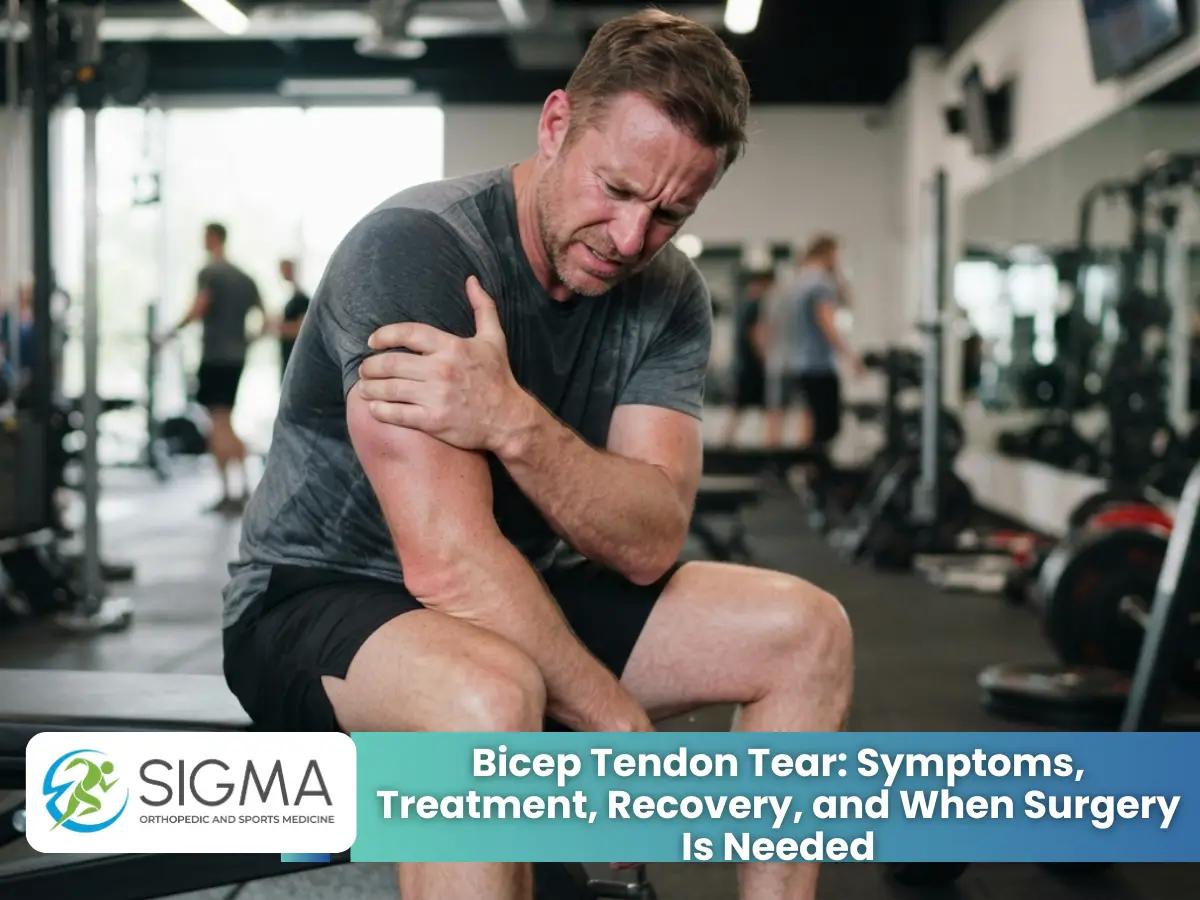
The biceps muscle helps you bend your elbow, rotate your forearm, and stabilize your shoulder during lifting and overhead movements. When one of its tendons becomes damaged, even simple daily tasks can become painful. Knowing the signs of a tear and understanding your treatment options can help you recover safely and regain confidence in your arm.
Understanding the Biceps Tendon
The biceps muscle has two tendons at the shoulder and one tendon at the elbow. The tendon attached to the top of the shoulder has two parts called the long head and the short head biceps tendon. Together, they help keep the shoulder stable while allowing smooth movement.
The long head passes through the shoulder joint before attaching to the top of the shoulder blade. Because of its location, it experiences more wear and tear than the short head. This makes it more likely to become inflamed or injured over time.
The lower tendon connects the muscle to the forearm near the elbow. Although less common, injuries in this area often cause greater loss of strength and usually need more urgent treatment.
What Is a Biceps Tendon Tear?
A tendon tear happens when the tough tissue connecting the muscle to the bone becomes damaged. The injury may involve only a few fibers, known as a partial tear, or the tendon may separate completely from the bone.
Many people describe hearing or feeling a “pop” when the injury happens. Others notice pain that gradually worsens after months of tendon irritation.
A tear in bicep tissue may occur near the shoulder or the elbow. Shoulder tears are more common, especially in adults over 40. Elbow tears are less frequent but often happen during heavy lifting or sudden force.
What Causes a Bicep Tendon Tear?
Most tears do not happen without warning. In many cases, the tendon has already weakened before it finally ruptures.
Age is one of the biggest risk factors. Tendons naturally lose flexibility and strength over time. Years of repetitive movement can slowly wear them down.
Sports that involve throwing, swimming, tennis, baseball, and weightlifting place repeated stress on the shoulder. Occupations that require heavy lifting or overhead work also increase the risk.
A sudden injury can also cause a tear. Trying to catch a heavy object, lifting more weight than usual, or falling on an outstretched arm can overload the tendon.
Smoking, long-term corticosteroid use, and certain medical conditions may weaken tendons further, making injuries more likely.
Signs and Symptoms to Watch For
Symptoms depend on whether the tendon is partially or completely torn. Some people notice immediate pain, while others experience gradual weakness over several weeks.
Pain usually starts suddenly after the injury. It may be sharp at first before becoming a deep ache around the shoulder or elbow.
Many patients report pain in bicep and shoulder when reaching overhead, lifting groceries, or carrying objects. Night pain is also common, especially if the injury is near the shoulder.
Swelling and bruising may appear within the first few days. In complete tears, the muscle can bunch lower in the arm, creating what doctors often call a “Popeye” appearance.
A damaged bicep tendon may also make it difficult to twist a doorknob, use a screwdriver, or lift even light objects. These movements depend on the biceps muscle working normally.
Can Rotator Cuff Problems Feel Similar?
Yes. Shoulder conditions often overlap, making diagnosis difficult without a proper examination.
The biceps tendon and rotator cuff work together to stabilize the shoulder during movement. Because they share many functions, injuries in one structure frequently affect the other.
Many people experience rotator cuff bicep pain without realizing both tissues may be involved. Pain at the front of the shoulder, weakness when lifting the arm, and discomfort during overhead activities can occur with either condition.
Studies show that long head biceps tendon injuries commonly occur alongside rotator cuff tears. This is one reason orthopedic specialists carefully examine the entire shoulder instead of focusing on only one tendon.
If shoulder pain continues despite rest, medical imaging may be needed to identify every injured structure.
When Should You See a Doctor?
Not every tendon injury requires surgery, but every suspected tear deserves medical attention.
You should seek evaluation if you hear a pop during lifting, develop sudden weakness, notice significant bruising, or see a change in the shape of your upper arm.
Persistent pain lasting more than a few days also deserves attention. Continuing normal activities with an untreated injury may worsen tendon damage.
If your arm becomes numb, loses circulation, or you cannot move it after an injury, seek emergency care immediately.
How Doctors Diagnose a Biceps Tendon Tear

Diagnosis begins with a detailed conversation about how the injury happened. Your doctor will ask when the pain started, what activities make it worse, and whether you noticed a popping sensation.
During the physical examination, your shoulder and elbow strength, range of motion, and tenderness are carefully evaluated. Certain movement tests help identify whether the biceps tendon, rotator cuff, or another structure is responsible for your symptoms.
Imaging is often used to confirm the diagnosis. X-rays cannot show tendons, but they help rule out fractures and arthritis.
Ultrasound is useful for detecting many tendon injuries and offers a quick, dynamic assessment. Magnetic resonance imaging (MRI) provides the clearest view of soft tissues and can reveal partial tears, complete ruptures, and associated shoulder injuries.
Whether your injury is mild or severe, an accurate diagnosis helps determine the safest treatment plan.
Treatment Options for a Biceps Tendon Tear
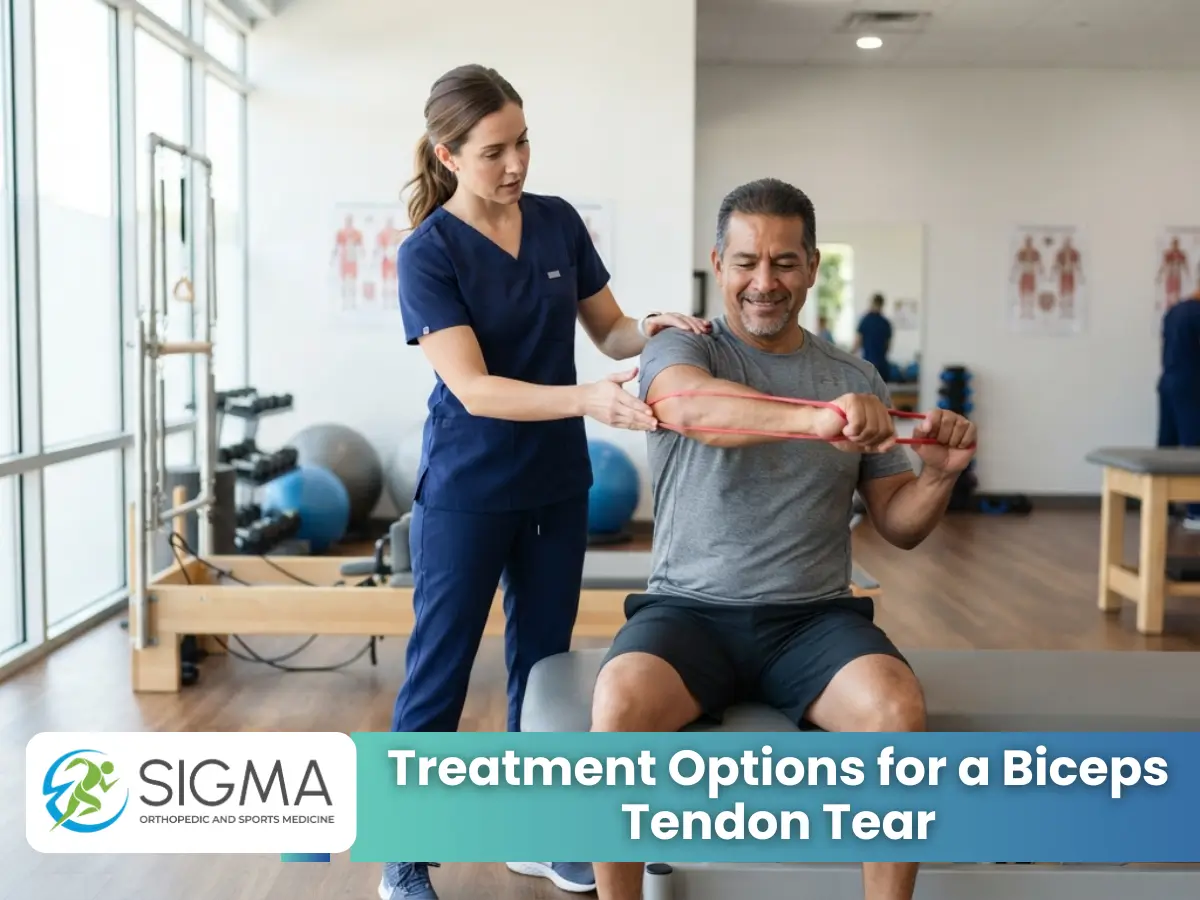
Treatment depends on where the tear occurred, how severe it is, and your activity level. Some injuries respond well to conservative care, while others need surgery to restore strength.
Non-Surgical Treatment
Many partial tears and some shoulder tendon tears improve without surgery. The goal is to reduce pain, protect the tendon, and gradually restore movement.
Your doctor may recommend resting the arm for a short time and avoiding activities that increase pain. Ice can help reduce swelling during the first few days. Over-the-counter anti-inflammatory medication may also provide relief when used as directed.
Physical therapy is often the most important part of recovery. A therapist will guide you through exercises that improve flexibility, shoulder stability, and strength without placing too much stress on the healing tendon.
According to MedlinePlus, many people with partial tendon injuries regain good function through a structured rehabilitation program combined with activity modification.
When Is Surgery Needed?
Surgery is usually recommended for complete tears near the elbow because these injuries can cause permanent weakness if left untreated. Some shoulder tears also require surgery, especially if pain continues despite months of conservative treatment.
A ripped tendon in arm may also need surgical repair if you have a physically demanding job or participate in sports that require lifting or throwing.
During surgery, the orthopedic surgeon reattaches the tendon to the bone using specialized anchors or fixation devices. Modern techniques often allow for smaller incisions and faster rehabilitation than older procedures.
The American Academy of Orthopaedic Surgeons explains that early surgical repair generally provides the best chance of restoring strength after a complete distal biceps tendon rupture..
Recovery After Treatment
Recovery varies from person to person. Age, overall health, and the type of tear all affect healing time.
People treated without surgery often begin feeling better within several weeks. Full recovery may take two to four months, depending on tendon healing and participation in physical therapy.
Recovery after surgery usually takes longer. Most patients wear a sling or brace for the first few weeks before starting guided exercises. Strength training is added gradually as healing progresses.
Returning to heavy lifting or sports too early can increase the risk of another injury. Following your rehabilitation plan is one of the most important steps for a successful recovery.
What Does Rehabilitation Involve?
Physical therapy starts with gentle movements to prevent stiffness. As pain improves, exercises focus on restoring flexibility and muscle control.
Later stages include strengthening the shoulder, arm, and upper back. These muscles work together to support normal movement and reduce stress on the repaired tendon.
Your therapist will also correct movement patterns that may have contributed to the injury. This can lower the risk of future problems.
The National Institute of Arthritis and Musculoskeletal and Skin Diseases (NIAMS) recommends following a structured rehabilitation program because tendon healing continues long after pain improves.
Possible Complications
Most people recover well with proper treatment. However, delaying care or returning to activity too soon can lead to ongoing problems.
Some patients continue to experience weakness when lifting heavy objects. Others develop stiffness that limits shoulder or elbow motion.
A complete tear that is never repaired may result in permanent loss of strength, especially when rotating the forearm. This is one reason early evaluation is important after a significant injury.
Can You Prevent Another Tendon Injury?

Although not every injury can be prevented, healthy habits reduce the risk.
Warm up before exercise and increase training intensity gradually. Avoid lifting weights that are too heavy for your current fitness level.
Strengthening the shoulder, back, and core muscles helps reduce stress on the biceps tendon. Good lifting technique is equally important.
If you notice ongoing shoulder pain, do not ignore it. Early treatment of tendon inflammation may prevent a larger tear from developing later.
When Should You Seek Immediate Medical Care?
Some symptoms should never be ignored. Seek medical attention right away if you hear a loud pop followed by severe pain and sudden weakness.
Large bruises, a visible change in the shape of the arm, or difficulty bending the elbow also require prompt evaluation. Early treatment gives your doctor more options and may improve the final outcome.
Final Thoughts
A bicep tendon tear can interrupt work, sports, and everyday activities. The good news is that most people recover well with an accurate diagnosis and the right treatment plan.
Whether your injury requires physical therapy or surgery, early care can improve healing and help restore strength. If you have persistent shoulder or arm pain, do not wait for the symptoms to become worse.
At SIGMA Orthopedics and Sports Medicine, every treatment plan is tailored to the patient’s injury, activity level, and recovery goals. The team focuses on evidence-based care to help patients return to daily life as safely and confidently as possible.
Frequently Asked Questions
Can a biceps tendon tear heal without surgery?
Yes. Many partial tears and some shoulder tendon injuries heal with rest, physical therapy, and activity modification. Complete tears near the elbow are more likely to require surgery.
What are the first signs of a torn biceps tendon?
Common signs include sudden pain, a popping sensation, bruising, weakness, and difficulty lifting or rotating the arm. Some people also notice a bulge in the upper arm.
How long does recovery take?
Recovery depends on the severity of the injury. Mild cases may improve within a few months, while surgical recovery often takes four to six months before returning to full activity.
Is it safe to exercise with a torn biceps tendon?
Exercising without medical advice may worsen the injury. Your doctor or physical therapist can recommend safe exercises based on your stage of healing.
Can a biceps tendon tear happen with a rotator cuff injury?
Yes. These injuries often occur together because the tendons work closely to stabilize the shoulder. Your doctor may recommend imaging to evaluate both structures.
Will I regain full strength after treatment?
Many patients regain excellent function after proper treatment and rehabilitation. Recovery is generally better when the injury is diagnosed early and the treatment plan is followed consistently.
Disclaimer: This content is for informational purposes only and does not constitute medical advice. Always seek the advice of a qualified healthcare provider with any questions you may have regarding a medical condition or before starting any new medication. Never disregard professional medical advice or delay in seeking it because of something you have read in this blog.