Shoulder dislocation after surgery is uncommon, but it can happen even after a successful procedure. A repeat injury does not always mean the surgery failed. In many cases, the shoulder becomes unstable again because of a new traumatic injury, incomplete healing, tissue quality, or underlying factors that continue to place stress on the joint. Identifying the reason behind the instability is the first step toward choosing the right treatment and preventing another dislocation.
Whether your shoulder slipped completely out of place or simply feels unstable, understanding why it happened can help you make informed decisions about recovery. This guide explains the common causes, symptoms, diagnosis, treatment options, and realistic expectations after a shoulder redislocates following surgery.
Understanding Why the Shoulder Can Become Unstable Again
The shoulder has the greatest range of motion of any joint in the body, but that flexibility comes with less natural stability. Unlike the hip, which sits deeply inside its socket, the shoulder relies on soft tissues, muscles, and ligaments to keep the ball of the upper arm centered.
Even after surgery repairs damaged structures, these tissues need time to heal completely. During that healing process or even years later a significant injury can stretch or tear the repaired tissue again. Age, activity level, bone loss, and tissue quality also influence whether the shoulder remains stable over time.
How Shoulder Stabilization Surgery Works
Most stabilization procedures repair the torn labrum, tighten stretched ligaments, or restore damaged bone that contributes to instability. The goal is to keep the humeral head centered within the shoulder socket during everyday movement and sports activities.
Depending on the injury, surgeons may recommend shoulder dislocation arthroscopic surgery, which uses small incisions and specialized instruments to repair damaged tissues while minimizing trauma to surrounding muscles.
Surgery Improves Stability but Doesn’t Remove All Risk
Modern techniques have excellent success rates, especially when rehabilitation is followed carefully. However, no surgery can completely eliminate the possibility of another injury.
Returning to contact sports too early, experiencing another fall, or having significant bone damage can all increase the likelihood of instability returning despite an initially successful repair.
Is It Normal for a Shoulder to Dislocate Again After Surgery?
While redislocation is not considered normal, it is a recognized complication. Research shows that recurrence rates vary depending on age, activity level, surgical technique, and the severity of the original injury.
Younger athletes participating in football, wrestling, rugby, and other collision sports have a higher chance of recurrent instability than older adults with lower physical demands. Studies published through the National Center for Biotechnology Information (NCBI) continue to show that patient selection, rehabilitation, and surgical planning all play important roles in long-term success.
A single episode does not automatically mean another operation is necessary. Some patients experience only minor instability, while others develop repeated dislocations that require further evaluation.
The Difference Between Instability and a True Dislocation
Many people confuse shoulder instability with a complete dislocation.
Instability often feels like the shoulder is loose, shifts during movement, or threatens to slip out before returning to its normal position. A true dislocation occurs when the ball completely leaves the socket and usually requires medical reduction.
Recognizing the difference helps your orthopedic specialist determine whether additional imaging or treatment is needed.
Several factors can contribute to recurrent instability after surgery. Sometimes the repaired tissue never fully heals, while in other cases a completely new injury damages structures that were previously stable.
Understanding these causes helps explain why two patients with similar surgeries may experience very different outcomes.
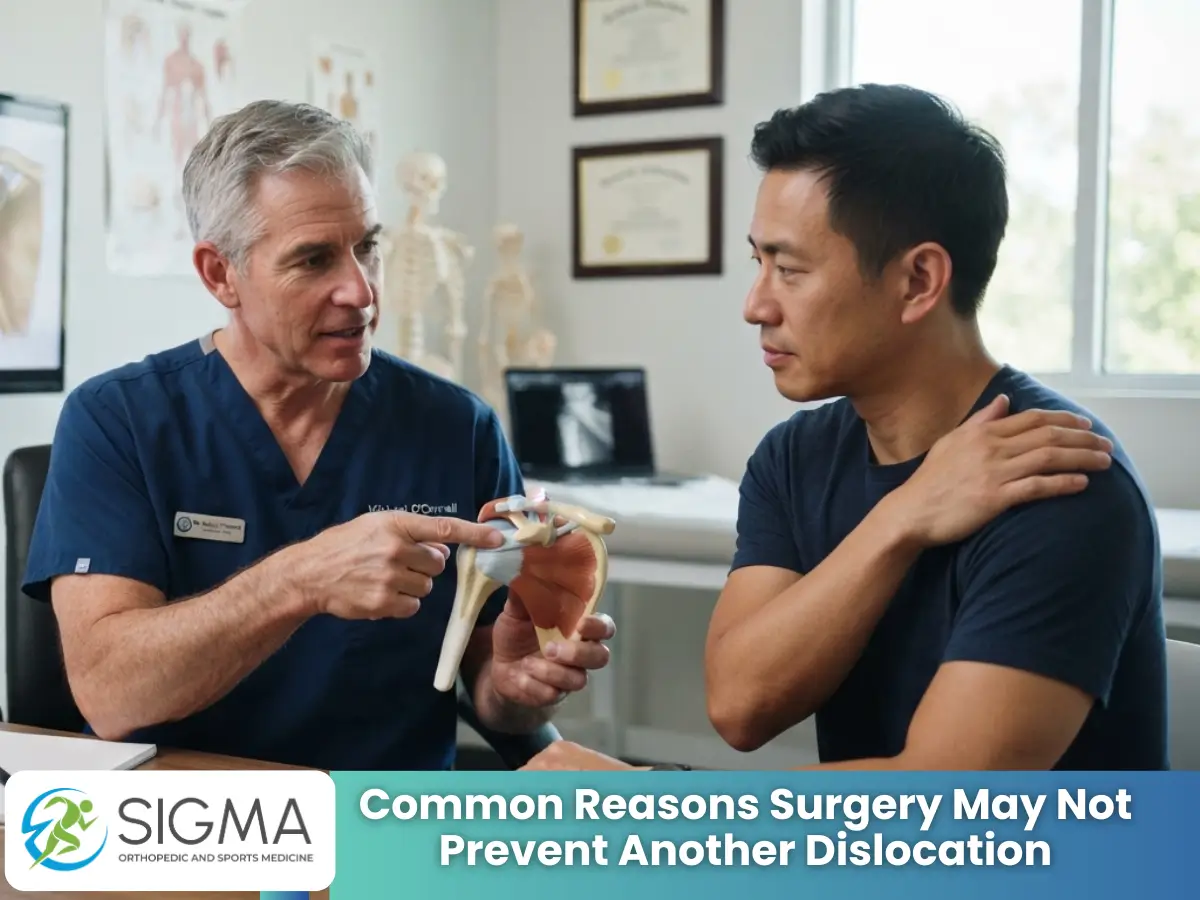
A New Traumatic Injury
The most common cause is another significant injury. Falling on an outstretched arm, suffering a sports collision, or experiencing a forceful impact can overwhelm even a well-healed repair.
In these situations, the shoulder experiences forces similar to the original injury, placing repaired ligaments and cartilage under tremendous stress.
Bone Loss Around the Shoulder Joint
Repeated dislocations can gradually wear away portions of the shoulder socket or damage the humeral head. When enough bone is lost, soft tissue repairs alone may no longer provide adequate stability.
Advanced imaging such as CT scans helps surgeons measure bone loss and determine whether additional reconstructive procedures may be necessary.
Ligament Laxity and Connective Tissue Quality
Some individuals naturally have looser ligaments than others. This generalized flexibility may increase the chance that repaired tissues stretch over time.
Patients with connective tissue disorders or significant ligament laxity often require individualized treatment plans because standard repairs may not provide enough long-term stability.
Warning Signs That Your Shoulder Needs Medical Evaluation
Not every painful shoulder indicates another dislocation, but certain symptoms should never be ignored. Early assessment may prevent additional damage and improve treatment outcomes.
If your symptoms worsen rather than improve, seeking prompt medical attention is the safest approach.
Persistent Feelings of Instability
Many patients describe the sensation as though the shoulder could “slip out” during reaching, throwing, or lifting overhead.
This feeling may occur even without severe pain and often suggests that stabilizing structures are not functioning normally.
Recurrent Popping or Catching
Occasional painless popping is common during recovery. However, repeated painful popping combined with weakness or instability deserves evaluation.
Some patients notice shoulder clicking after rotator cuff surgery, which may result from scar tissue, inflammation, tendon movement, or joint mechanics rather than instability alone. A thorough examination helps determine the underlying cause.
Loss of Strength or Motion
Difficulty lifting objects, reduced range of motion, or sudden weakness after an injury should not be ignored.
Although stiffness is expected early after surgery, a sudden decline months later may signal structural damage requiring further evaluation.
How Doctors Diagnose Recurrent Shoulder Instability
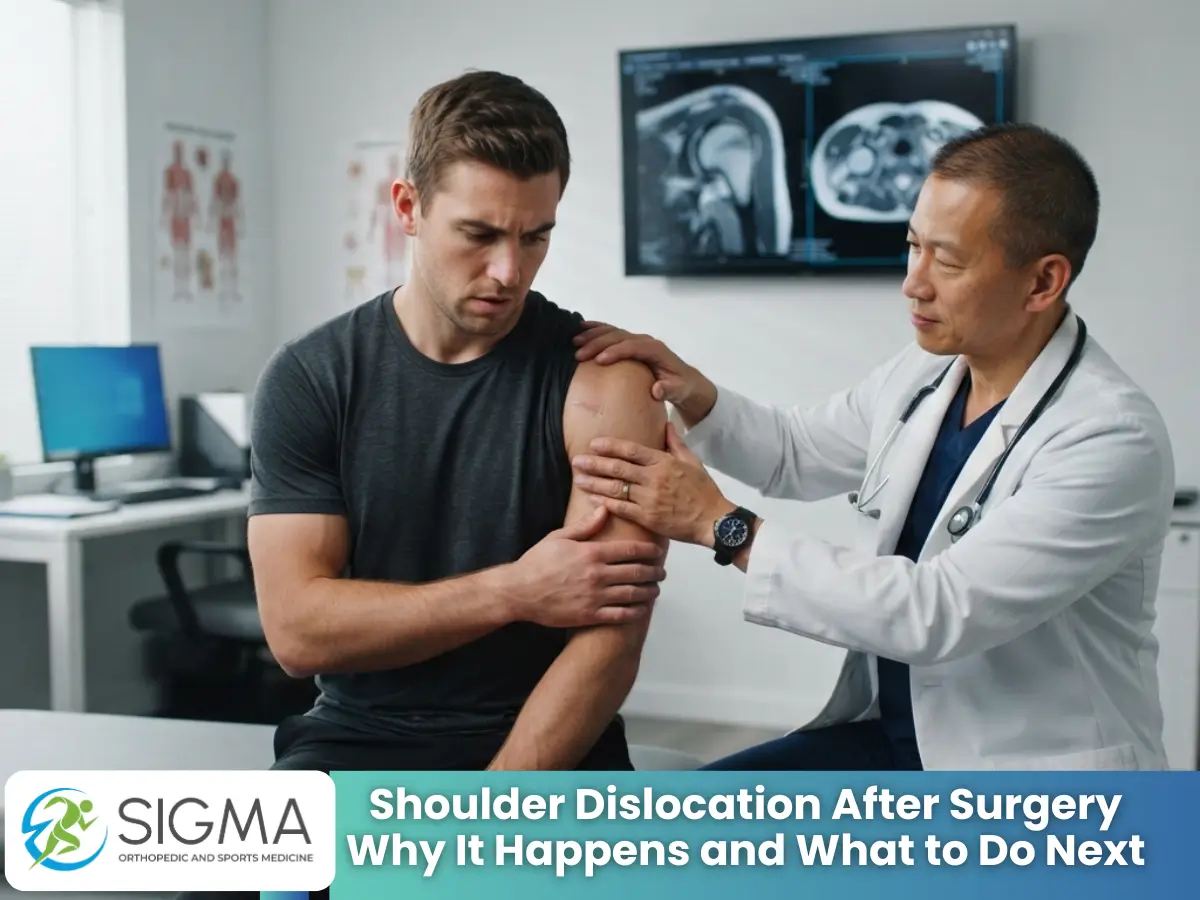
Diagnosing recurrent instability involves much more than simply asking whether the shoulder came out of place. Your orthopedic specialist evaluates how the injury occurred, examines shoulder movement, and determines whether ligaments, cartilage, tendons, or bone have been affected.
A careful diagnosis ensures that treatment addresses the true source of the problem instead of only relieving symptoms.
Physical Examination
The examination includes stability tests, strength assessment, range-of-motion measurements, and comparison with the opposite shoulder.
Your physician also evaluates nerve function because shoulder dislocations occasionally affect nearby nerves.
Imaging Studies
X-rays are usually the first imaging test because they quickly identify fractures and confirm whether the joint is properly aligned.
MRI scans evaluate the labrum, rotator cuff, and surrounding soft tissues, while CT scans provide detailed information about bone loss that may influence surgical planning. According to MedlinePlus, combining a physical examination with appropriate imaging offers the most accurate diagnosis for shoulder injuries.
When Another Surgery May Be Necessary
Not everyone with recurrent instability needs another operation. Some patients improve with activity modification and structured rehabilitation, while others continue experiencing episodes that interfere with daily life or sports participation.
The decision depends on imaging findings, symptom severity, bone loss, activity level, and overall shoulder function rather than the redislocation alone.
When Revision Surgery Is the Better Option
If the repaired tissues have torn again, significant bone loss is present, or the shoulder continues to dislocate despite rehabilitation, revision surgery may provide the best chance for lasting stability. The surgical approach depends on why the original repair failed. Some patients benefit from another soft tissue repair, while others require procedures that restore bone or change how the shoulder is stabilized. The goal is not simply to repair the injury again but to correct the underlying reason the instability returned.
What Happens During Recovery After a Repeat Dislocation?
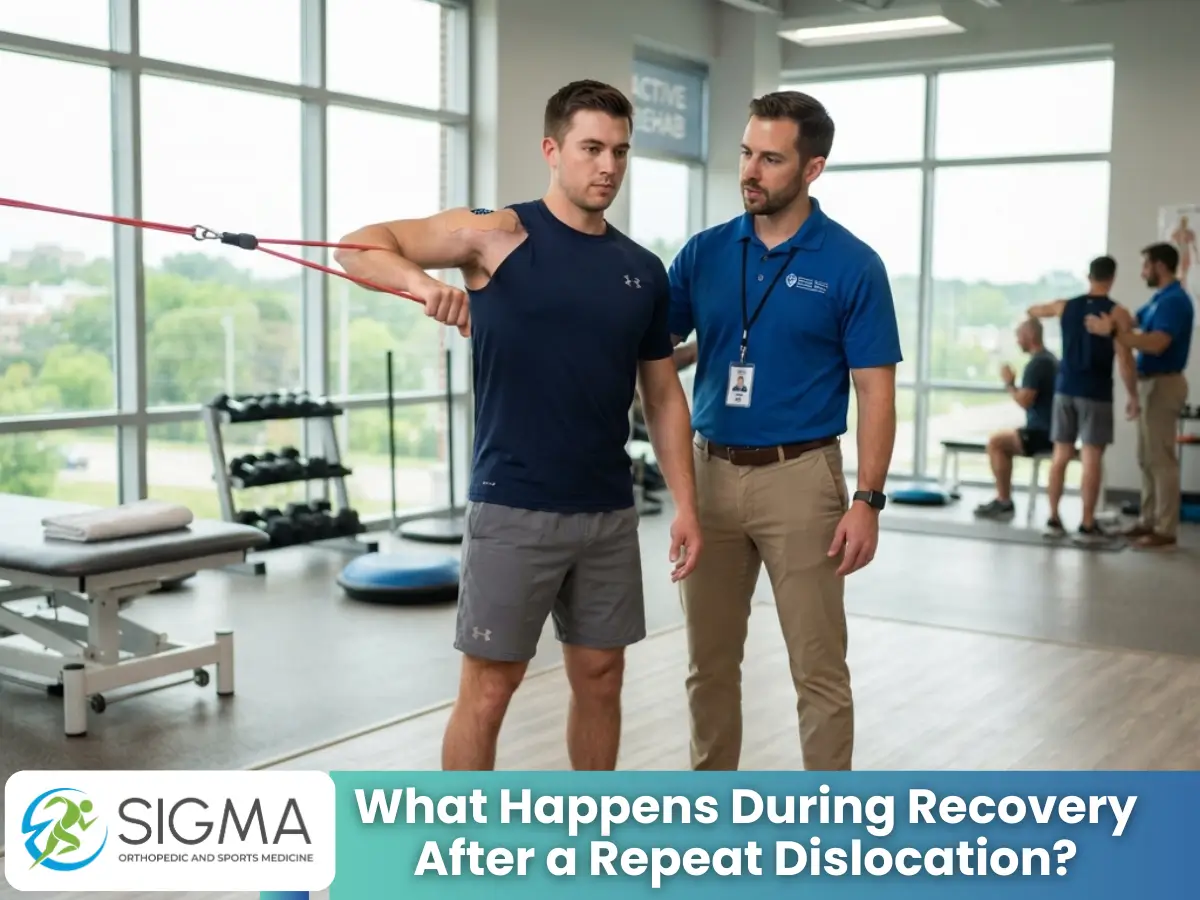
Recovery varies depending on whether the shoulder is treated without surgery or requires another operation. Minor instability episodes may respond well to rest, immobilization, and physical therapy, while recurrent dislocations often involve a longer rehabilitation process.
Patience is essential because the repaired tissues need time to heal before they can safely tolerate daily activities or sports.
Early Healing Phase
During the first several weeks, protecting the shoulder is the priority. A sling may be recommended to reduce stress on healing tissues while gentle, guided exercises help maintain mobility without compromising stability.
Pain and swelling gradually decrease, but pushing too hard too early can increase the risk of another injury.
Strengthening and Functional Recovery
As healing progresses, therapy shifts toward restoring strength in the rotator cuff and the muscles around the shoulder blade. These muscles work together to keep the joint stable during movement.
This stage often determines long-term success because strong muscles help compensate for minor instability and improve overall shoulder mechanics.
Returning to Sports and Daily Activities
Returning to work, exercise, or competitive athletics should be based on shoulder function rather than the calendar. Even when pain has resolved, the repaired tissues continue remodeling for several months.
Patients often ask about shoulder popped out and back in recovery time after another injury. Recovery depends on the severity of the damage, but a simple subluxation may improve within a few weeks, whereas a complete redislocation or revision surgery can require several months before unrestricted activity is safe.
Can Physical Therapy Prevent Another Dislocation?
For many patients, physical therapy is one of the most valuable parts of recovery. Surgery repairs damaged structures, but rehabilitation teaches the shoulder how to move safely and efficiently again.
A personalized rehabilitation program improves muscle coordination, posture, flexibility, and joint control. These improvements reduce unnecessary stress on repaired tissues and may lower the risk of future instability.
Therapists also identify movement patterns that contribute to shoulder problems. Correcting poor mechanics during lifting, throwing, or overhead activities can make a significant difference in long-term outcomes.
Lifestyle Changes That Protect Your Shoulder
Recovery does not end when formal therapy is complete. Long-term shoulder health depends on maintaining strength and avoiding situations that place unnecessary strain on the joint.
People who participate in contact sports should use proper training techniques and follow return-to-play guidelines from their orthopedic specialist. Those whose jobs involve repetitive overhead work may benefit from ergonomic adjustments and regular strengthening exercises.
Maintaining overall fitness also plays a role. Strong back, chest, and core muscles help distribute forces more evenly across the shoulder during daily activities.
Does One Repeat Dislocation Mean the First Surgery Failed?
Not necessarily. One of the biggest misconceptions is that every recurrent dislocation indicates a failed procedure.
A shoulder that remains stable for years before sustaining another traumatic injury may simply have experienced a new injury rather than a failure of the original repair. Likewise, mild instability without structural damage can often improve with rehabilitation instead of another operation.
The important question is not whether the shoulder dislocated again but why it happened. A thorough evaluation allows your orthopedic surgeon to determine whether healing, anatomy, activity level, or a new injury is responsible.
Factors That Increase the Risk of Future Shoulder Instability
Although every patient is different, several factors consistently increase the likelihood of another instability episode.
Younger individuals, particularly those involved in collision sports, generally experience higher recurrence rates than older adults. Significant bone loss, large labral tears, generalized ligament laxity, and returning to sports before full healing also increase the chances of another injury.
Patients with repeat shoulder dislocation episodes should not ignore recurring symptoms, even if the shoulder seems to relocate on its own. Each instability event can cause additional damage to cartilage, ligaments, and bone, making future treatment more complex.
When Should You See an Orthopedic Specialist?

You should schedule an evaluation if your shoulder feels unstable, repeatedly slips out of place, loses strength, or develops persistent pain after surgery.
Emergency medical attention is necessary if the shoulder remains visibly dislocated, numbness develops in the arm or hand, severe swelling occurs, or you cannot move the joint after an injury.
Early evaluation often leads to simpler treatment. Waiting through multiple instability episodes may increase bone damage and make future surgery more complicated.
How to Improve Your Chances of a Successful Recovery
Successful recovery depends on more than the operation itself. Following postoperative instructions, attending every therapy session, and avoiding activities that overload the healing shoulder are just as important as the procedure.
Patients who communicate openly with their surgeon and physical therapist are more likely to recognize small problems before they become major complications. Staying consistent with strengthening exercises even after formal therapy ends helps maintain long-term stability.
At SIGMA Orthopedics and Sports Medicine, treatment plans are designed around each patient’s lifestyle, injury pattern, and recovery goals. Whether you’re returning to recreational activities or competitive sports, individualized care helps maximize shoulder function while reducing the risk of future instability.
Final Thoughts
Experiencing shoulder dislocation after surgery can be discouraging, but it does not automatically mean your original procedure was unsuccessful. Many recurrent instability episodes result from new injuries, incomplete healing, bone loss, or individual anatomical factors rather than surgical failure alone.
The key is obtaining an accurate diagnosis as soon as symptoms appear. With advanced imaging, an individualized rehabilitation program, and timely orthopedic care, many patients regain excellent shoulder stability and return to the activities they enjoy.
If you continue experiencing instability, painful popping, weakness, or repeated dislocations, seeking evaluation from an experienced orthopedic specialist is the best next step. SIGMA Orthopedics and Sports Medicine provides comprehensive evaluation and treatment options tailored to each patient’s condition, helping restore confidence and function while supporting long-term shoulder health.
Frequently Asked Questions
Can a shoulder dislocate years after surgery?
Yes. A shoulder can become unstable years after surgery because of a new traumatic injury, progressive ligament stretching, or bone loss. A redislocation long after surgery does not necessarily mean the original repair failed.
Is shoulder instability the same as a dislocation?
No. Instability describes a shoulder that feels loose or partially slips during movement, while a dislocation occurs when the ball completely leaves the socket. Both conditions should be evaluated if they happen repeatedly.
How long does recovery take after a repeat shoulder dislocation?
Recovery depends on the severity of the injury and whether surgery is required. Mild cases treated conservatively may recover within several weeks, while revision surgery often requires several months of rehabilitation before returning to unrestricted activities.
Can physical therapy fix recurrent shoulder instability?
Physical therapy can improve muscle strength, joint control, and stability, especially when structural damage is limited. However, patients with significant ligament tears or bone loss may still require surgery.
Is arthroscopic surgery effective for recurrent shoulder instability?
Yes. Shoulder dislocation arthroscopic surgery is highly effective for many patients with soft tissue injuries. If substantial bone loss is present, your surgeon may recommend a different stabilization procedure to improve long-term outcomes.
Why does my shoulder click after surgery?
Occasional painless clicking can occur as tissues heal or tendons move over the joint. Persistent pain, catching, or instability associated with shoulder clicking after rotator cuff surgery should be evaluated to rule out tendon problems, scar tissue, or recurrent instability.
Can I play sports again after revision surgery?
Many patients return to sports after successful revision surgery and rehabilitation. The timeline depends on healing, strength, shoulder stability, and the demands of the specific sport. Your orthopedic surgeon will determine when it is safe to return.
Disclaimer: This content is for informational purposes only and does not constitute medical advice. Always seek the advice of a qualified healthcare provider with any questions you may have regarding a medical condition or before starting any new medication. Never disregard professional medical advice or delay in seeking it because of something you have read in this blog.