

Knee pain that lingers after a run, a shoulder that aches every time you reach overhead, a back that never quite settles down. When a joint or muscle problem doesn’t go away on its own, the next step is usually a specialist. That’s where the titles start to get confusing. Is an orthopedic doctor different from an orthopedic surgeon? And does booking with a surgeon mean you’re headed for an operation?
In most cases, they’re the same specialist. Both titles describe a physician trained in orthopaedic surgery who focuses on the musculoskeletal system. The real difference lies in how each doctor chooses to practice, not in their training.
What Is Orthopedics?
Orthopedics is the branch of medicine that treats the bones, joints, muscles, ligaments, tendons, and nerves that help you move. You may also see it spelled “orthopaedics,” and both spellings mean the same thing.
The field covers a wide range of problems, from sprains and sports injuries to fractures, arthritis, and spine conditions.
What Does an Orthopedist Do?
An orthopedist, also called an orthopedic doctor, is an MD or DO who diagnoses and treats musculoskeletal conditions. A first visit usually includes a physical exam, a review of your history, and imaging such as X-rays or an MRI.
Treatment often starts with the least invasive option. That can mean physical therapy, bracing, activity changes, medication, or injections. For many patients, these steps are enough to relieve pain and restore movement.
What Does an Orthopedic Surgeon Do?
“Orthopedic surgeon” is the formal title for the same specialist. Every orthopedist completes a residency in orthopaedic surgery, so they’re trained to operate when surgery is the best option.
Common procedures include arthroscopy, ligament reconstruction, rotator cuff repair, fracture fixation, and joint replacement. Some orthopedists spend most of their time on non-surgical care, while others operate every week. Both are surgically trained.
How Orthopedic Surgeons Are Trained
The training path is one of the longest in medicine. It typically includes four years of college, four years of medical school, and a five-year orthopaedic surgery residency.
Many surgeons then complete a one-year fellowship in a subspecialty such as sports medicine, spine, hand, or joint replacement. When choosing a specialist, “board-certified” and “fellowship-trained” are two credentials worth looking for.
How Orthopedic Surgeons Compare to Other Specialists

Several types of doctors treat bone, joint, and muscle problems, which adds to the confusion. Here’s a quick comparison:
| Specialist | Performs surgery? | Main focus |
| Orthopedic surgeon | Yes | Diagnosis, non-surgical care, and surgery |
| Physiatrist (PM&R) | No | Rehabilitation and restoring function |
| Sports medicine physician (non-surgical) | No | Sports injuries and conservative care |
| Interventional spine specialist | No | Injections and non-surgical spine care |
| Rheumatologist | No | Autoimmune joint diseases like rheumatoid arthritis |
These specialists often work together. A physiatrist may guide your rehab while an orthopedic surgeon handles the structural repair.
Does Seeing an Orthopedic Surgeon Mean You’ll Need Surgery?
No. Most people who see an orthopedic surgeon are treated without an operation. Surgery is usually considered for structural problems that won’t heal on their own, such as a complete tear, an unstable fracture, or a badly damaged joint. It may also be considered when symptoms persist after a fair trial of conservative care.
Starting with a surgically trained specialist has one clear advantage: you hear every option, surgical and non-surgical, from someone who can provide either. At SIGMA Orthopedics and Sports Medicine, that’s how care is structured. Treatment begins with an accurate diagnosis and the least invasive option that fits your condition. If surgery does become necessary, you stay with the same team instead of starting over with a new doctor.
When Should You See an Orthopedic Doctor?
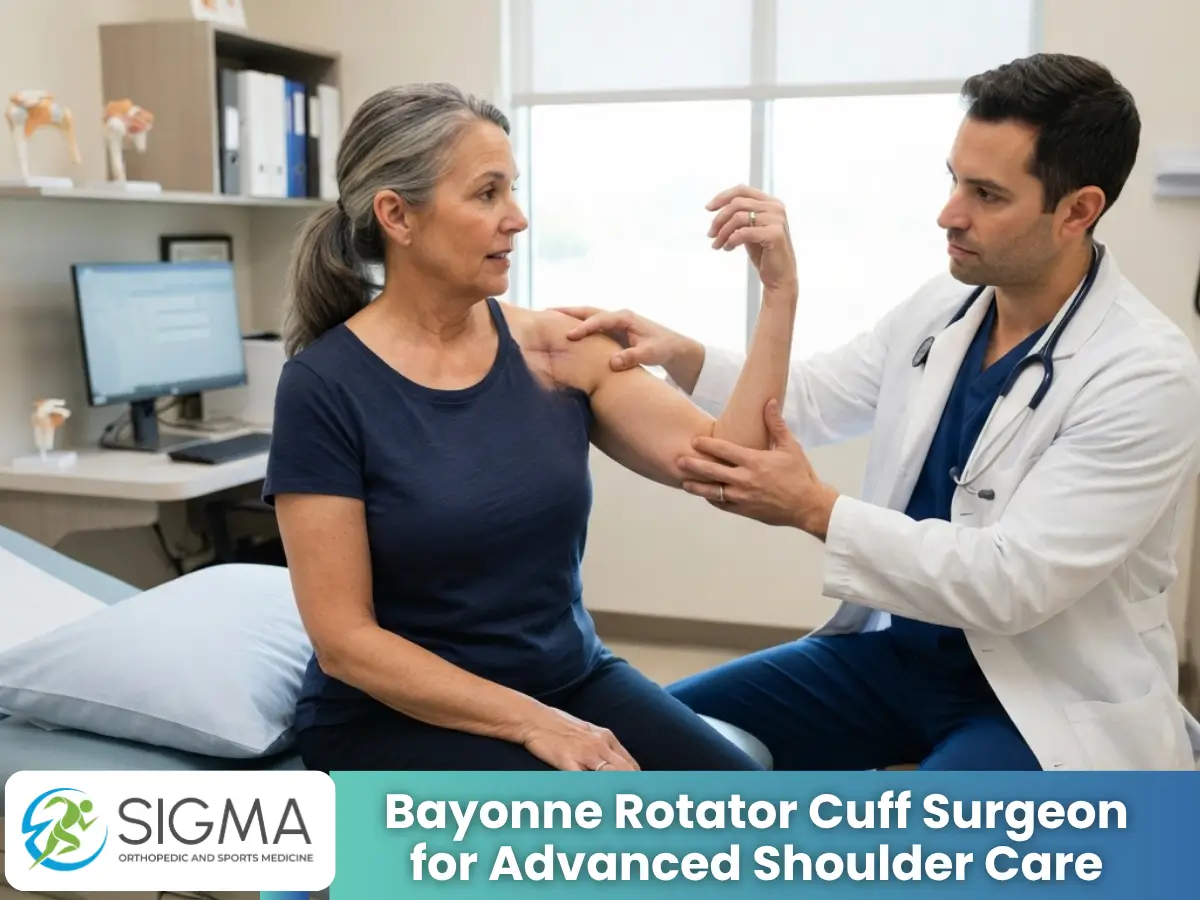
It’s worth booking an evaluation if pain lasts more than a few weeks or keeps getting worse. The same goes for a joint that swells, stiffens, locks, or gives way, and for an injury where you felt a “pop” or can’t bear weight. Back or neck pain that travels into your arms or legs is another reason to be seen, as is pain that disrupts your sleep.
Go to the emergency room for an obvious deformity, a bone breaking through the skin, sudden weakness, or back pain combined with loss of bladder or bowel control.
Which Specialist Should You See First?
For a new injury or pain with an unclear cause, a board-certified orthopedic specialist is a strong starting point. If you already know you have a structural injury, look for a fellowship-trained surgeon who focuses on that body part.
If you’ve been told you need surgery and feel unsure, a second opinion from another orthopedic surgeon can confirm the plan or point to alternatives. Some insurance plans require a referral from your primary care doctor before you book, so check your coverage first.
The Bottom Line
The difference between an orthopedist and an orthopedic surgeon is mostly a matter of wording. Both are highly trained specialists who can guide you through non-surgical care and, when truly needed, surgery. What matters most is getting an accurate diagnosis early, before a manageable problem becomes a bigger one. If you’re dealing with joint, muscle, or spine pain, the team at SIGMA Orthopedics and Sports Medicine can help you understand what’s going on and which treatment path makes sense for you.
Frequently Asked Questions
Is an orthopedist a surgeon?
In most cases, yes. Orthopedists complete surgical residency training, even if some later focus on non-surgical care.
Do orthopedists always recommend surgery?
No. Most orthopedic conditions improve with conservative treatment, and surgery is typically reserved for cases that truly need it.
What’s the difference between an orthopedic surgeon and a physiatrist?
Both treat musculoskeletal problems. A physiatrist focuses on rehabilitation and doesn’t operate, while an orthopedic surgeon offers both surgical and non-surgical care.
Is a sports medicine doctor an orthopedic surgeon?
Sometimes. Some are orthopedic surgeons with sports medicine training, and others are non-surgical physicians. It’s fine to ask which type you’re seeing.
This article is for general educational purposes and is not a substitute for personalized medical advice.