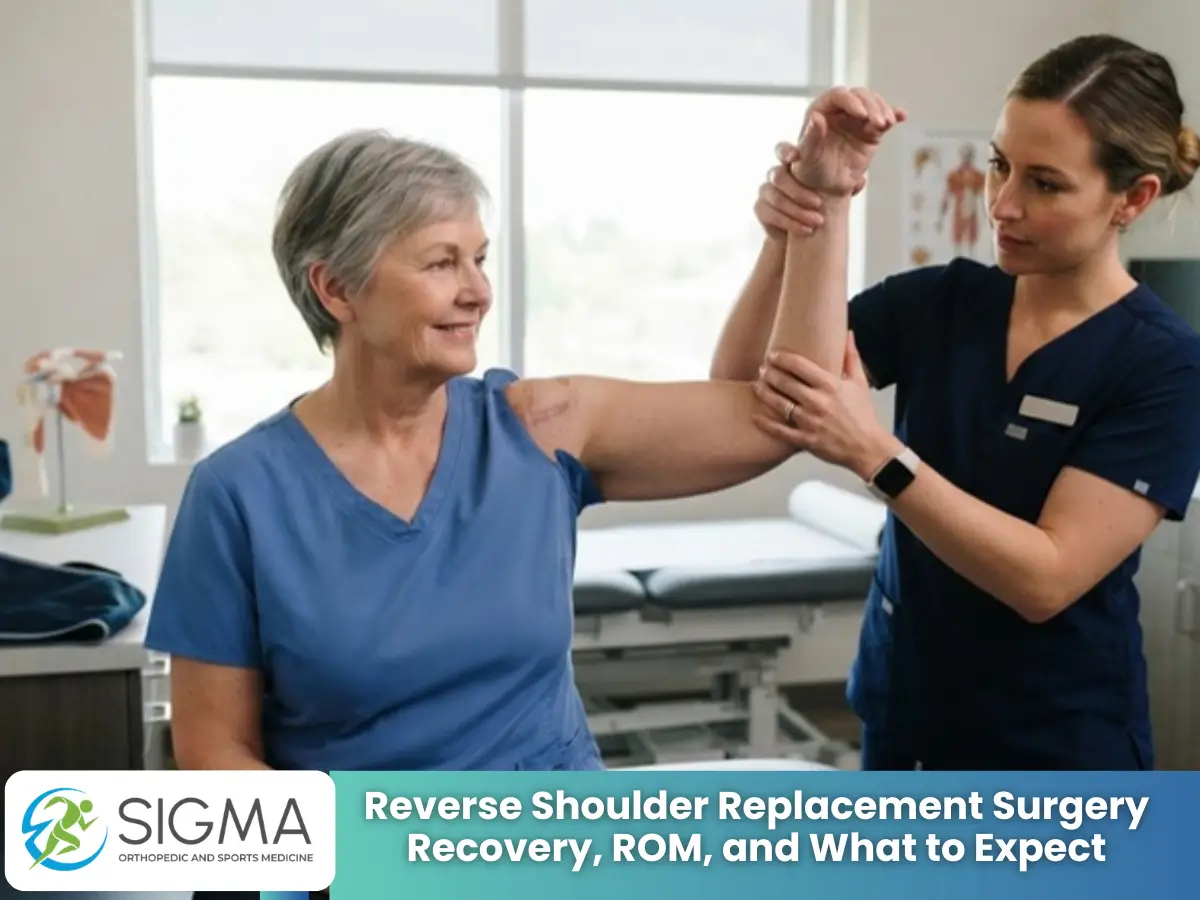

A sprained shoulder occurs when one or more ligaments around the shoulder are stretched beyond their normal range or torn. Most mild injuries improve with protection, activity modification, pain control, and gradual rehabilitation, but significant pain, weakness, deformity, or inability to move the arm can indicate a more serious injury that needs medical evaluation.
Because the shoulder contains several bones, ligaments, tendons, muscles, and other structures working together, it is not always possible to tell from symptoms alone whether you have a simple sprain. A fall, collision, awkward lifting motion, or forceful sports movement can also injure the rotator cuff, labrum, joint surfaces, or bones.
Understanding what was actually injured is therefore the first step toward choosing the right treatment and knowing when it is safe to return to normal activity.
What Is a Sprained Shoulder?
A shoulder sprain is an injury to a ligament. Ligaments are strong bands of connective tissue that connect bones and help stabilize a joint. When a force pushes the shoulder beyond its normal movement, a ligament may become overstretched or develop a partial or complete tear.
The shoulder is particularly vulnerable because it is designed for a very large range of motion. The upper arm bone, shoulder blade, and collarbone interact through several joints and supporting structures. This mobility allows you to reach overhead, throw, lift, push, and rotate your arm, but it also means the joint depends heavily on soft tissues for stability.
A sprain can occur after a fall, direct impact, sudden pull, collision, or movement that forces the shoulder into an unusual position. Sports and physical work are common settings for these injuries.
According to the National Institutes of Health, a sprain can range from minimal ligament stretching to a partial or complete ligament tear.
Sprain vs. Strain: What Is the Difference?
The terms “sprain” and “strain” are often used interchangeably in everyday conversation, but they describe different tissues.
A sprain affects a ligament, which connects one bone to another. A strain affects a muscle or tendon, which connects muscle to bone. That distinction matters because the location of pain and the rehabilitation approach can differ depending on which structure was injured.
For example, a person who suddenly reaches backward and feels pain around the shoulder could have a ligament injury, muscle injury, tendon injury, or another type of soft-tissue problem. Symptoms alone do not always identify the damaged tissue.
A shoulder strain may develop after lifting, repetitive activity, throwing, weight training, or another movement that overloads the muscles or tendons around the shoulder. A sprain is more commonly associated with a force that stretches the joint or its stabilizing ligaments.
Both injuries can cause pain, swelling, tenderness, weakness, and reduced movement, which is why an examination can be useful when symptoms are significant or do not improve.
For a broader explanation of how sprains and strains differ, the MedlinePlus guide to sprains and strains provides an evidence-based overview.
What Causes a Sprained Shoulder?
A shoulder ligament can become injured when the joint is suddenly forced beyond its normal range. The force does not necessarily have to be dramatic. A poorly controlled movement or an awkward landing can be enough, particularly when the shoulder is already fatigued.
Falls are a common cause. Landing directly on the shoulder or using an outstretched arm to break a fall can place considerable stress on the structures surrounding the joint.
Contact and overhead sports can also cause shoulder sprains. Football, hockey, rugby, baseball, swimming, and other activities that involve collisions, falls, throwing, or repetitive shoulder movement can increase exposure to these forces.
Another cause is a sudden increase in physical activity. Someone who abruptly increases the weight, volume, or intensity of a workout may place more stress on the shoulder than the surrounding tissues are prepared to handle.
Poor technique can contribute as well. Repeatedly performing an exercise with poor mechanics can increase stress on the muscles and connective tissues supporting the joint.
What Are the Symptoms of a Sprained Shoulder?

The symptoms depend largely on how severely the ligament has been injured and whether another structure was damaged at the same time.
Common symptoms include shoulder pain, tenderness, swelling, bruising, stiffness, and difficulty moving the arm through its usual range. Some people also notice weakness or a feeling that the shoulder is unstable.
The pain may be noticeable immediately after the injury or become more obvious as swelling develops. Certain movements, especially reaching overhead, reaching behind the back, pushing, pulling, or rotating the arm, may aggravate the symptoms.
Typical shoulder strain symptoms can look very similar. Pain with movement, muscle tenderness, weakness, and reduced function can occur with either a muscle or ligament injury, which is one reason self-diagnosis can be unreliable.
A feeling that the shoulder is slipping, giving way, or becoming less secure deserves particular attention. It may suggest instability rather than a simple muscle problem.
Cleveland Clinic identifies pain, swelling, bruising, instability, and reduced range of motion among the common signs of a shoulder ligament injury.
How Do Shoulder Sprain Grades Work?
Doctors generally describe ligament sprains according to the amount of tissue damage.
A mild, or Grade 1, sprain involves little or no ligament tearing. The ligament has been stretched, but its overall structural integrity is largely maintained. Pain and tenderness may be present, but significant instability is less likely.
A Grade 2 sprain is more substantial. The ligament is partially torn, which can produce more pain, swelling, weakness, and instability. Normal shoulder movement may become considerably more difficult.
A Grade 3 sprain is the most severe form and involves a complete ligament tear. The shoulder may feel unstable, and the person may have substantial pain and loss of function.
The grade does not tell the entire story. The specific ligament involved, the person’s age and activity level, and the presence of other injuries all influence treatment and recovery.
A severe injury after a fall or collision, for example, should not automatically be assumed to be a Grade 3 sprain. A fracture, dislocation, separated shoulder, tendon tear, or labral injury may produce similar symptoms and needs to be considered during evaluation.
Can an Overextended Shoulder Cause a Sprain?
Yes. An over extended shoulder can place excessive force on the ligaments that stabilize the joint.
This can happen when the arm is suddenly pushed too far behind the body, pulled forcefully, rotated beyond its normal range, or exposed to a high-impact movement. The injury may happen during sports, a fall, lifting, or even an unexpected movement.
However, the phrase “overextended shoulder” describes a mechanism rather than a specific diagnosis. The same movement can injure different tissues depending on the direction and amount of force.
For example, excessive external rotation may stress stabilizing structures around the shoulder, while a direct fall may affect the joint, collarbone, or surrounding soft tissue. A forceful overhead motion may instead place more stress on the rotator cuff or labrum.
That is why the mechanism of injury is an important part of a medical evaluation. Knowing exactly what happened can help a clinician determine which structures are most likely to have been affected.
How Is a Sprained Shoulder Diagnosed?
Diagnosis usually starts with the history of the injury and a physical examination.
A clinician may ask how the injury occurred, when the pain began, which movements hurt, whether you heard or felt a pop, and whether you experienced weakness, numbness, or a feeling of instability.
During the examination, the shoulder may be assessed for tenderness, swelling, bruising, strength, range of motion, and stability. The clinician may compare the injured side with the opposite shoulder.
Imaging is not automatically required for every mild soft-tissue injury. However, it may be appropriate when the mechanism or examination raises concern about a fracture, dislocation, rotator cuff tear, labral injury, or another problem.
X-rays are useful for evaluating bones and can help identify fractures or other structural abnormalities. Depending on the suspected injury, ultrasound or MRI may provide additional information about soft tissues.
The American College of Radiology considers shoulder radiography an appropriate initial imaging study for adults with acute shoulder pain in many circumstances, while MRI or other imaging may become appropriate when specific injuries are suspected.
What Is the Best Treatment for a Sprained Shoulder?
Treatment depends on the severity of the injury and what structures are involved.
For a mild injury, the initial goal is to protect the shoulder from activities that increase pain while allowing the tissues to begin healing. Rest from the activity that caused the injury can help prevent additional stress.
Cold therapy may help with pain and swelling during the early period. A cold pack should be wrapped in a cloth rather than placed directly against the skin.
Over-the-counter pain medicines may be appropriate for some people, but they are not suitable for everyone. People with certain medical conditions, medication interactions, kidney problems, gastrointestinal issues, or other risk factors should discuss medication choices with a healthcare professional.
A sling may sometimes be recommended temporarily when pain makes normal movement difficult. However, prolonged immobilization is not automatically better. Once it is safe, gradual movement can help prevent stiffness and restore normal shoulder function.
The NIAMS guidance on sports injury treatment and rehabilitation emphasizes protecting the injured area initially and using rehabilitation to restore strength and movement before returning to demanding activity.
When Is Physical Therapy Needed?
Physical therapy can become an important part of recovery when pain, stiffness, weakness, or reduced shoulder function persists.
Rehabilitation generally progresses rather than jumping directly back into heavy lifting or sports. Early exercises may focus on maintaining comfortable movement. As healing progresses, treatment can shift toward restoring range of motion, strengthening the muscles supporting the shoulder, improving coordination, and gradually rebuilding tolerance for the activities that caused the injury.
The goal is not simply to make the shoulder feel better. It is to restore enough strength, control, and confidence for normal activity without repeatedly stressing the injured tissue.
Returning too quickly can be a problem even when pain has decreased. Pain reduction does not necessarily mean that the ligament has fully recovered.
A physical therapist or sports medicine professional can help determine when specific movements and resistance exercises are appropriate based on the injury and the person’s goals.
How Long Does a Sprained Shoulder Take to Heal?
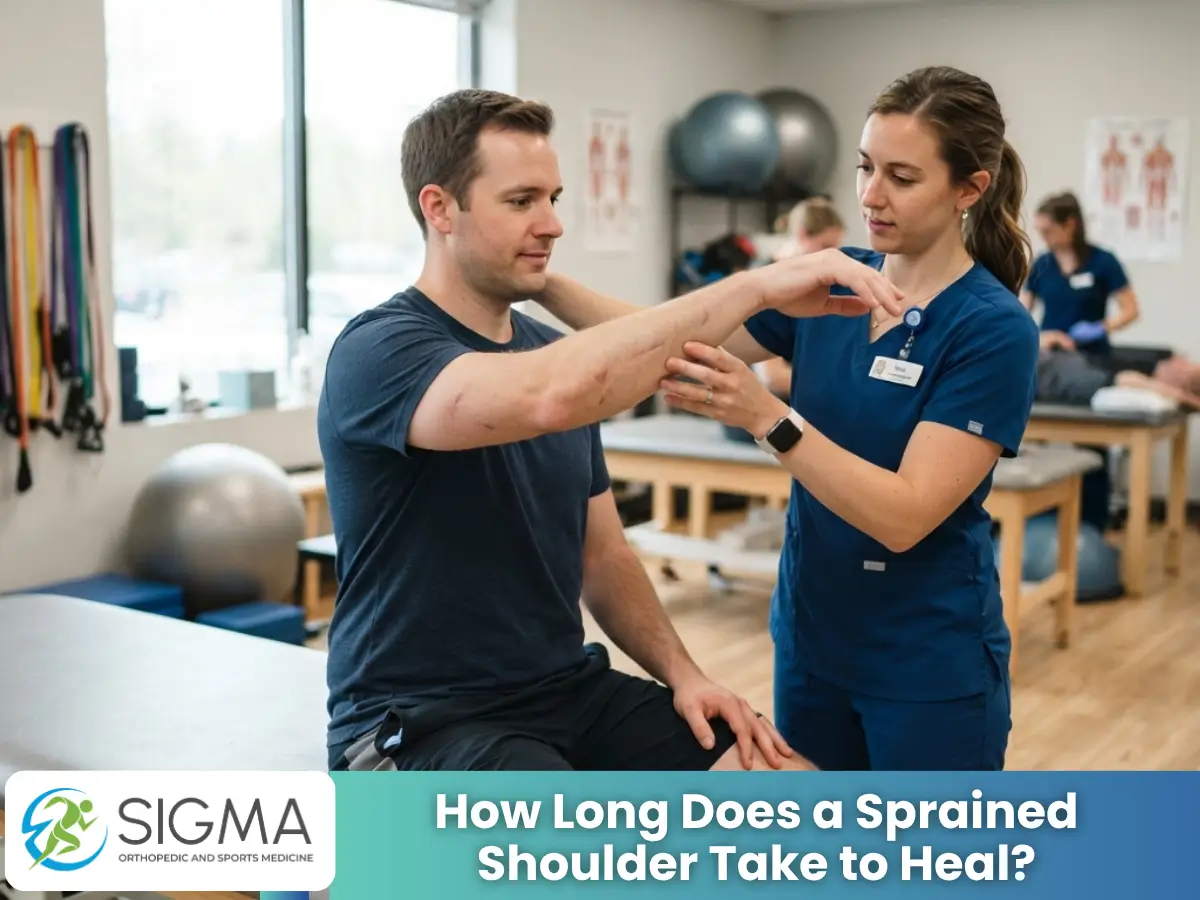
The shoulder injury recovery time varies significantly from one person to another.
A mild sprain may begin feeling better within days and continue improving over the following weeks. More significant ligament injuries can take substantially longer, particularly when there is partial or complete tearing or another injury at the same time.
Cleveland Clinic notes that many shoulder sprains recover over several weeks, while severe Grade 3 injuries can require several months.
Recovery should therefore be measured by function as well as time. Being able to move the arm comfortably does not necessarily mean the shoulder is ready for heavy lifting, throwing, contact sports, or repetitive overhead activity.
Your recovery may also take longer if the injury occurred alongside a fracture, dislocation, tendon injury, or significant inflammation.
A useful way to think about recovery is progression: pain and swelling should gradually settle, movement should improve, strength should return, and demanding activities should be reintroduced progressively rather than all at once.
What Is the Difference Between a Sprain and a Shoulder Contusion?
A contusion is essentially a bruise caused by a direct impact. It can damage small blood vessels and soft tissues without necessarily tearing a ligament.
A right shoulder contusion, for example, may cause localized tenderness, bruising, swelling, and pain after someone falls directly onto the right shoulder or receives a blow during sports.
A ligament sprain is different because the primary injury involves the connective tissue stabilizing a joint.
The two injuries can occur together. A direct collision may bruise the tissues around the shoulder while simultaneously placing enough force on a ligament to cause a sprain.
This distinction matters because bruising alone does not tell you how much deeper tissue damage has occurred. Significant pain, weakness, deformity, or inability to use the arm after an impact warrants evaluation rather than assuming the problem is only a bruise.
When Should You See a Doctor?
Not every sore shoulder requires emergency treatment, but certain symptoms should not be ignored.
Seek prompt medical evaluation if the pain is severe, the shoulder looks deformed, swelling develops rapidly, or you cannot move or use the arm normally after an injury. Persistent numbness or tingling is another reason to seek medical attention.
A particularly important warning sign is an obvious change in the shape or position of the shoulder. This can occur with a dislocation or fracture and requires urgent assessment.
You should also seek medical advice if symptoms are getting worse rather than gradually improving, or if shoulder pain continues despite appropriate activity modification and home care.
Mayo Clinic advises immediate medical attention after an injury when there is severe pain, sudden swelling, deformity, or an inability to move the arm.
Could It Be More Than a Sprain?
Yes. Shoulder pain following an injury can come from several different conditions.
A fracture may cause severe pain, swelling, bruising, and difficulty moving the arm. A dislocation can produce intense pain and an obvious change in the shoulder’s appearance. A rotator cuff injury may cause weakness, especially when lifting the arm.
A labral injury can produce pain, catching, clicking, or instability. A separated shoulder involves the joint between the collarbone and shoulder blade rather than simply being a muscle strain.
This is why the exact mechanism of injury matters. A person who falls directly onto the shoulder has a different injury pattern to consider than someone who experiences pain after repetitive overhead throwing.
If symptoms do not match a straightforward mild sprain or fail to improve as expected, further examination and possibly imaging can help determine what is actually injured.
What Should You Avoid During Recovery?
The biggest mistake is often doing too much too soon.
If a movement consistently causes pain, do not repeatedly test it to see whether the shoulder is “better.” Continuing an activity that aggravates an injury can increase stress on healing tissue.
Heavy pressing, throwing, contact sports, repetitive overhead work, and other demanding movements may need to be temporarily modified depending on the injury.
At the same time, complete inactivity for an unnecessarily long period can contribute to stiffness and weakness. Recovery is generally more effective when activity is adjusted according to the stage of healing rather than treating the shoulder as either completely normal or completely unusable.
The appropriate balance depends on the severity of the injury. A healthcare professional can help determine which movements are safe and which should temporarily be avoided.
How Can You Prevent Another Shoulder Injury?
Not every shoulder injury can be prevented, particularly when contact sports or accidents are involved. However, conditioning and sensible training can reduce risk.
Strengthening the muscles around the shoulder and upper back can improve the joint’s ability to handle physical demands. A proper warm-up before sports or resistance training can also prepare the body for activity.
Sudden increases in training volume or intensity are worth avoiding. If you normally exercise twice a week, immediately switching to daily high-intensity training gives the tissues less time to adapt.
Technique also matters. Poor lifting mechanics, uncontrolled movements, and fatigue can alter how force travels through the shoulder.
The NIH recommends gradual increases in physical activity, appropriate technique, proper equipment, and rehabilitation before returning to demanding sports after an injury.
Can You Return to Sports After a Shoulder Sprain?

Most people with uncomplicated shoulder sprains can eventually return to their normal activities. The timing, however, depends on the severity of the injury and the demands of the activity.
Someone returning to desk work may have very different requirements from a baseball pitcher, swimmer, football player, or weightlifter.
Before returning to high-demand activity, the shoulder should have adequate pain-free movement and strength for the required task. Sport-specific movements should generally be reintroduced gradually rather than immediately returning to full intensity.
A return-to-sport plan may begin with basic movement and controlled strengthening before progressing toward more demanding exercises, practice drills, and eventually competition.
If pain, instability, weakness, or swelling returns as activity increases, that is a reason to slow the progression and have the shoulder reassessed.
Final Thoughts
A sprained shoulder is usually a treatable soft-tissue injury, but the word “sprain” should not be used as a substitute for an actual diagnosis. The shoulder contains multiple structures that can be injured through similar movements, and a fall or collision can cause more than one problem at the same time.
Mild injuries often improve with protection, appropriate activity modification, and gradual rehabilitation. More severe injuries may require imaging, structured physical therapy, or additional treatment.
If shoulder pain is severe, the joint looks abnormal, you cannot move your arm, or symptoms are not improving, getting an accurate diagnosis is more important than simply waiting for the pain to disappear.
At SIGMA Orthopedics and Sports Medicine, evaluating the underlying cause of shoulder pain is an important part of determining the appropriate path back to strength, movement, and activity. A proper assessment can help distinguish a simple soft-tissue injury from a condition that requires more specialized treatment.
FAQs About a Sprained Shoulder
1. How long does a sprained shoulder take to heal?
A mild sprain may improve within a few days to several weeks. More severe ligament injuries can take several months to fully recover.
2. Can a sprained shoulder heal without surgery?
Yes, most mild and moderate sprains improve with rest, activity modification, pain management, and physical therapy when needed.
3. What are the common symptoms of a sprained shoulder?
Common symptoms include pain, tenderness, swelling, bruising, stiffness, weakness, and difficulty moving the shoulder normally.
4. Should I exercise with a sprained shoulder?
Avoid movements that increase pain during the early stages of recovery. Gradual exercises can usually be introduced as healing progresses.
5. When should I see a doctor for a shoulder sprain?
Seek medical care for severe pain, significant swelling, deformity, numbness, or inability to move the arm, especially after a fall or collision.
Disclaimer: This content is for informational purposes only and does not constitute medical advice. Always seek the advice of a qualified healthcare provider with any questions you may have regarding a medical condition or before starting any new medication. Never disregard professional medical advice or delay in seeking it because of something you have read in this blog.